



The Life360 lawsuit is not one case. It is a set of separate legal actions about location data, stalking claims, and a data leak. As of October 2026, no Life360 settlement is open for claims.
- Life360 Lawsuit at a Glance
- What Is the Life360 Lawsuit Really About?
- The 2021 Investigation Behind the Life360 Lawsuit
- E.S. v. Life360: The Location Data Class Action
- Allstate and Arity: Where Life360 Fits In
- The Tile Stalking Lawsuit and the 2026 Arbitration Ruling
- The 2024 Life360 Data Breach
- Is There a Life360 Lawsuit Settlement You Can Claim?
- What Each Case Means for a Regular User
- Five Checks Before You Trust Any Life360 Lawsuit Page
- Deadlines, Arbitration, and Other Pitfalls
- How to Protect Your Location Data Today
- Other Life360 Court Cases
- How We Checked This Article
- Life360 Lawsuit FAQs
- Is there a Life360 class action lawsuit right now?
- Can I get money from the Life360 lawsuit?
- Did Life360 sell my location data?
- Is Texas suing Life360?
- What is the Life360 Tile lawsuit about?
- Was my data exposed in the Life360 breach?
- Is Life360 safe to use?
- How can I check a Life360 case myself?
- Conclusion
Life360 had 33 million users worldwide when a 2021 investigation showed it was selling location data. That report led to a class action, a state enforcement case, and years of mixed-up headlines.
This guide goes through each case in plain English. You will see what courts decided, what is still moving, and what you can do today.
Life360 Lawsuit at a Glance
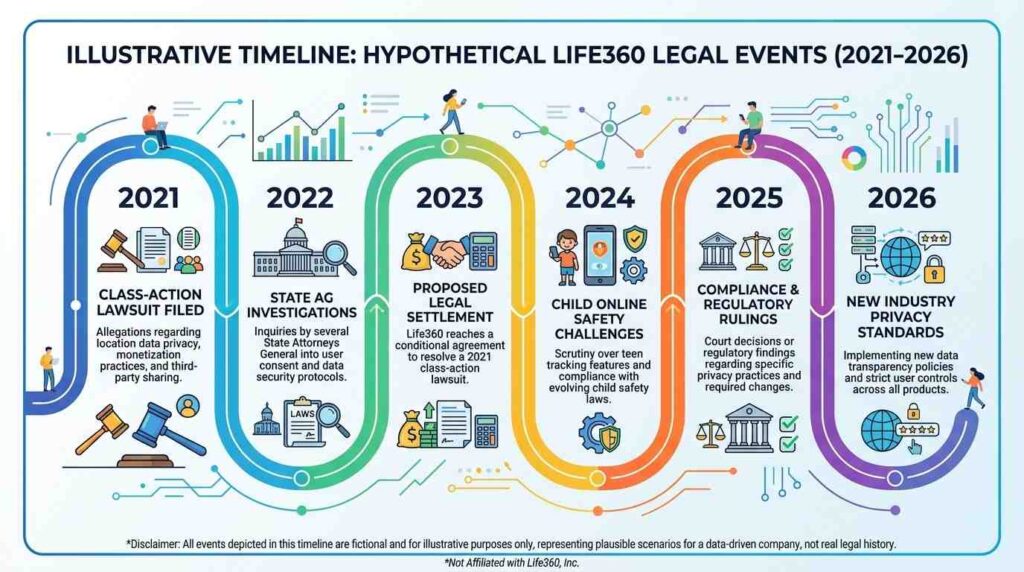
A complaint is only one side’s story until a court rules. Here is where each matter stands.
- E.S. v. Life360 (location data sales): filed January 2023 in federal court in California. The plaintiff dropped it with prejudice in November 2023.
- Ireland-Gordy v. Tile (stalking claims): filed August 2023 in federal court in California against Tile, Life360, and Amazon. In March 2026 the Ninth Circuit sent key claims to arbitration.
- Texas v. Allstate and Arity: filed January 2025 by the Texas Attorney General. Life360 is named as an app, not as a defendant. Still pending in the latest reports found.
- Allstate driver class action: a federal judge in Chicago let it move ahead in March 2026. Again, the defendants are Allstate and Arity.
- 2024 data leak: a flaw exposed details of 442,519 customers. We found no filed lawsuit, and a law firm investigation has closed.
What Is the Life360 Lawsuit Really About?
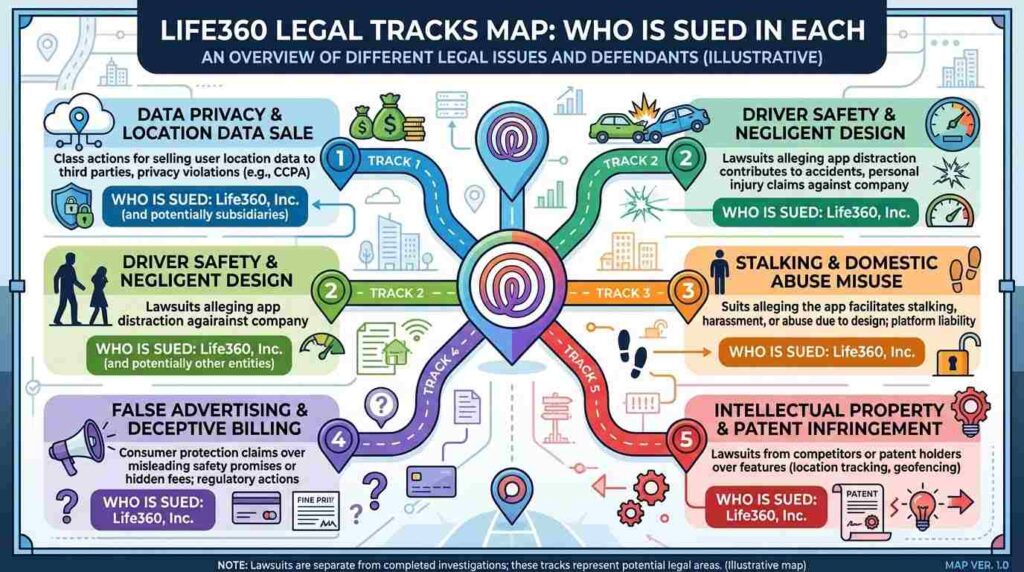
Most people search for the Life360 lawsuit as if one judge is handling one case. In truth, several tracks exist, and each has its own court and its own result.
Two questions run through all of them. First, did users really understand how their data was used? Second, did the companies do enough to prevent harm?
Famous names often work this way. One headline can hide many separate matters, as this lawsuit update on a TV ranch dispute shows.
Allegations are not findings. Life360 has said it is committed to transparency and choice while declining to comment on pending litigation.
The 2021 Investigation Behind the Life360 Lawsuit
The Markup reported on December 6, 2021 that the app sold location data to about a dozen data brokers. People who had worked at two of the buyers called Life360 one of their biggest data sources. You can read the original investigation by The Markup.
The money was real. Data sales brought in $693,000 in 2016, then about $16 million in 2020, close to one fifth of that year’s revenue. Another $6 million came from the Arity partnership.
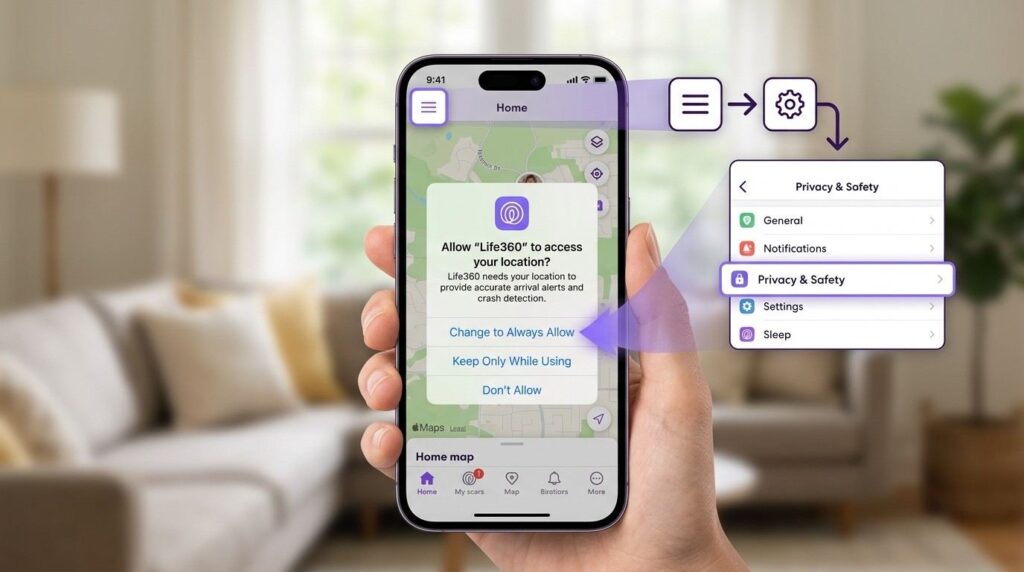
The app asks for location access at all times, because it tracks people in real time. A small-print note on the permission screen said location data could go to partners for crash detection, research, analytics, attribution, and tailored advertising. Users could switch off sales in settings, but that option was not part of the prompt.
CEO Chris Hulls said data sales help keep core features free and that contracts bar buyers from re-identifying users. In January 2022, Life360 said it would stop selling precise location data to the dozen or so brokers. It would sell precise data only to Arity, and aggregated data to Placer.ai.
Example (hypothetical): A parent taps Allow so the family map works. The small print mentions partners, but it does not name data brokers. Did that parent agree to a sale? Courts and regulators keep asking questions like this one.
E.S. v. Life360: The Location Data Class Action
The class action was filed on January 12, 2023, in federal court in California. A Florida minor and his family brought it. They said they would never have used the app had they known about the data sales, and they claimed unjust enrichment.
The complaint said Life360 sold data without consent. It also said the “de-identified” label was misleading, because researchers have shown this kind of location data can be linked back to real people. The plaintiffs wanted to represent anyone in the United States whose data was sold without consent.
In May 2023, the judge paused the case so the sides could attend a private mediation.
The case ended on November 3, 2023. The plaintiff voluntarily dismissed it, and the notice says the dismissal was with prejudice, so it cannot be refiled. The ClassAction.org case page links to that notice.
No judge decided whether Life360 broke the law, and public reports list no payout. In general, a dismissal before a class is certified affects the named plaintiff more than other users. Ask a qualified attorney how it may apply to you.
Allstate and Arity: Where Life360 Fits In
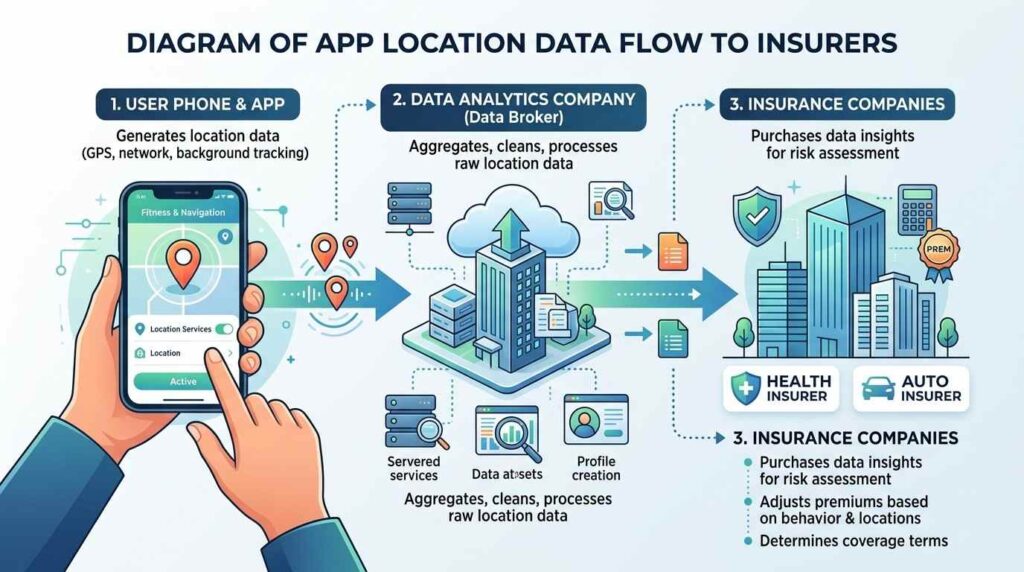
Texas Attorney General Ken Paxton sued Allstate and its Arity unit in January 2025. The state says they collected and sold phone location and movement data through hidden code in apps such as Life360. Texas calls it the first time a state attorney general has enforced a comprehensive privacy law. The Texas Attorney General press release has the state’s full account.
The state says the data covered over 45 million people and helped insurers justify higher premiums. Allstate says users get clear notice and choose to opt in. Texas is also asking for penalties of thousands of dollars per violation.
Life360 is not the named defendant here. It appears as one of the apps that carried the software. Reporting on the complaint says it criticized how Life360’s permission page described location sharing without naming Arity.
Drivers have also sued privately. In early March 2026, a federal judge in Chicago let drivers move ahead with a proposed class action over cellphone driving data. The judge allowed claims under the laws of 20 states and threw out 3 of 38 claims. The case combines 15 earlier suits. Fox Business, citing Reuters, reported the ruling and lists Life360 among the apps named.
These cases target Allstate and Arity. A win would not automatically pay Life360 users. Still, a ruling here can shape how courts read privacy law for every app that shares driving data.
The Tile Stalking Lawsuit and the 2026 Arbitration Ruling
Tile makes Bluetooth trackers for keys and bags. Life360 bought Tile in 2021, and Tile partnered with Amazon to widen its tracking network. On August 14, 2023, people who said trackers were used to stalk them filed a proposed class action in federal court in California.
The claims include negligence, unjust enrichment, intrusion upon seclusion, and violations of California privacy and unfair competition laws. A later complaint also said Tile advertised on adult websites, waited nine years to add a scan feature for unwanted trackers, and then let owners switch that protection off. These are allegations, not findings.
Time limits then cut the case down. In August 2025, Judge Rita Lin dismissed the claims of two plaintiffs as time-barred and paused the rest. Deadlines like this vary by claim and state. Claims against a government body can have even shorter windows, as the notice of claim in this Warren Sapp lawsuit explainer shows.
On March 3, 2026, the Ninth Circuit changed the picture again. It held that two plaintiffs accepted Tile’s updated terms by continuing to use the app after an emailed notice. It sent their claims to an arbitrator, including the question of what arbitration covers. MetNews covered the ruling in detail.
Arbitration is a private process where an arbitrator decides instead of a judge and jury. The ruling does not decide whether Tile’s design is unsafe. It decides who will hear the dispute.
The 2024 Life360 Data Breach
In July 2024, a hacker leaked a database of 442,519 Life360 customers, taken through a flaw in the Android login system. BleepingComputer’s report says the breach itself happened in March 2024, and you can read it here. The leaked data included names, phone numbers, and email addresses.
Life360 said the exposure was limited to first names and mobile phone numbers. It said it saw no sign that location data, payment details, ID numbers, or passwords were accessed.
A separate incident hit Tile’s customer support system. Attackers used a former employee’s credentials and reached names, addresses, phone numbers, and device IDs, but not passwords or card numbers.
ClassAction.org says the attorneys working with it have finished their investigation of the breach. We did not find a filed breach class action in the sources we reviewed.
Exposed phone numbers can feed scams and harassment. Serious online threats can also reach real life, as this report on an Arizona swatting claim shows. That case is separate from Life360.
Is There a Life360 Lawsuit Settlement You Can Claim?
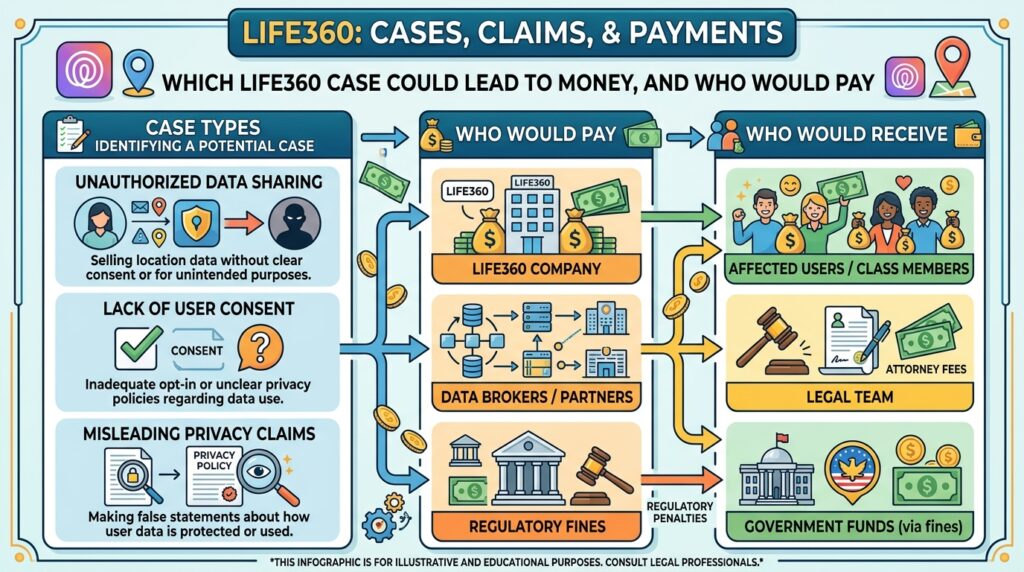
No. We found no open Life360 class action settlement or claim form as of October 5, 2026. Here is why:
- The 2023 location data case was dismissed before any payout was reported.
- The Tile claims are heading to arbitration.
- The Texas case seeks penalties for the state, not checks for users.
- The Chicago class action targets Allstate and Arity, not Life360.
Some law firms are recruiting users for individual arbitration claims. Labaton Keller Sucharow says it is looking for Life360 users who may have been tracked by third-party software without consent. Recruiting is not a ruling or a payout.
Myth check: Some sites claim an FTC order against Life360 or give a payout date. We could not confirm an FTC order naming Life360. The FTC did act against X-Mode, one of the brokers that bought Life360 location data, and it won a first-ever ban on selling sensitive location data.
Court records beat rumors. Case status changes, and many blogs repeat old facts. This Trulife Distribution lawsuit update makes the same point about relying on court records.
Never pay a fee to join a real class settlement. Never share a Social Security number on a claim site you cannot verify.
What Each Case Means for a Regular User
Most readers want to know one thing: does any of this touch me? Here is a simple way to sort it.
- You used Life360 between 2016 and early 2022: your location data may have been part of the sales described in 2021. The class action that raised this issue is over, so no group payout is waiting.
- You were tracked by a Tile device you did not own: the Tile case is the closest match, but key claims are moving to arbitration. Time limits matter here, so talk to a qualified attorney early.
- You drive and use apps that connect to insurers: the Allstate and Arity cases are the ones to watch. They do not name Life360 as a defendant.
- You got a breach notice: the main risk is scam messages. Life360 says passwords and location data were not part of the leak.
Your own facts matter more than any headline. Dates, states, and account terms can change the answer.
Five Checks Before You Trust Any Life360 Lawsuit Page
Many pages on this topic copy each other. Run these checks before you believe a claim.
- Find the case name and number. If a page gives neither, treat it as a rumor.
- Check the court. Federal, state, and arbitration matters work very differently.
- Look for a date. A page from 2023 may describe a case that ended.
- Ask who is actually sued. Many pages say “Life360 lawsuit” when the defendant is Allstate or Arity.
- Open the source document. A ruling, notice, or press release beats a summary of a summary.
Deadlines, Arbitration, and Other Pitfalls
Old information. Many pages still treat the 2023 case as active. The case page shows it ended that year.
Arbitration clauses. Many app terms send disputes to arbitration. The Tile ruling shows an emailed update can bind users when the notice is clear and use continues, at least as the Ninth Circuit applied California law. To see how arbitration can play out, read this Mercedes-Benz arbitration example, where an arbitrator ruled for the buyer and a court later upheld the award.
One case does not cover everything. A ruling about Tile says little about location data sales. A ruling about Allstate says little about Life360’s own conduct.
How to Protect Your Location Data Today
These are general privacy tips, not legal advice.
- Check the sale opt-out. The Markup described the 2021 path as Settings, then Privacy and Security, then Do Not Sell My Personal Information. Menu names can change, so check your current app.
- Read the privacy policy. Life360 keeps an archived policy from before November 26, 2024, so you can compare old and new wording.
- Review driving and crash features. Turn off any you do not need.
- Watch for scam messages. Be careful with texts or emails that mention the breach.
- Talk with teens. Explain what location sharing includes and who can see it.
Other Life360 Court Cases
Life360 has also been a plaintiff. In 2015 it sued AGIS over patent practices, including false patent marking. On September 21, 2015, a California federal judge denied AGIS’s motions to dismiss for lack of personal jurisdiction and insufficient service. That case has nothing to do with privacy, but it often shows up in search results for this topic.
How We Checked This Article
We read the 2021 Markup investigation, the ClassAction.org dismissal notice, the Texas Attorney General press release, the MetNews report on the March 2026 Ninth Circuit ruling, Fox Business and Reuters coverage of the Allstate ruling, and BleepingComputer’s breach report. Where sites disagreed, we went with the court notice or the primary report. We also treated unverified claims, such as an FTC order against Life360, as unconfirmed.
Facts were last checked on October 5, 2026. Court cases change fast, so confirm the latest status on the docket before you act.
Life360 Lawsuit FAQs
Is there a Life360 class action lawsuit right now?
Not one that is heading toward a settlement. The 2023 location data case was dismissed. A proposed class action over Tile trackers named Life360, but the Ninth Circuit sent key claims to arbitration in March 2026.
Can I get money from the Life360 lawsuit?
Not at this time. No settlement fund or claim form is open. Be careful with sites that say otherwise.
Did Life360 sell my location data?
Reports in 2021 said it sold precise location data to about a dozen data brokers. The company later said it would keep selling precise data only to Arity and aggregated data to Placer.ai.
Is Texas suing Life360?
No. Texas sued Allstate and Arity. Life360 is named as one app that carried their software.
What is the Life360 Tile lawsuit about?
It is a proposed class action saying Tile trackers made stalking easier and the company did too little to stop it. Those claims are allegations, and key parts are going to arbitration.
Was my data exposed in the Life360 breach?
Possibly. 442,519 customers had details leaked in 2024. If you received a notice from Life360, keep it and watch for scam messages.
Is Life360 safe to use?
A lawsuit is an accusation, not a verdict. Many families value the safety features. Because the app tracks you in real time, review your settings and know what you share.
How can I check a Life360 case myself?
Search the case name on PACER or CourtListener for federal cases. State courts have their own tools, such as New York’s WebCrims, explained in this court search guide.
Conclusion
The Life360 lawsuit story has four parts. The location data case was dismissed in 2023, the Tile stalking claims are heading to arbitration, the Allstate and Arity cases are moving forward, and the 2024 breach led to no filed suit that we found. No settlement is open today.
Rumors spread faster than court orders, so check records before you act. If you think your rights were affected, consider speaking with a qualified attorney licensed in your state. Bookmark this page, because we update it when courts rule.