



The Google Android cellular data lawsuit is a real set of class action cases that accused Google of using Android phones to send data over cellular networks without permission, even while the phones sat idle. Two major cases came out of these claims. Together they produced more than $485 million in jury verdicts and settlements for millions of Android users across the United States.
- What Is the Google Android Cellular Data Lawsuit?
- Timeline: How the Case Unfolded
- The Two Cases Explained: Csupo v. Google and Taylor v. Google
- What Google Is Accused of Doing With Your Cellular Data
- The $350 Million Csupo Settlement: Who Qualifies
- The $135 Million Taylor Settlement: Who Qualifies
- How to File a Claim and Get Paid
- What Changes for Android Users Going Forward
- Is This Related to Other Google Privacy Cases?
- Common Mistakes to Avoid
- When to Talk to a Lawyer
- Frequently Asked Questions
- Conclusion
This matters because most people never noticed their phone quietly using up mobile data in the background. If you paid for a limited data plan, this case is about whether that data belonged to you, and whether Google took some of it without asking.
What Is the Google Android Cellular Data Lawsuit?
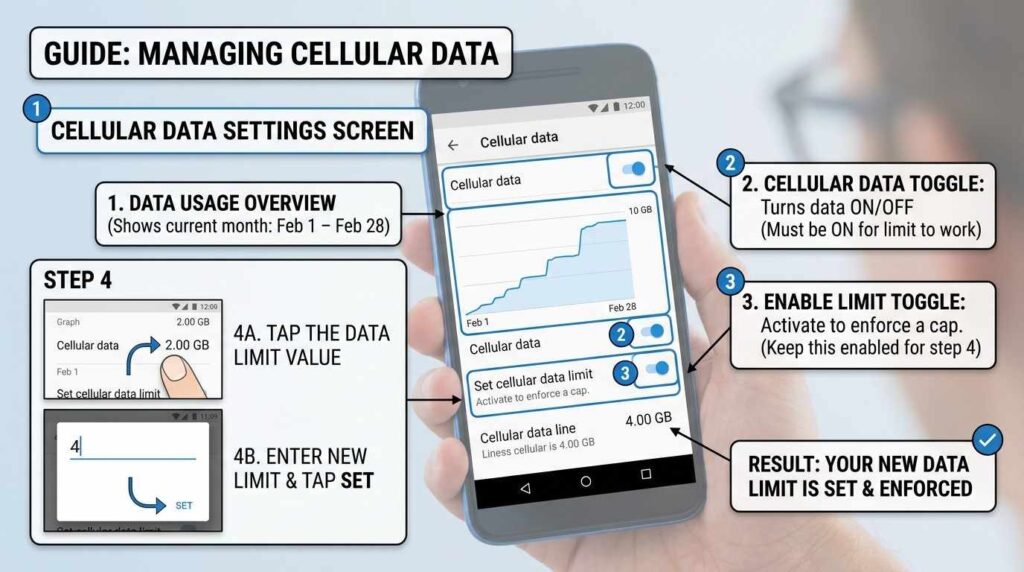
The Google Android cellular data lawsuit refers to two linked class action cases. Both claim that Google programmed Android phones to transfer information to its own servers over cellular networks, even when a device was not connected to WiFi and was not actively being used.
Plaintiffs argued this drained data that people had already paid their carrier for. A California jury agreed with one group of plaintiffs in 2025. That verdict, plus a related federal settlement, forms the core of this story.
Key takeaway: if you used an Android phone with a cellular data plan any time after November 12, 2017, you were likely part of one of these two settlement classes.
Timeline: How the Case Unfolded
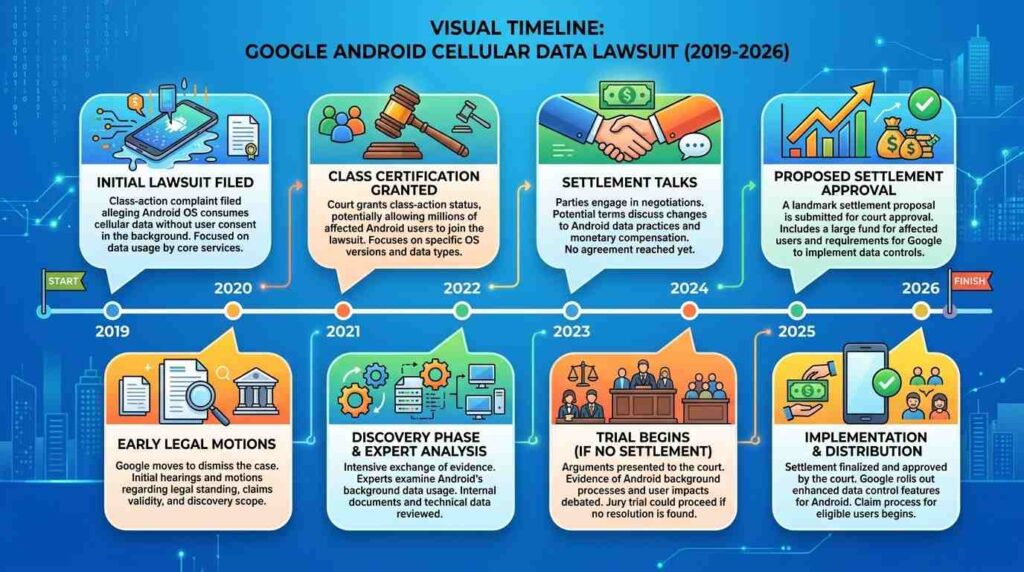
Here is the case in order, from filing to final approval.
| Date | Event |
|---|---|
| August 9, 2019 | Csupo v. Google LLC filed in Santa Clara County Superior Court, California |
| 2020 | Taylor v. Google LLC filed in federal court, Northern District of California |
| February 2024 | The Ninth Circuit Court of Appeals reverses an earlier dismissal, reviving the federal case |
| June to July 2025 | Csupo goes to a month-long jury trial in California |
| July 2025 | Jury awards $314.6 million in the Csupo case |
| Late 2025 | Google agrees to a $350 million settlement in Csupo rather than appeal |
| Early 2026 | Google and plaintiffs reach a $135 million settlement in the federal Taylor case |
| May 29, 2026 | Deadline to opt out or object to the Taylor settlement |
| June 23, 2026 | Final approval hearing held for the Taylor settlement |
| August 21, 2026 | Taylor settlement receives final court approval |
Both settlements were negotiated with help from mediators Kenneth Feinberg and Camille Biros, the same team known for administering the September 11th Victim Compensation Fund. This gives some sense of the scale and seriousness both sides brought to the negotiations.
For updates on other major consumer class actions like this one, you can browse more lawsuit coverage as new cases develop.
The Two Cases Explained: Csupo v. Google and Taylor v. Google
It helps to think of this as one story told in two courtrooms.
Csupo v. Google LLC is the state court case. It was filed in Santa Clara County Superior Court under case number 19-CV-352557. This case only covers California residents, roughly 14 million Android users. It went all the way to trial and ended with a jury verdict.
Taylor v. Google LLC is the federal case. It was filed in the Northern District of California under case number 5:20-cv-07956-VKD. This case covers every Android user in the United States who is not part of the California class, an estimated 100 million people.
The two cases are cross-contingent. That means if a court had rejected either settlement, the other one could have been affected too. Both dealt with the same basic claim, just for different groups of users.
- Csupo: California only, went to trial, verdict of $314.6 million, later settled for $350 million
- Taylor: Rest of the country, settled directly for $135 million without a trial
What Google Is Accused of Doing With Your Cellular Data
The lawsuits center on a claim called conversion. In simple terms, conversion means taking someone’s property and using it without permission. The plaintiffs argued that a data plan is a form of property. You buy a set number of gigabytes each month, and anyone who uses that data without your consent has taken something that belongs to you.
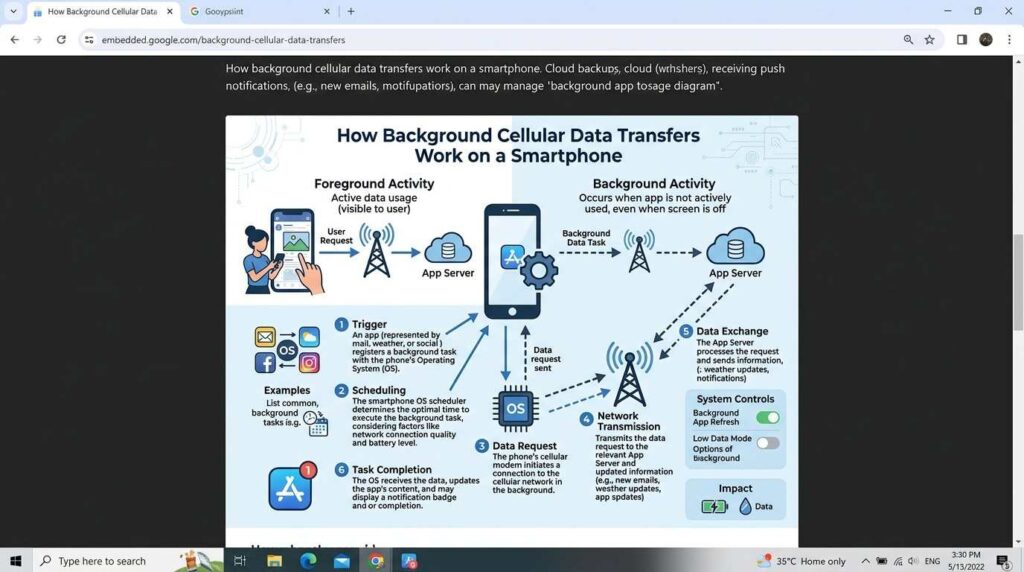
According to court filings, Android system services sent information to Google servers over cellular networks starting around November 12, 2017. This reportedly happened:
- When phones were sitting idle
- When screens were locked
- When users were not actively opening any app
Technical experts who reviewed the evidence during discovery said the transfers included system logs, background location signals even when location history was turned off, and advertising data used to build user profiles. Plaintiffs pointed out that Android’s “stop background data” toggle did not actually stop these particular transfers.
Google’s position is different. The company says these transfers are standard, low-level system activity needed to keep billions of Android devices running smoothly, secure, and in sync. A Google spokesperson said the amount of data used is smaller than sending a single photo, and that users agree to this kind of activity through the terms of service and device settings they accept when setting up a phone. You can read Google’s side of the story in Bloomberg’s coverage of the verdict.
Google has stated publicly that it disagrees with the jury’s findings and has pursued its legal options rather than accept the verdict outright, which is part of why the company chose settlement over a lengthy appeal in the Csupo case. Insurance Journal’s report on the verdict covers the jury’s reasoning in more detail.
The $350 Million Csupo Settlement: Who Qualifies
This settlement applies only to California residents. You may be part of this class if all of these are true:
- You lived in California at any point during the class period
- You used a mobile phone running a Google-licensed version of Android
- Your phone had an active cellular data plan
- This applied to you any time from August 9, 2016, to the present
After a nine-to-three jury verdict awarding $314,626,932 in damages, Google chose not to appeal the Csupo case. Instead, the company agreed to a $350 million settlement. This is a common move in class actions. It avoids the years of delay and legal cost that a full appeal process can bring, and it gives class members certainty instead of an uncertain wait.
Most California class members will not need to fill out a lengthy claim form. Payments are typically distributed automatically once the settlement is fully approved and administered.
The $135 Million Taylor Settlement: Who Qualifies
This settlement covers every other Android user in the United States. You may qualify if:
- You are a person living in the United States
- You used a mobile device running Android with an active cellular data plan
- This applied to you any time from November 12, 2017, to the date of final approval
- You are not already a member of the California Csupo class
The settlement class is estimated at around 100 million people, making it one of the largest class action settlements tied to a conversion claim in federal court history. Payments are pro rata, meaning the payout depends on how many people ultimately participate. The settlement caps individual payments at $100, though most class members are expected to receive far less than that once the fund is divided among everyone eligible.
The official court-authorized notice explains the process in plain terms. You can view it directly on the Taylor v. Google settlement website, which is the court-approved source for updates, deadlines, and payment status.
How to File a Claim and Get Paid
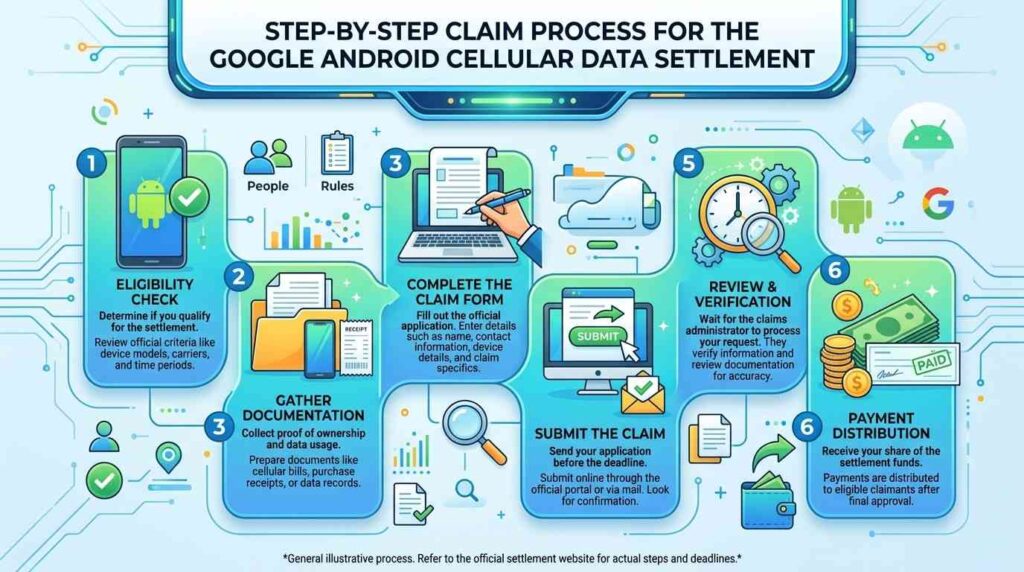
Filing a claim in this case is simpler than in many class actions. Here is what the process generally looks like.
- Check your eligibility. Review the class period and location requirements above.
- Watch for a settlement notice. Eligible class members typically receive an email or mailed notice with a notice ID and confirmation code.
- Complete a payment election form. Most class members do not need to prove anything or submit a traditional claim form. Instead, they choose how they want to receive payment, such as direct deposit, PayPal, Venmo, Zelle, or a prepaid card.
- Wait for final approval and any appeals to resolve. Payments are not issued until the settlement is fully final.
- Keep your contact information current with the settlement administrator so your payment is not delayed or lost.
The official settlement notice, filed with the federal court, lays out these steps in detail, including deadlines for opting out or objecting. You can review the official court notice document if you want to see the exact language approved by the judge.
Large settlements like this often move slowly because courts want to make sure every class member is treated fairly. If you have followed other major consumer settlements, such as the Depo-Provera lawsuit settlement process, you already have a sense of how these payment election and administration steps tend to work.
What Changes for Android Users Going Forward
Money is not the only outcome here. The Taylor settlement includes a change that could matter more in the long run than the $135 million payout itself.
Going forward, Google must clearly notify new Android users about its data collection practices and obtain consent when a device is set up. This is not the same as burying a disclosure inside a long terms of service document that almost nobody reads. It has to be part of the setup flow itself, where users can actually see and respond to it.
This means every new Android phone activation from this point forward should include a clearer explanation of what background data transfers happen and why. It is a small change in wording, but a meaningful shift in how transparent the setup process has to be.
Is This Related to Other Google Privacy Cases?
Google has faced several other privacy-related class actions recently, and it is easy to confuse them with the cellular data lawsuit. Here is how to keep them straight.
- Rodriguez v. Google LLC dealt with the Web and App Activity setting, not cellular data specifically. A federal jury awarded $425.7 million in September 2025 after finding Google kept collecting activity data from non-Google apps even when users had turned the setting off. This case is still under appeal and has no settlement fund yet, so it is a separate matter from the cellular data claims covered in this article.
- Other companies have faced similar data-related lawsuits recently too. For a look at how a different major tech company is handling a comparable claim, see this breakdown of the Samsung S22 software update lawsuit.
- Data privacy claims are not limited to phones either. Government use of personal data has drawn its own legal challenges, such as the Rhode Island voter data lawsuit, which raises similar questions about consent and data use in a different context.
If you want a broader look at how courts have handled Google’s other legal battles, Law360’s case tracking page offers ongoing coverage from legal industry reporters.
Common Mistakes to Avoid
Class members sometimes lose out on money they were entitled to simply because of avoidable errors. Watch out for these.
- Ignoring the settlement notice. Emails about class action settlements can look like spam. Do not delete them without reading them first.
- Missing the opt out or objection deadline. If you wanted to pursue your own separate claim instead of joining the class, that window closes fast.
- Letting your contact details go stale. If the administrator cannot reach you, your payment can be delayed or forfeited.
- Assuming you are automatically excluded. Many people assume a settlement does not apply to them without checking the actual eligibility dates.
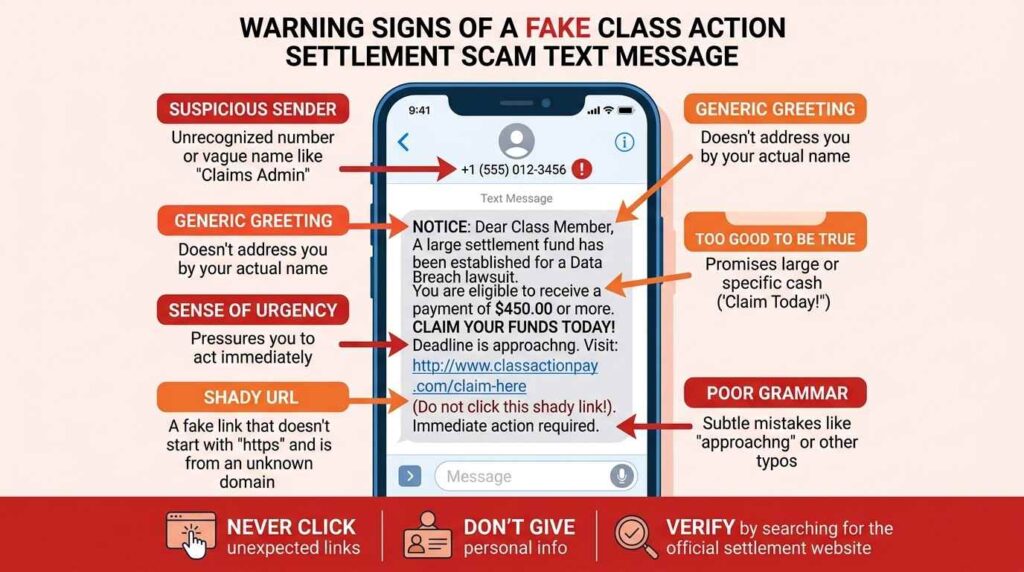
- Falling for scam messages. Always confirm claim details through the official court-approved settlement website rather than a random link in a text message.
When to Talk to a Lawyer
Most class members do not need a personal attorney to receive a settlement payment. The process is designed to be simple enough to handle on your own. However, there are situations where speaking with a lawyer makes sense, such as if you believe you suffered unusual harm beyond the scope of the class, or if you are unsure whether you should opt out and pursue an individual claim.
If you are not sure about the difference between the professionals who can help you here, this guide on attorney vs lawyer terminology explains the distinction in plain language before you decide who to call.
Frequently Asked Questions
Is the Google Android cellular data lawsuit real?
Yes. It includes two real cases, Csupo v. Google LLC in California state court and Taylor v. Google LLC in federal court, both resulting in confirmed verdicts and settlements totaling roughly $485 million.
How much money will I get from the settlement?
Individual payments depend on how many class members file a payment election and how the fund is divided. The federal settlement caps payments at $100 per person, though most people will likely receive a smaller pro rata amount.
Do I need to file a claim form?
In most cases, no. Eligible class members typically receive a payment election notice rather than a traditional claim form, since eligibility is usually determined by account and device records.
What if I live outside California?
You likely fall under the Taylor v. Google LLC federal settlement instead of the Csupo California settlement, as long as you meet the general eligibility requirements.
Did Google admit any wrongdoing?
No. Google has denied wrongdoing in both cases and has stated it disagrees with the jury verdict in Csupo, even though it agreed to settle rather than pursue a lengthy appeal.
When will payments actually go out?
Payments are issued after final court approval and after any appeal periods pass. The Taylor settlement received final approval on August 21, 2026, so payment timing depends on the administrator’s next steps.
Can I still sue Google separately about this?
If you do not opt out of the class by the stated deadline, you generally give up your right to sue Google individually over these same claims.
Is this the same as the Google Web and App Activity lawsuit?
No. That is a separate case, Rodriguez v. Google LLC, dealing with a different privacy setting and a different set of legal claims.
Conclusion
The Google Android cellular data lawsuit shows how a small, easy to overlook detail, background data use, can turn into one of the largest privacy related class actions in recent memory. Between the $350 million California settlement and the $135 million federal settlement, hundreds of millions of Android users across the country are now eligible for some form of payment.
Beyond the money, the case pushed Google toward clearer consent practices for new Android devices going forward. If you used an Android phone with cellular data any time since 2017, it is worth checking your inbox and mail for a settlement notice so you do not miss your share.