



The Janice Griffith lawsuit is a personal injury case that followed a 2014 photoshoot stunt gone wrong. Griffith, an adult film performer, was thrown from a rooftop toward a pool during a shoot tied to Hustler magazine and social media personality Dan Bilzerian. She missed the water, struck the pool’s edge, and broke her foot.
The incident went viral, and the injury led to a civil lawsuit. This guide walks through what is publicly known about the case, the legal concepts it raises, and what similar situations can teach anyone hurt during a staged shoot, stunt, or promotional event.
What Happened During the Photoshoot
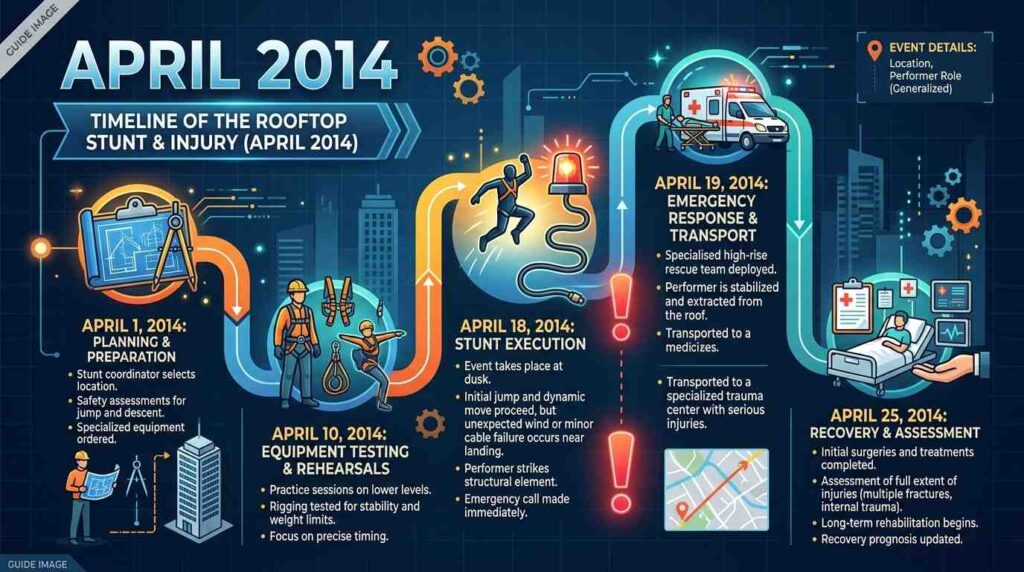
On April 23, 2014, Janice Griffith took part in a photoshoot at Dan Bilzerian’s home in the Hollywood Hills. The shoot was arranged in connection with Hustler magazine and was meant to capture Bilzerian’s high profile lifestyle for promotional content.
As part of the planned stunt, Bilzerian picked Griffith up and threw her from the rooftop toward the pool below. According to contemporaneous reporting from HuffPost UK, Griffith made it into the pool but broke her foot in the process. Video of the moment spread quickly online, and Griffith said publicly that the injury forced her to cancel work for several weeks.
The Lawsuit: Who Was Sued and Why
According to multiple reports, Griffith later filed a civil complaint in the Superior Court of California, County of Los Angeles. The lawsuit reportedly named two defendants:
- Dan Bilzerian, who physically threw her during the stunt
- LFP Internet Group, doing business as Hustler Magazine, which organized the shoot
Reports describe the claim as a negligence case. In broad terms, that means Griffith argued the people who planned and carried out the stunt did not take reasonable care to keep her safe, and that this failure caused her injury. Reported figures suggest the suit initially sought around $85,000 in damages for medical costs and lost income, though the exact publicly filed numbers vary across secondary sources and cannot be independently confirmed here.
It is worth being direct about something important: much of what circulates online about this case comes from secondary blog posts, not from primary court documents or major legal databases. Treat specific dollar figures and procedural dates as reported, not as confirmed fact, unless you have reviewed the actual court file yourself.
Key Legal Issues in the Case
A few legal concepts sit at the center of this type of dispute. These apply broadly to stunt, shoot, and production injuries, not just to this one case. Negligence claims show up across very different industries too, from staged photoshoots to consumer contracts, as our breakdown of the CarGuard lawsuit shows.
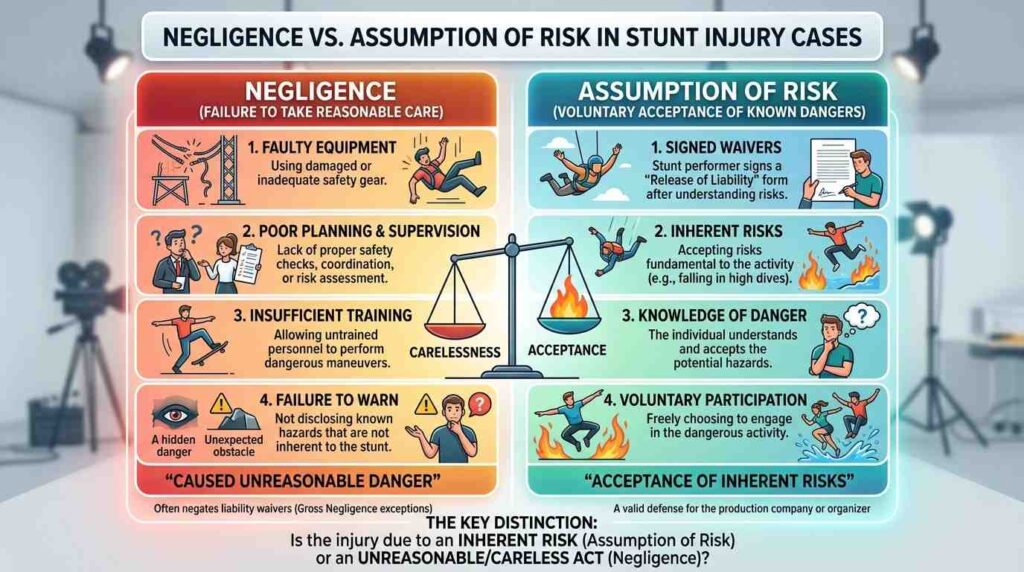
Negligence and duty of care. A negligence claim generally requires showing that someone owed a duty of care, failed to meet that duty, and caused injury as a result. On a photoshoot, that duty can fall on the person performing the stunt, the production company organizing it, or both.
Assumption of risk. This is a common defense in stunt and sports related injury cases. It argues that a person who knowingly takes part in a risky activity cannot later hold others fully liable for injuries that come from that known risk. The Cornell Law School Legal Information Institute describes it as a doctrine that can reduce or block recovery when a plaintiff voluntarily accepted a known danger. Reports say Bilzerian’s side raised this defense, arguing Griffith agreed to the stunt.
Consent versus safety. Agreeing to take part in a risky scene is not the same as accepting every possible outcome. Courts often look at whether the people running the shoot took reasonable safety steps, regardless of the performer’s consent to participate.
How the Case Was Resolved
Several secondary reports state that the case was resolved through a confidential settlement around 2016, without going to trial and without a public court ruling on liability. Because civil settlements of this kind are frequently sealed or simply undisclosed, the final terms have not been made public.
This outcome is common in personal injury cases involving public figures. Settling privately lets both sides avoid the cost, time, and publicity of a trial, and it does not require either party to admit fault.Sorting reported claims from confirmed fact is a recurring theme with high-profile cases like this one, similar to what we found when we untangled the Emuaid lawsuit.
What This Case Teaches About Liability
Regardless of the exact final numbers, this case is a useful example of a few broader principles in personal injury law:
- Physical risk does not remove the duty of care. Even in a job that involves stunts or dangerous content, organizers generally still have to plan for foreseeable harm.
- Video evidence matters. Footage of the stunt, including any rehearsals, became a central piece of evidence for both sides.
- Consent has limits. Agreeing to a risky activity is not the same as agreeing to an unsafe one.
- Production companies can share liability. Griffith’s complaint reportedly named Hustler’s parent company alongside Bilzerian individually, which is typical when a business organizes or profits from the activity that caused the injury.
When to Talk to a Personal Injury Lawyer
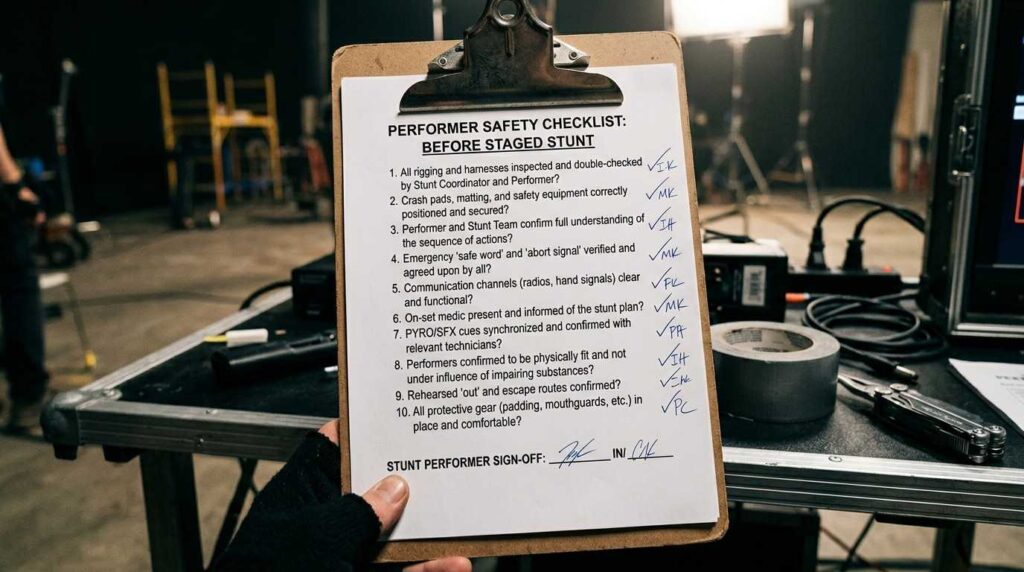
If you are hurt during a shoot, stunt, or staged event, a personal injury attorney can help you understand your options. According to Nolo’s legal encyclopedia, whether a defense like assumption of risk applies depends heavily on the specific facts, the state you are in, and what you were told about the risks beforehand.
Generally, it is worth speaking with a lawyer if:
- You were injured during a planned activity someone else organized
- You were not fully informed about the risks involved
- Medical bills or lost income are piling up
- The other side is disputing responsibility
This is general guidance only. A licensed attorney in your state can review your specific situation and tell you whether you have a viable claim.
Frequently Asked Questions
What was the Janice Griffith lawsuit about?
It was a personal injury lawsuit filed after Griffith broke her foot during a 2014 rooftop stunt at a photoshoot connected to Hustler magazine and Dan Bilzerian.
Who did Janice Griffith sue?
Reports say she sued Dan Bilzerian and LFP Internet Group, the company doing business as Hustler Magazine.
Did the Janice Griffith lawsuit go to trial?
No. According to available reports, the case was resolved through a private settlement rather than a courtroom verdict.
What legal defense did Bilzerian’s side reportedly raise?
Assumption of risk, the argument that Griffith knowingly agreed to take part in the stunt and accepted the associated danger.
Does agreeing to a stunt mean you cannot sue if you get hurt?
Not automatically. Courts typically still examine whether reasonable safety precautions were taken, separate from whether you consented to take part.
How much money did Janice Griffith seek in the lawsuit?
Multiple secondary reports cite a figure around $85,000, though this has not been independently verified against primary court records here.
Is this case still relevant today?
It is often cited as an example of how negligence and assumption of risk interact in production and stunt related injuries, which remain common questions in entertainment and influencer content today.
Where can I read more about personal injury claims like this?
See our related guides linked below, or speak with a licensed personal injury attorney in your state.
Conclusion
The Janice Griffith lawsuit began with a viral rooftop stunt and ended, according to widely reported accounts, in a private settlement years later. Along the way, it raised real questions about negligence, consent, and who is responsible when a planned stunt causes real harm.
The core lesson holds up regardless of the exact settlement details: organizers of any risky activity generally have a duty to plan for foreseeable harm, and a performer’s willingness to take part does not erase that duty.
If you have been injured during a shoot, stunt, or similar staged activity, this article is a starting point, not a legal opinion on your case. For another look at how high-dollar, high-profile lawsuits play out in the media versus the courtroom, see our coverage of the Antthony Mark Haskins QVC lawsuit. For guidance specific to your situation, reach out to our team or a licensed personal injury attorney in your state.
This article is general information only. It is not legal advice and not a substitute for advice from a qualified attorney licensed in your jurisdiction. Laws vary by state, and outcomes depend on the specific facts of each case.