



There isn’t just one Warren Sapp lawsuit. The Pro Football Hall of Famer has been part of two major legal stories.
The first is a 2017 sexual harassment lawsuit filed by a former NFL Network employee, which named Sapp among several on air personalities. The second, and more current, is a $20 million notice of claim Sapp filed against Okeechobee County, Florida, after a 2024 arrest that prosecutors later dropped.
The Okeechobee County $20 Million Claim
On February 24, 2024, Sapp was part of a charity car convoy passing through Okeechobee County. Deputies pulled over another vehicle in the convoy for speeding at a gas station, and Sapp was arrested and charged with obstruction without violence after he allegedly would not identify himself.
Here’s the twist: the charge did not stick. An assistant state attorney dropped it days later, saying the officers’ actions during the stop were not legally supportable.
That should have been the end of it. It wasn’t.
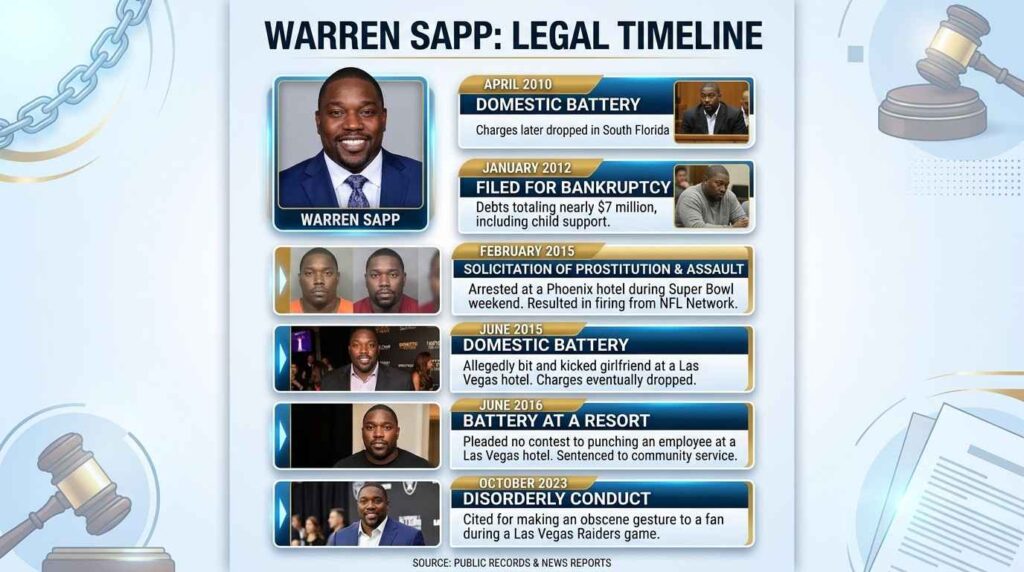
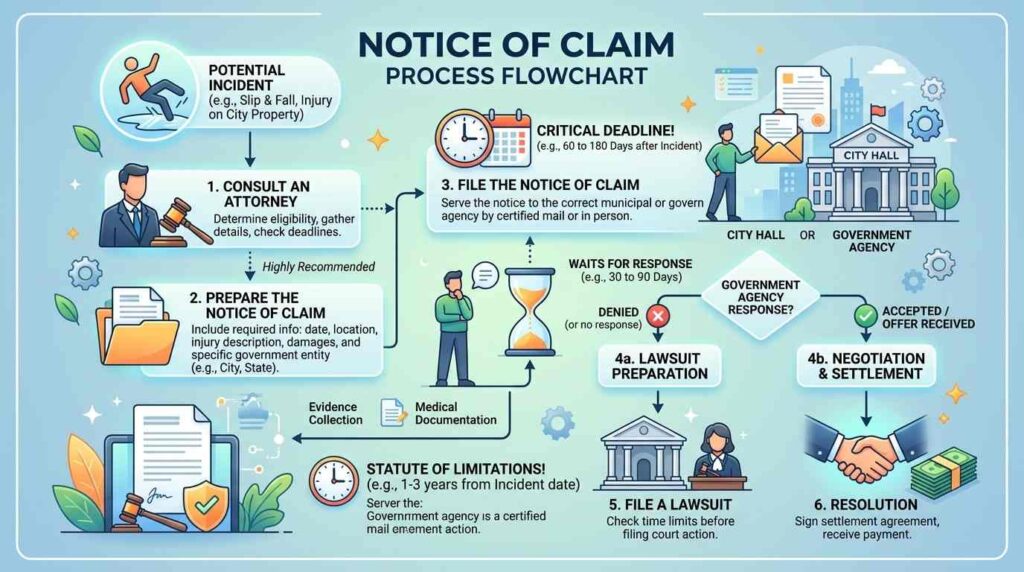
Sapp’s attorney filed a formal notice of claim in December 2024, seeking $20 million from Okeechobee County and its sheriff’s office. The claim alleges civil rights violations, emotional distress, and reputational harm tied to the arrest. Under Florida law, a notice of claim is a required first step before someone can actually sue a government agency, it gives the agency a chance to respond before a lawsuit is filed in court.
A few things happened next:
- An internal after action report later confirmed deputies made several procedural mistakes during the stop, including unclear verbal commands and equipment problems.
- The county’s insurance provider, the Florida Sheriff’s Risk Management Fund, offered Sapp $3,500 to settle. His legal team called the offer insulting.
- In April 2025, Sapp showed up in person at an Okeechobee County Board of Commissioners meeting and confronted officials directly. Several attendees, including Sapp, were removed by deputies for disruptive conduct.
As of the most recent public filings, no formal civil lawsuit had been entered in court following the notice period. The claim is technically still a pre lawsuit filing, not an active court case, though that can change quickly if talks stall. WPTV’s original investigation has the full public records behind this claim.
If you’re researching how a similar dispute plays out, this guide to civil rights claims filed against a government agency walks through a comparable situation and shows how these disputes can drag on for months before anything is filed in court.
The 2017 NFL Network Harassment Lawsuit
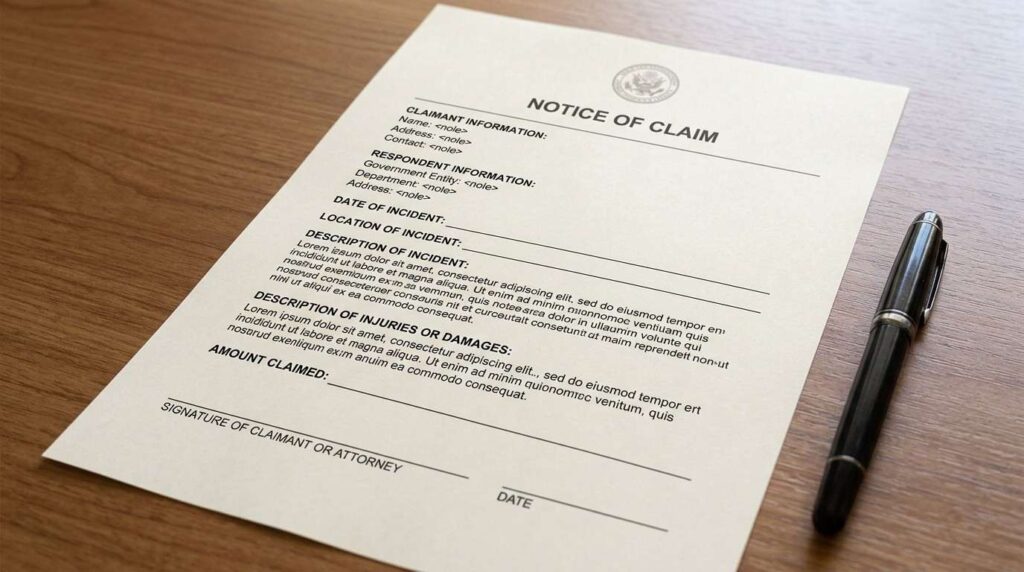
In October 2017, a former NFL Network wardrobe stylist named Jami Cantor filed a lawsuit in Los Angeles Superior Court against NFL Enterprises, as first reported by the Los Angeles Times. She had worked at the network for a decade before being let go in 2016. Her suit raised claims including sexual harassment, hostile work environment, age and sex discrimination, wrongful termination, and defamation.
An amended complaint filed in December 2017 named several on air personalities and executives Cantor said had harassed her, including Marshall Faulk, Ike Taylor, Heath Evans, Donovan McNabb, Eric Davis, executive Eric Weinberger, and Sapp, per ESPN’s reporting on the NFL’s response.
What Cantor’s complaint said about Sapp, specifically:
- He allegedly gave her sexually themed gifts as part of a workplace holiday tradition over three consecutive years.
- He allegedly showed her photos of women he claimed to have been intimate with.
- She said he once walked into a men’s restroom where she was working and urinated in front of her.
Sapp addressed the allegations publicly on Miami radio station WINZ two days after the amended complaint was filed. He acknowledged giving novelty gifts around the office but disputed that any of it amounted to harassment, and he specifically denied the bathroom allegation. NFL Enterprises later filed a formal response denying wrongdoing.
The important legal detail here: Sapp was described in the complaint as one of the men accused of harassment, but the lawsuit itself was filed against NFL Enterprises, the company, rather than against each individual by name as a defendant. That distinction matters in employment law, since companies can be held responsible for a hostile work environment created by employees even when those employees aren’t formally sued.
Faulk, Taylor, and Evans were suspended by the network shortly after the suit became public. Sapp was no longer employed there by that point, since he had already been let go in 2015 for unrelated reasons (more on that below).
The case eventually settled. In late 2018, Cantor and the network reached a settlement, and a Los Angeles Superior Court judge approved it under California’s Private Attorneys General Act. Cantor agreed to drop her claims as part of the deal. Settlements like this typically happen without any side admitting fault, which is standard in employment disputes that resolve before trial.
For a look at how another public figure’s harassment related lawsuit unfolded from filing to resolution, this breakdown of the Tyler Perry lawsuit covers a comparable civil process step by step.
Sapp’s Other Legal History
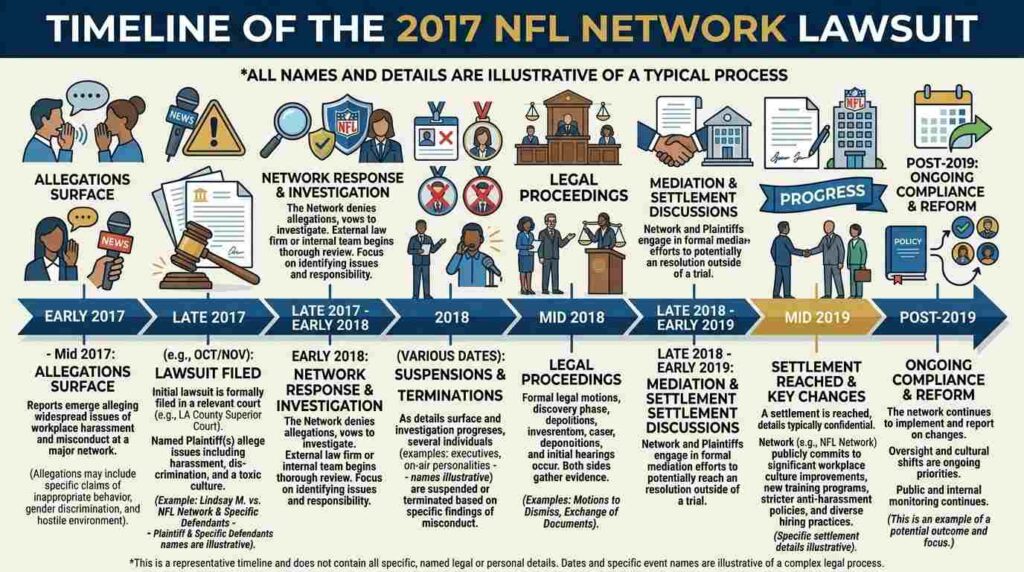
Because Sapp has had a fairly public legal record, search results for his name pull up a few other incidents. Here’s the short version of each, so you’re not left guessing which “lawsuit” a headline is talking about.
2010, Las Vegas domestic battery case. Sapp was accused of knocking down and stepping on a former girlfriend during an argument. He pleaded no contest to one misdemeanor charge and was fined, ordered to pay restitution, and required to complete community service and counseling.
2015, Super Bowl weekend arrest. Sapp was arrested in Arizona for allegedly soliciting a prostitute and two counts of assault. NFL Network fired him from his analyst role the day after the arrest. Those charges were later dismissed.
May 2026, Hollywood, Florida obstruction charge. Cell phone video showed Sapp arguing with police and city staff at Hollywood City Hall after he tried to enter restricted floors. He was charged with interfering with city employees and placed on pretrial supervision, which requires regular check-ins with a pretrial services office. This is a separate, ongoing matter from the Okeechobee claim, as detailed by Yahoo Sports.
None of these cases are legally connected to each other. They’re grouped here only because search results tend to blend them together under Sapp’s name.
If you’re trying to sort out which case applies to a specific legal question you have, this roundup of how celebrity legal disputes get resolved is a useful reference for understanding how different types of claims, criminal, civil, and pre suit notices, move through very different processes.
How a Notice of Claim Works Against a Government Agency
Most states require a waiting period before you can sue a government body. Florida is one of them. Before someone can file an actual lawsuit against a county, city, or state agency, they usually have to send a formal written notice first.
Here’s the general sequence:
- The claimant sends a notice of claim. This document lays out what happened, what rights were allegedly violated, and how much money is being sought.
- The agency has a set window to respond, often several months, during which it can investigate, deny the claim, or offer a settlement.
- If no resolution is reached, the claimant’s attorney can then file a lawsuit in civil court.
This process exists so government agencies get a chance to review and resolve disputes before taxpayers foot the bill for a courtroom fight. It also explains why a case can generate a lot of headlines, like the Okeechobee County commission meeting confrontation, without an actual lawsuit ever being filed in court.
What if a settlement offer feels too low? That’s a common sticking point in these cases. A claimant isn’t required to accept a low offer, and their attorney can either negotiate further or proceed to filing suit once the waiting period ends.
You can see a similar civil enforcement dynamic play out in this writeup of the Nightfall Group lawsuit, where a government entity and a private party spent months in dispute before the matter moved further through the courts.
What “Named in a Lawsuit” Actually Means
A lot of confusion around cases like this comes down to one phrase: being “named” in a lawsuit.
It does not automatically mean someone is being sued directly. Depending on how a complaint is written, a person can be:
- A formal defendant, meaning the lawsuit is filed against them personally and they must respond in court.
- Named as an alleged wrongdoer within the facts of the case, even though the company or organization is the actual defendant.
- A witness or third party whose actions are described but who isn’t accused of anything themselves.
In Sapp’s 2017 case, he fell into that second category. Understanding this distinction matters if you’re trying to figure out someone’s actual legal exposure from a news headline alone, since headlines rarely spell out which category applies.
FAQ
Is Warren Sapp currently being sued?
As of the most recent public records, the Okeechobee County matter is a notice of claim, not yet a filed lawsuit. The 2017 NFL Network case settled in 2018. Sapp does face a separate, active criminal obstruction charge from a 2026 incident in Hollywood, Florida.
Did Warren Sapp settle the NFL Network harassment case?
Yes. The plaintiff, Jami Cantor, and NFL Enterprises reached a settlement that a Los Angeles Superior Court judge approved in late 2018. Cantor agreed to drop her claims as part of the deal.
How much money is Sapp seeking from Okeechobee County?
His attorney’s notice of claim seeks approximately $20 million, covering alleged future medical costs, lost wages, and general damages tied to the 2024 arrest.
Was Warren Sapp arrested at Super Bowl XLIX?
Yes. He was arrested in Arizona in February 2015 on charges related to soliciting a prostitute and assault. NFL Network fired him the next day. The charges were later dismissed.
Why weren’t the 2024 Okeechobee charges pursued?
An assistant state attorney determined the arresting officers’ actions were not legally supportable and dropped the obstruction charge within days of the arrest.
What’s the difference between a notice of claim and a lawsuit?
A notice of claim is a required pre lawsuit notification sent to a government agency, giving it a chance to respond or settle. A lawsuit is the actual court filing that follows if no resolution is reached.
Is the 2026 Hollywood City Hall case connected to the Okeechobee claim?
No. They’re separate incidents in different Florida counties, involving different alleged conduct. The Hollywood case is an active criminal charge, while the Okeechobee matter is a civil claim.
Conclusion
The phrase “Warren Sapp lawsuit” covers more ground than most headlines suggest. The 2017 NFL Network harassment case is closed and settled. The Okeechobee County notice of claim is still working its way through Florida’s pre suit process. And a newer, unrelated obstruction charge from 2026 adds another layer for anyone searching his name today.
If you’re dealing with a legal situation of your own involving a government agency, a workplace dispute, or a civil claim, the specific facts and your state’s rules matter far more than any general article can capture. For an example of how a civil dispute plays out from complaint to settlement, this timeline of the Kim Muratori Mercedes-Benz lawsuit is a useful side-by-side.