



Legal Disclaimer: This is general information only and not a substitute for advice from a qualified attorney licensed in your jurisdiction. Immigration status decisions carry serious, time-sensitive consequences — always confirm your specific situation with a licensed immigration attorney before taking action.
The homeland security student visa lawsuit isn’t one court case. It’s a wave of federal lawsuits filed in 2025 and 2026, after the U.S. Department of Homeland Security (DHS) abruptly terminated thousands of international students’ immigration status with no warning and, in many cases, no real explanation.
- What Is the Homeland Security Student Visa Lawsuit?
- Student Visa Status vs. Student Visa Stamp — Why the Difference Matters
- Timeline: Every Major Case, in Order
- Harvard v. DHS — The Biggest Case Explained
- Is Harvard being sued by DHS, or is Harvard suing DHS?
- What the courts have ruled so far
- Harvard’s international student numbers
- Harvard Hillel and campus context
- What happens if DHS eventually wins
- University of Iowa Students Sue Homeland Security — What Happened
- Oregon International Student Visa Lawsuits
- New Hampshire and the Pasula Class Action
- Which States and Schools Have Been Affected?
- Why Do Student Visas Get Revoked?
- What Is CBP Home, and How Is It Different From These Lawsuits?
- How the self-deportation process works
- Should an international student with a pending visa case use CBP Home?
- What Should You Do If Your Student Visa Status Is Terminated?
- Frequently Asked Questions
- Conclusion
A homeland security student visa lawsuit is any federal court case challenging DHS’s decision to revoke or terminate a foreign student’s F-1, J-1, or M-1 status without proper notice or legal grounds. Since 2025, students at Harvard, the University of Iowa, and universities across Oregon and New Hampshire have all sued DHS — and in nearly every early ruling, courts have sided with the students.
Here’s why this matters even if you’ve never heard of these specific cases. Every year, more than a million international students study in the United States. Many pay full tuition, years in advance, on the promise that following the rules keeps them safe. In 2025, thousands of those students discovered that wasn’t quite true.
This guide walks through every major case, in plain English, with the real 2026 status of each one. We’ll also cover what’s actually going on with SEVIS, the confusing difference between your visa and your student status, and the separate “self-deportation” program that keeps getting mixed up with these lawsuits.
What Is the Homeland Security Student Visa Lawsuit?
The homeland security student visa lawsuit isn’t a single case — it’s a pattern of federal lawsuits filed after DHS terminated thousands of international students’ SEVIS records without warning. Students at Harvard, the University of Iowa, and Oregon universities sued, arguing DHS violated their due process rights under the Administrative Procedure Act.
Think of it like this. Sometime in March 2025, without any public announcement, DHS started quietly flipping a switch in a federal database. That switch controlled whether a student’s legal status showed as “active” or “terminated.” Students found out they’d been switched off in different ways — some from a panicked email from their university, some from a routine background check, some only when they tried to renew a driver’s license.
By mid-April 2025, more than 210 colleges had identified over 1,400 affected students and recent graduates nationwide. Lawsuits followed almost immediately, in New Hampshire, Iowa, Oregon, Massachusetts, and beyond.
Student Visa Status vs. Student Visa Stamp — Why the Difference Matters
Your visa is the stamp or sticker in your passport that lets you enter the U.S. Your student status is a separate, ongoing legal condition — tracked in SEVIS — that keeps you lawfully enrolled once you’re already here. Losing one doesn’t automatically mean losing the other.
This distinction trips up almost everyone, including some university staff. A consulate issues your visa before you ever board a plane. Once you’re studying in the U.S., what actually matters day to day is your status — whether you’re still enrolled full-time, still following the rules, still “in status.”
Here’s a real scenario. Imagine a graduate student named Wei is told his visa has been revoked by the State Department. He assumes he has to pack up and fly home that week. In fact, DHS’s own guidance says visa revocation, by itself, is not grounds to terminate a student’s SEVIS record. His visa being revoked mostly affects future travel — it doesn’t automatically end his ability to stay and finish his semester.
Common mistake: Leaving the country the moment you hear your visa was “revoked,” without checking your actual SEVIS status first. That single decision can cut off your only path back into your program.
Several of the 2025 lawsuits exist precisely because DHS blurred this line — treating a visa problem as though it automatically ended a student’s status, which the agency’s own rules say it shouldn’t.
Timeline: Every Major Case, in Order
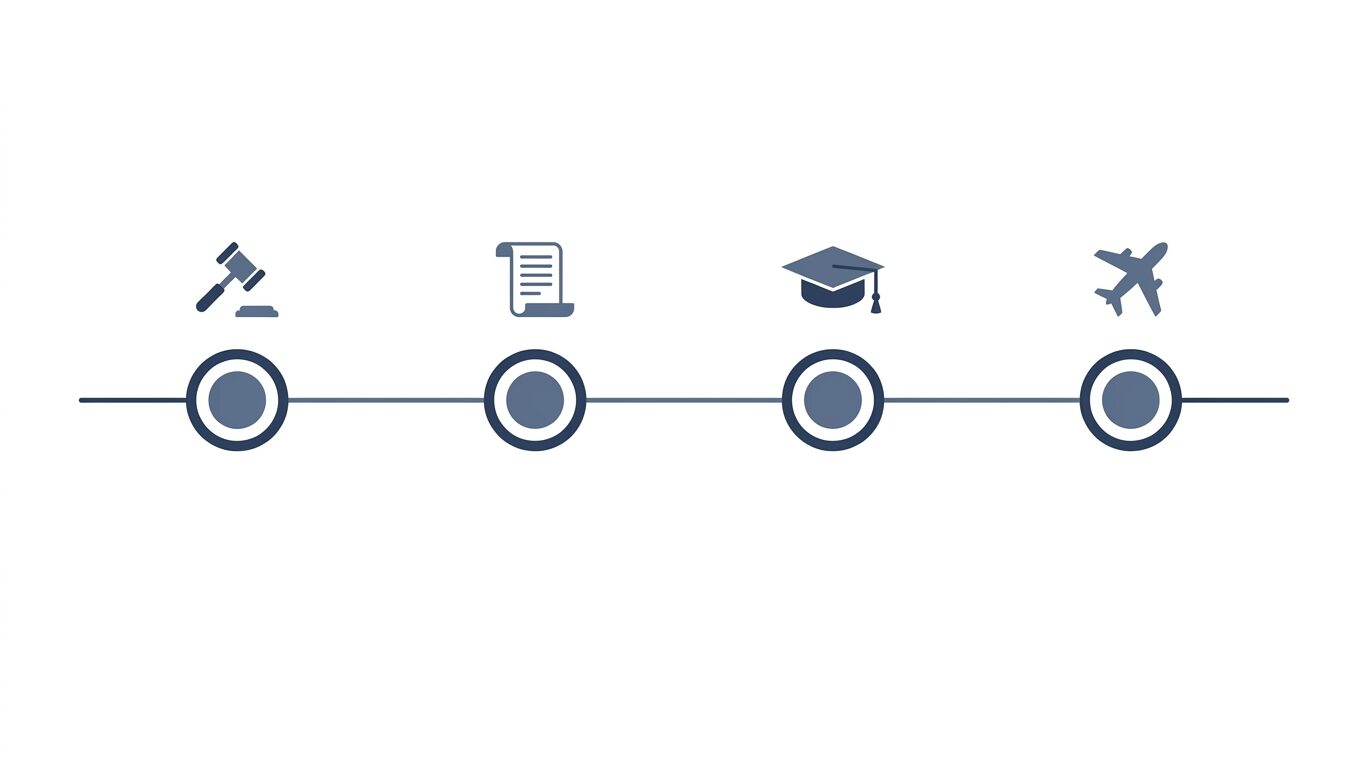
Student visa terminations began in early March 2025 and triggered lawsuits in New Hampshire, Oregon, Iowa, and Massachusetts within weeks. Courts issued emergency orders protecting students in nearly every case, and by early 2026, one case had settled, one had ended, and Harvard’s fight with DHS was still headed toward trial.
| Date | Event | Case |
| March 1, 2025 | DHS begins terminating student SEVIS records nationwide | National |
| April 11–18, 2025 | 112 students affected across NH/ME/RI/PR; Pasula class action filed | Pasula v. DHS |
| April 16–17, 2025 | DHS sends records request to Harvard; 1,400+ students affected nationally | Harvard / National |
| April 17–22, 2025 | Oregon State student sues; ACLU of Oregon files two suits | Oregon |
| April 22, 2025 | Federal judge orders 14-day TRO restoring two Oregon students’ status | Oregon |
| April 25, 2025 | DOJ reverses course, drops removal efforts for terminated students nationwide | National |
| April 22, 2025 | Four University of Iowa students sue DHS | University of Iowa |
| April 29, 2025 | Dartmouth student Xiaotian Liu granted preliminary injunction | Pasula / Dartmouth |
| May 15, 2025 | Judge orders DHS to restore Iowa students’ SEVIS status | University of Iowa |
| May 22–23, 2025 | DHS revokes Harvard’s SEVP certification; Harvard sues the next day | Harvard v. DHS |
| June 20, 2025 | Preliminary injunction granted protecting Harvard’s SEVP certification | Harvard v. DHS |
| July 1, 2025 | DHS appeals Harvard injunction to the First Circuit | Harvard v. DHS |
| August 2025 | Pasula case settles; DHS restores status for the full class | Pasula v. DHS |
| December 8, 2025 | University of Iowa case settled, dismissed with prejudice | University of Iowa |
| January 12, 2026 | Harvard files response brief; First Circuit proceedings continue | Harvard v. DHS |
| January 2026 | DHS raises CBP Home stipend to a standing $2,600 | CBP Home (separate program) |
Harvard v. DHS — The Biggest Case Explained
Is Harvard being sued by DHS, or is Harvard suing DHS?
Harvard is the plaintiff. Harvard sued DHS in May 2025 after the agency revoked the university’s SEVP certification — the approval a school needs to enroll any international student at all.
On May 22, 2025, DHS Secretary Kristi Noem told Harvard it had lost the “privilege” of hosting international students, citing what the administration called an insufficient response to a records request about student conduct. Harvard sued the next day in the District of Massachusetts, arguing the move violated the First Amendment, the Administrative Procedure Act, and basic due process.
What the courts have ruled so far
A federal judge issued a temporary restraining order within one day of the lawsuit being filed. By June 20, 2025, that became a full preliminary injunction, meaning Harvard could keep enrolling international students while the case played out. The government appealed to the First Circuit Court of Appeals — twice — and lost both times, keeping the injunction in place through the 2026 proceedings.
As of the most recent filings in January 2026, the case is still moving toward trial. If Harvard ultimately loses, the consequences would be severe and fast-moving for its students. If Harvard wins, it will likely set the legal template every other university in this fight is watching closely.
Harvard’s international student numbers
Harvard is the plaintiff. Harvard sued DHS in May 2025 after the agency revoked the university’s SEVP certification — the approval a school needs to enroll any international student at all.
| Metric | Figure |
| Total international students (fall 2025) | 6,749 |
| Share of total enrollment | 28% |
| Countries represented | 140+ |
| Top origin countries | China, Canada, India, South Korea, UK |
| International share, incoming Class of 2029 | ~15% |
Undergraduates make up a smaller slice of that number — about 15% of the incoming Class of 2029 — while graduate and professional programs, especially in business, law, and the sciences, often run 30–40% international.
Harvard Hillel and campus context
Some of the coverage around this case has touched on campus organizations, including Harvard Hillel, a long-standing Jewish student life organization on campus, since DHS’s initial records request referenced concerns about campus incidents. Harvard has stated the underlying dispute is about due process and its authority to run its own admissions process, not about any single campus group.
What happens if DHS eventually wins
Picture a fourth-year PhD candidate from South Korea, deep into her dissertation research. If Harvard permanently lost its SEVP certification, she’d likely face a narrow window to transfer to another SEVP-certified school to keep her legal status — a genuinely disruptive outcome for anyone years into a specialized program. That’s the real stake behind the legal headlines.
See also: More lawsuit and legal-update trackers on Blind Frog Ranch Lawsuit Update, TruLife Distribution Lawsuit, and Cash App Spam Text Lawsuit Settlement.
University of Iowa Students Sue Homeland Security — What Happened
Four University of Iowa students sued DHS in April 2025 after their SEVIS records were terminated over minor, sometimes dismissed, criminal records. A judge ordered DHS to restore their status in May 2025, and the case ended in a settlement in December 2025.
The plaintiffs were two Chinese undergraduates, a fourth-year doctoral student from India, and a master of public health graduate from India. According to their attorney, their criminal histories were limited to misdemeanor-level offenses, including drunk driving charges that had, in some cases, already been dismissed.
The “Student Criminal Alien Initiative” — how it worked
In sworn testimony, a DHS official explained the agency ran student names through the National Crime Information Center database to flag any past law-enforcement contact, however minor. Of roughly 1.3 million student visa holders screened, about 6,400 names — less than half of one percent — were passed to the State Department. The State Department then revoked visas for around 3,000 of those students, and DHS terminated their SEVIS records.
From the bench: During a related D.C. hearing, U.S. District Judge Ana C. Reyes pressed a DHS official on why 10 to 20 federal employees spent weeks combing through 1.3 million records for minor infractions like a dismissed traffic ticket, calling out what she described as the government’s “utter lack of concern for human individuals” who had contributed to their communities and paid their tuition.
How the Iowa case ended
A federal judge issued a preliminary injunction on May 15, 2025, ordering DHS to restore the students’ active status and backdate the record. DHS spent much of the summer arguing the case was moot because it had already reversed course — a judge rejected that argument in July 2025 and again pushed back on a motion to dismiss in August. The two sides ultimately settled, and the case was dismissed with prejudice on December 8, 2025, closing the matter for good.
Oregon International Student Visa Lawsuits
Students at the University of Oregon, Oregon State University, and Portland State University all had visas revoked in April 2025 without explanation. Federal courts ordered their status restored within weeks, and DHS reinstated most Oregon students’ status by late April 2025.
Oregon State v. Trump — Aaron Ortega Gonzalez’s case
Aaron Ortega Gonzalez, a doctoral student researching wildfire impacts on ranchland, learned his status had been terminated with no explanation. The ACLU of Oregon, along with Innovation Law Lab, filed suit on his behalf and for a University of Oregon graduate student identified in court papers only as Jane Doe.
What made the Oregon rulings different
U.S. District Judge Michael McShane didn’t just restore the students’ status — he ordered immigration authorities to give 15 days’ advance notice before changing a covered student’s visa status again. During the hearing, McShane bluntly asked government attorneys what regulation ICE was even relying on to justify the terminations in the first place. Within weeks, DHS had voluntarily reinstated status for students across all three major Oregon universities.
New Hampshire and the Pasula Class Action
Pasula v. DHS was a federal class action filed by ACLU affiliates in New Hampshire, Maine, Rhode Island, and Puerto Rico, on behalf of more than 100 students. The case settled in August 2025 after DHS agreed to restore every affected student’s F-1 status.
Filed April 18, 2025 in the District of New Hampshire, the case was brought jointly by the ACLU of New Hampshire, ACLU of Rhode Island, ACLU of Puerto Rico, and the law firm Shaheen & Gordon. ACLU-NH Legal Director Gilles Bissonnette said at the time that mounting legal pressure nationwide had “a profound impact” on DHS’s decision to begin reactivating student records — while noting that DHS never made clear what criteria it was using to decide who got reinstated.
The Dartmouth student case (Xiaotian Liu)
Inside the same wave of filings, a Dartmouth College doctoral student named Xiaotian Liu, a Chinese national studying computer science, learned by email on April 4, 2025 that his status had been terminated. A federal judge in Concord granted a preliminary injunction restoring his status on April 29, and on May 12 denied the government’s request to reconsider. Shaheen & Gordon’s immigration law chair, Ronald Abramson, called the ruling “an important moment for our client and for the Rule of Law,” adding that the court had seen through what he described as the government’s unfounded effort to interrupt the student’s academic progress.
287(g) and the wider enforcement climate
These lawsuits didn’t happen in a vacuum. Around the same time, two New Hampshire counties — Belknap and Grafton — joined ICE’s 287(g) program, which trains local deputies to carry out certain federal immigration duties. Attorneys representing immigrants in the state say the broader enforcement climate, including arrests near courthouses, has made people more anxious about interacting with the legal system at all, even when they’re not personally involved in a student-status dispute.
Which States and Schools Have Been Affected?
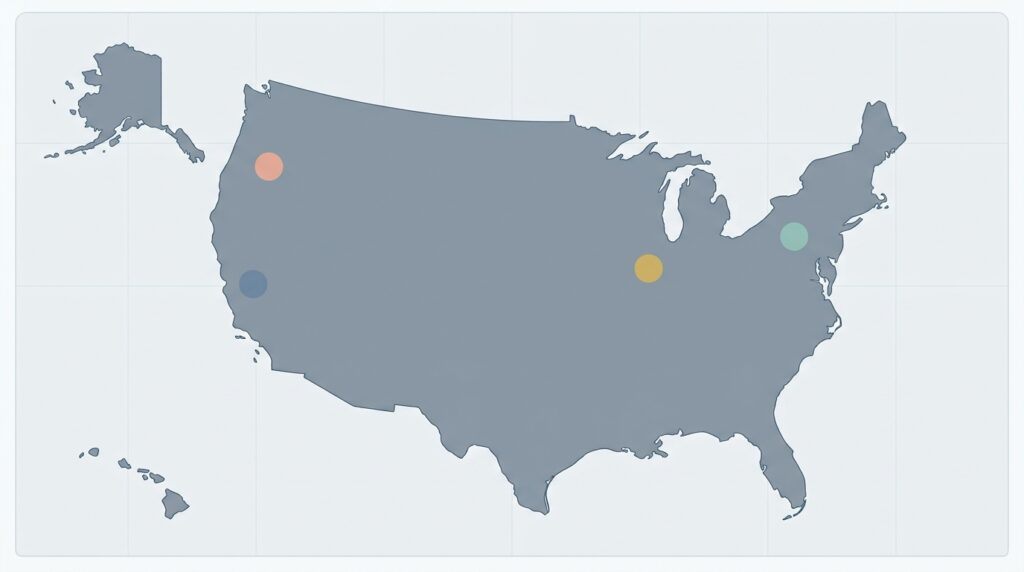
No single competitor page tracks all of these cases side by side — here’s the full national picture as of early 2026.
| State | School(s) | Case | Status (2026) |
| New Hampshire / Maine / RI / Puerto Rico | Multiple (100+ students) | Pasula v. DHS | Settled, Aug. 2025 |
| Massachusetts | Harvard University | Harvard v. DHS | Active; heading to trial |
| Iowa | University of Iowa | UI students v. DHS | Settled, Dec. 2025 |
| Oregon | U. of Oregon, Oregon State, Portland State | Multiple filings | Status reinstated, 2025 |
Beyond these four flagship cases, national reporting has also referenced universities in states including Arkansas, where some students had visas reinstated as part of the broader DHS reversal in spring 2025 — a sign of how widespread the initial wave of terminations really was.
Why Do Student Visas Get Revoked?
DHS can lawfully terminate student status only for specific reasons — a violent-crime conviction, unauthorized employment, falling below a full course load, or lying on an immigration form. In 2025 and 2026, many terminations happened without any of these grounds, which is exactly what the lawsuits challenge.
Under the regulations DHS itself points to, only a handful of things are supposed to end a student’s status:
- A conviction for a violent crime carrying a potential sentence of more than one year
- Working without proper authorization
- Falling below a full course of study without approval
- Misrepresenting information on a visa or status application
- By itself, a revoked visa — DHS’s own guidance says visa revocation alone is not enough to end a student’s SEVIS record
Here’s where it went wrong for many students in 2025. A dismissed DUI charge, a traffic stop that never led to a conviction, even an old citation that had already been resolved — none of these fit the government’s own criteria, yet they still triggered SEVIS terminations for hundreds of students, including several of the University of Iowa plaintiffs.
What Is CBP Home, and How Is It Different From These Lawsuits?
CBP Home is a separate DHS program that lets people self-deport voluntarily through a mobile app, in exchange for a stipend — currently up to $2,600 — and a paid flight home. It has nothing to do with the SEVP or SEVIS student-status lawsuits; it targets undocumented immigrants generally, not enrolled international students.
It’s easy to see why the two get confused online — both involve DHS, both involve leaving the country, and both show up in the same news cycle. But they’re legally unrelated programs aimed at different groups of people.
How the self-deportation process works
- Download the CBP Home app
- Submit personal information and a photo
- Pass DHS vetting
- Receive a booked flight, typically within about 21 days of approval
- Confirm departure through the app
- Receive the stipend after your return is confirmed
The stipend has changed several times. DHS launched the program in May 2025 offering $1,000. By the 2025 holiday season it had risen to $3,000 as a limited-time incentive, and by January 2026 DHS set a standing $2,600 exit bonus, framing it as a way to cut the roughly $18,245 average cost of a forced deportation down to about $5,100 per person.
Should an international student with a pending visa case use CBP Home?
Generally, no — not without talking to an immigration attorney first. Self-deporting through the app can forfeit a pending court case, trigger a multi-year reentry bar, or undo months of legal work, even though the process is marketed as simple and low-risk.
What if scenario: A student sees a CBP Home ad after her misdemeanor charge — already dismissed months earlier — still shows up in a background check. She panics and considers self-deporting for the stipend. In reality, a dismissed charge isn’t a lawful reason to terminate her status at all. Using CBP Home here could give up a strong legal claim she didn’t need to give up, for a one-time payment that doesn’t come close to covering what she’s already invested in her degree.
What Should You Do If Your Student Visa Status Is Terminated?
Don’t leave the country before checking your actual SEVIS status. Contact your school’s international office immediately, save every notice you’ve received, and talk to a licensed immigration attorney before making any irreversible decision.
- Don’t leave the country immediately — confirm what actually happened first
- Check your status through your school’s international office or the SEVP Portal
- Save every email, letter, and notice you’ve received, with dates
- Contact your school’s Designated School Official (DSO) the same day
- Consult a licensed immigration attorney before making any decisions
- Ask whether an existing class action already covers your situation
This last step matters more than people realize. Several of the 2025 cases were certified as class actions specifically so that students who never filed their own lawsuit could still benefit from the court’s ruling. Before assuming you’re on your own, it’s worth finding out whether you already have legal protection you don’t know about.
Frequently Asked Questions
Is the Harvard student visa case still active in 2026?
Yes. As of early 2026, Harvard v. DHS is still moving toward trial. The First Circuit Court of Appeals has twice upheld the injunction protecting Harvard’s ability to enroll international students while the case continues.
Did the University of Iowa students win their lawsuit?
Effectively, yes. A judge ordered their status restored in May 2025, and DHS ultimately agreed to a settlement. The case was dismissed with prejudice on December 8, 2025, closing the matter permanently.
What is SEVIS and why does it matter for my visa?
SEVIS, the Student and Exchange Visitor Information System, is the federal database that tracks whether your student status is active or terminated. It’s separate from your visa stamp, but schools and employers rely on it to confirm you’re in the country lawfully.
Can my F-1 visa be revoked for protesting?
Some 2025 terminations were linked to student activism, though DHS has publicly cited other reasons in most cases, like alleged criminal history. If you believe your status was affected by protected speech, that’s exactly the kind of due-process question an immigration attorney should review right away.
What percentage of Harvard students are international?
About 28% of Harvard’s total enrollment in fall 2025 — roughly 6,749 students from more than 140 countries — the highest share the university has reported since 2002.
Is CBP Home the same as being deported?
No. CBP Home is a voluntary self-deportation program with a stipend and flight assistance. A formal deportation, or removal, is an enforcement action ordered through immigration court and carries far more serious long-term consequences.
What do I do if I think my student visa was wrongfully revoked?
Check your actual SEVIS status with your school’s international office before doing anything else, keep records of every notice, and speak with a licensed immigration attorney about whether an existing lawsuit or class action already covers your situation.
Do I need a lawyer to fix a SEVIS termination?
You’re not legally required to hire one, but given how fast these cases move and how serious the consequences are, most students in this situation work with an immigration attorney rather than navigate it alone.
Conclusion
Across every major case — Harvard, Iowa, Oregon, and the Pasula class action in New Hampshire — one pattern holds up. When students challenged DHS in court, judges consistently granted emergency protection while the underlying claims were sorted out. Iowa’s case ended in a full settlement. The Oregon and New Hampshire cases resolved with reinstated status. Harvard’s fight is still headed for trial in 2026, with the government having lost every appeal so far.
If you’re an international student worried about your own status, don’t wait and don’t guess. Confirm your actual SEVIS record, keep a paper trail of everything your school and DHS send you, and talk to a licensed immigration attorney before you make any decision that can’t be undone — including anything involving CBP Home.