


Introduction
Texas tint laws require front side windows and windshields to let in at least 25% of light. This rule, known as VLT (Visible Light Transmission), applies to every vehicle registered in the state. Getting it wrong can mean a fine or a failed inspection.
- Introduction
- Texas Window Tint Law: Quick Reference Table
- What Is VLT and Why It Matters
- Windshield Tint Rules in Texas
- Front Side Window Tint Rules
- Rear Side and Rear Window Tint Rules
- Is 15% Tint Legal in Texas?
- Reflectivity Rules
- Prohibited Tint Colors
- Medical Exemptions for Darker Tint
- Penalties and Fines for Illegal Tint
- Certification and Compliance Sticker Requirements
- Vehicle Exemptions (Police, Taxis, and More)
- Tint Laws for Trucks, SUVs, and Commercial Vehicles
- Does Tesla or EV Tint Follow the Same Rules?
- Tail Light and Headlight Tint Laws
- How to Check If Your Tint Is Legal
- Recent Changes to Texas Tint Law
- FAQ
- 1. What is the legal tint limit in Texas?
- 2. Is 15% tint legal in Texas?
- 3. Can you tint your entire windshield in Texas?
- 4. How much is a tint ticket in Texas?
- 5. Do I need a medical exemption certificate for dark tint?
- 6. Are police cars exempt from Texas tint laws?
- 7. Do tint laws differ for trucks and SUVs in Texas?
- 8. What colors of tint are illegal in Texas?
- 9. What is the Tint Law in Texas? (2026 Updated)
- Conclusion
This guide breaks down the exact percentages, colors, and rules you need to follow. We also cover fines, medical exemptions, and common questions drivers ask before tinting their windows.
This article is for general information only. It is not a substitute for advice from a qualified attorney licensed in Texas. Tint rules can be interpreted differently by local law enforcement, so check with your county DMV if you have questions about your specific vehicle.
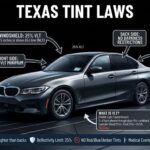
Texas Window Tint Law: Quick Reference Table
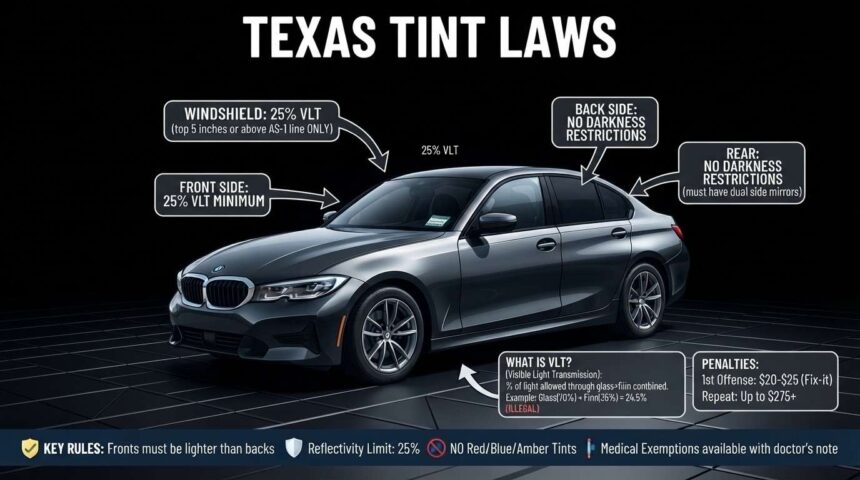
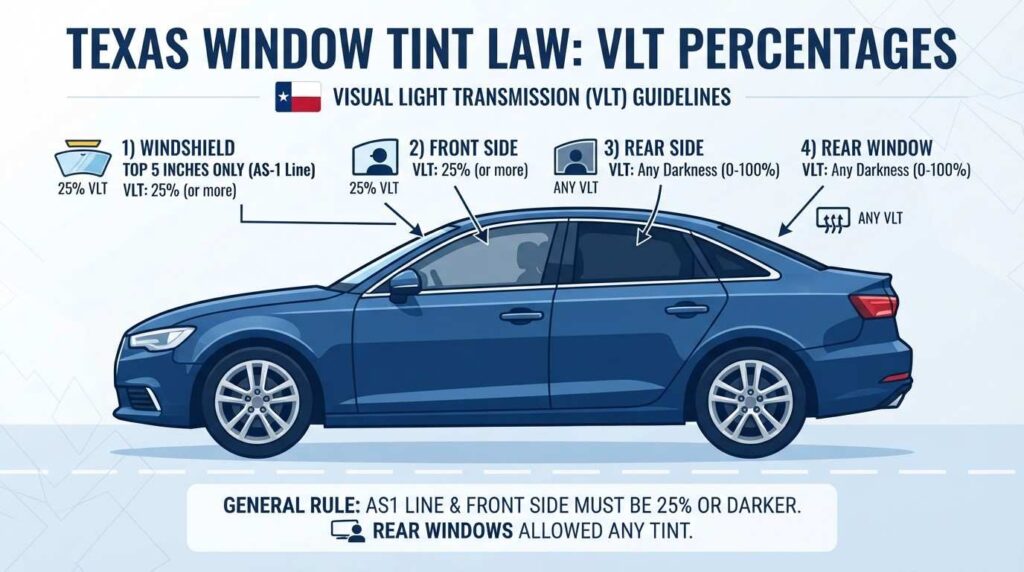
Here is the full breakdown of Texas window tint law by window type.
| Window | VLT Minimum | Reflectivity Limit |
|---|---|---|
| Windshield | 25% (top 5 inches or above AS-1 line only) | 25% |
| Front side windows | 25% | 25% |
| Back side windows | Any darkness | 25% |
| Rear window | Any darkness (with dual side mirrors) | 25% |
Front windows must stay lighter than the back. This keeps drivers visible to police officers and other drivers during a stop.
What Is VLT and Why It Matters
VLT stands for Visible Light Transmission. It measures how much light passes through your window and film combined.
A higher VLT number means a lighter tint. A tint rated at 5% VLT looks almost black. A tint rated at 50% VLT still looks fairly clear.
Here is the part many drivers miss. Factory glass already blocks some light before you add film.
Example: Say your factory glass measures 70% VLT. You add a film rated at 35% VLT. The combined VLT is roughly 70% multiplied by 35%, which equals about 24.5%. That fails the 25% legal minimum, even though the film itself was labeled “35%.”
This is why a shop should always measure your factory glass before installing film. Guessing based on the film’s label alone can lead to a failed inspection.
Windshield Tint Rules in Texas
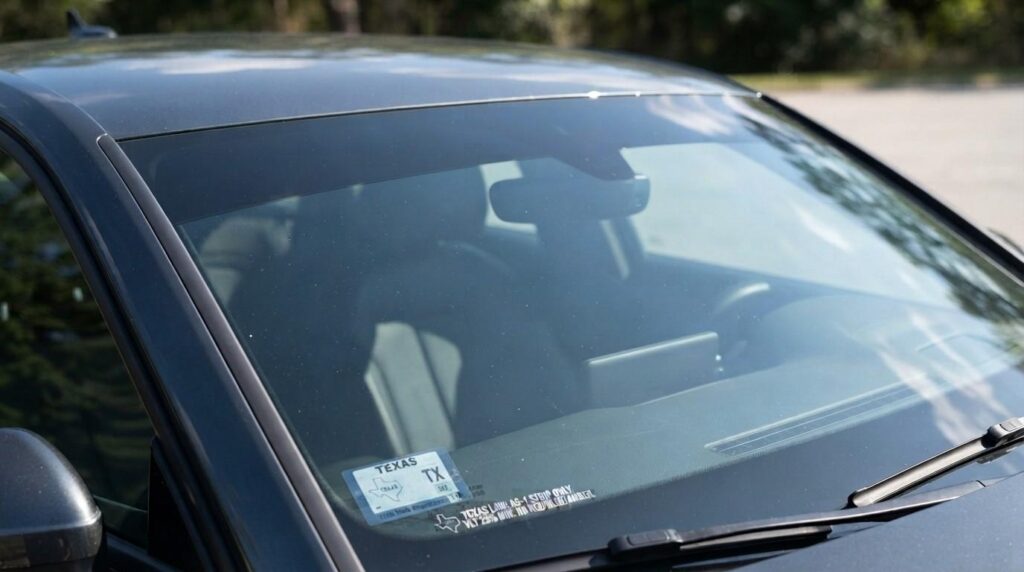
You cannot tint the whole windshield in Texas. The law only allows a strip at the top.
- The strip must sit above the AS-1 line, a marked line printed on most windshields.
- If there is no AS-1 line, the strip can extend down 5 inches from the top.
- This strip must allow at least 25% VLT.
- It cannot be red, blue, or amber in color.
Is It Illegal to Tint Your Windshield in Texas?
Tinting the entire windshield is illegal in Texas unless you have a medical exemption. Without one, only the top strip described above is allowed. Officers can issue a citation if tint extends below the AS-1 line or blocks more than 75% of light.
Front Side Window Tint Rules
Front side windows are the windows next to the driver and front passenger. These are the most strictly enforced windows in Texas.
- Must allow more than 25% of light through.
- Cannot be more than 25% reflective.
Police rely on these windows to see inside your car during a traffic stop. That is one reason this rule gets enforced closely.
Rear Side and Rear Window Tint Rules
Texas gives drivers more freedom in the back of the vehicle.
- Back side windows (behind the driver and passenger) can be tinted to any darkness.
- The rear window can also be any darkness, but only if the vehicle has dual outside mirrors.
- Without dual mirrors, the rear window must meet the same 25% VLT rule as the front.
Example: A driver installs 5% “limo tint” on the back windows of a sedan. This is legal, as long as the vehicle has two working side mirrors.
Is 15% Tint Legal in Texas?
15% tint is not legal on windshields or front side windows in Texas. The legal minimum for these windows is 25% VLT, so anything darker, including 15%, will fail inspection and can result in a fine.
15% tint is legal on back side windows and the rear window, since Texas places no darkness limit on those windows.
| Tint Darkness | Front Windows | Back/Rear Windows |
|---|---|---|
| 35% VLT | Legal | Legal |
| 25% VLT | Legal (minimum) | Legal |
| 15% VLT | Illegal | Legal |
| 5% VLT | Illegal | Legal (with dual mirrors) |
Reflectivity Rules
Reflectivity measures how much light bounces off your tint instead of passing through it. Highly reflective tint can look like a mirror and cause glare for other drivers.
Texas limits reflectivity to 25% or less on both front and back windows. This applies even if your VLT percentage is fully legal. A tint can pass the darkness test and still fail because it is too shiny.
Prohibited Tint Colors
Texas bans certain tint colors on any window, regardless of darkness or reflectivity.
- Red
- Blue
- Amber
These colors can be confused with emergency vehicle lights or road signals, which is why the state prohibits them outright. Stick to neutral shades like black, gray, or charcoal to stay compliant.
Medical Exemptions for Darker Tint
Drivers with certain medical conditions can qualify for darker front window tint than the law normally allows.
Qualifying conditions often include:
- Lupus
- Photosensitivity disorders
- Skin cancer or cancer treatment side effects
- Albinism
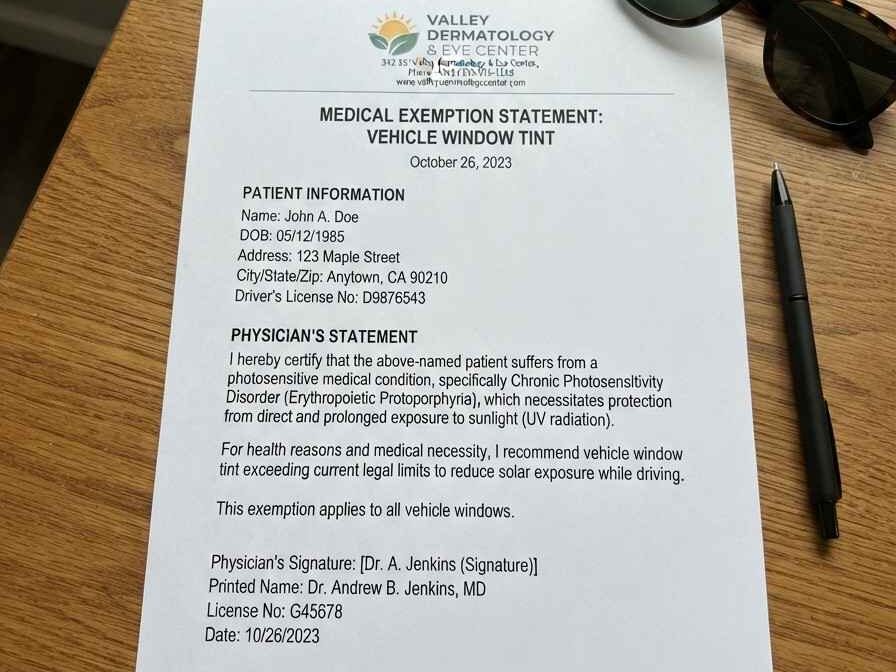
To apply, you need a signed statement from a licensed physician or optometrist. This statement must name the condition and explain why darker tint is medically necessary.
Important: As of January 1, 2019, the Texas Department of Public Safety no longer issues separate exemption certificates. The doctor’s signed statement itself is your proof. Keep it in your vehicle at all times and present it during a traffic stop or inspection.
Penalties and Fines for Illegal Tint
Fines for illegal tint in Texas increase with repeat violations.
| Offense | Typical Fine |
|---|---|
| First offense (fix-it ticket) | $20 to $25 |
| General VLT or reflectivity violation | $100 to $200 |
| Repeat offense | $250 to $275 |
| Extreme or repeated non-compliance | Up to $1,000 (rare) |
Example: A driver gets a first-time “fix-it” ticket for tint that measures 15% on the front windows. The fine is small, and the ticket is dismissed once the driver proves the tint was removed or replaced. If the same driver is stopped again with illegal tint, the fine can climb well past $200.
Beyond fines, illegal tint can also cause your vehicle to fail its annual safety inspection. You cannot renew your registration until the tint is corrected.
Certification and Compliance Sticker Requirements
Professional tint installers in Texas must place a compliance sticker between the film and the glass. This sticker usually sits on the driver’s side window, in the rearmost bottom corner.
The sticker should read something like “Complies with TRC Chapter 547.” It shows officers and inspectors that your tint meets legal standards without needing to test it every time.
Film manufacturers must also certify that their product meets Texas standards. Ask your installer if the film they use is certified before you agree to any work.
Vehicle Exemptions (Police, Taxis, and More)
A few vehicle types are generally exempt from standard tint limits.
- Law enforcement vehicles are typically exempt from standard tint restrictions.
- Vehicles transporting passengers for hire, such as certain taxis and limousines, may also fall outside standard tint limits.
Are Police Exempt From Window Tint Laws in Texas?
Yes. Vehicles owned or used by law enforcement agencies are generally exempt from the standard window tint regulations that apply to everyday drivers.
Tint Laws for Trucks, SUVs, and Commercial Vehicles
Unlike many states, Texas does not set separate tint rules for cars versus trucks, SUVs, or vans. The same VLT and reflectivity limits apply across all passenger and multi-purpose vehicles.
This means a pickup truck follows the same 25% front window rule as a sedan. Commercial vehicles used for business purposes generally follow these same standard rules as well, unless a specific exemption applies to that vehicle’s use.
Does Tesla or EV Tint Follow the Same Rules?
Yes. Electric vehicles, including Tesla models, must follow the same Texas tint laws as gas-powered cars. There is no separate VLT standard for EVs.
Some Tesla models come with a factory-tinted windshield or glass roof. If you add aftermarket film on top of factory tint, remember that the combined VLT of the glass and film must still meet the 25% minimum on the windshield and front windows.
Tail Light and Headlight Tint Laws
Window tint and light tint are governed by different rules. Tinting your tail lights or headlights is a separate issue from window film.
Texas requires tail lights to remain clearly visible in red and headlights to project white or amber light. Covering these lights with dark film can reduce visibility to other drivers and may result in a separate equipment violation, distinct from window tint citations.
How to Check If Your Tint Is Legal
You do not need to guess whether your tint is compliant. Here are two simple ways to check.
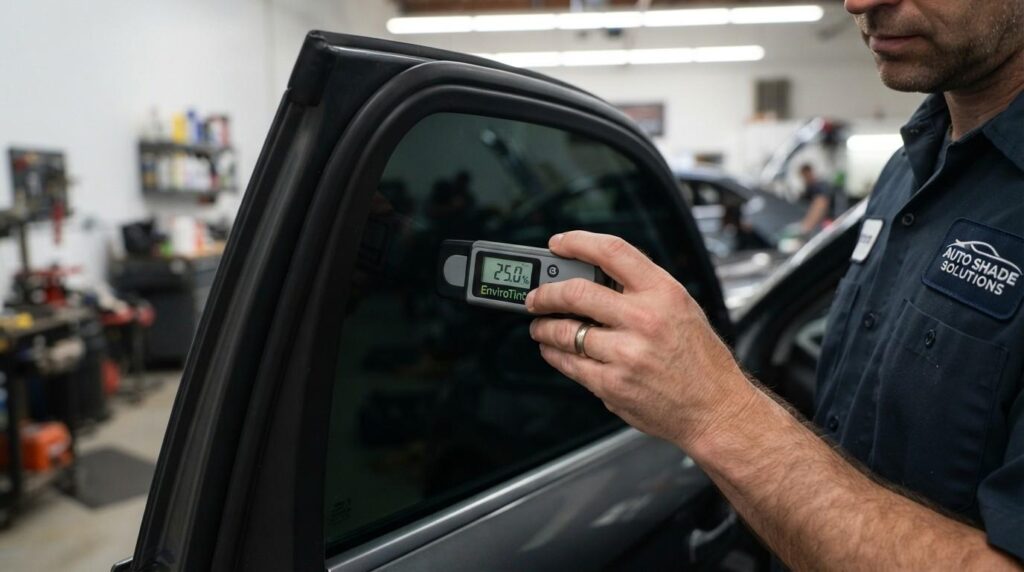
- Use a tint meter. These handheld devices measure VLT on the spot. Many professional tint shops offer free or low-cost checks.
- Visit a certified installer. A shop familiar with Texas law can test your existing tint and explain what, if anything, needs to change.
Checking before your annual inspection can save you a trip back to the shop and an extra inspection fee.
Recent Changes to Texas Tint Law
The core VLT and reflectivity limits in Texas have stayed consistent since the law was enacted in 2009. The most notable recent change was in 2019, when the Texas DPS stopped issuing separate medical exemption certificates, shifting to a doctor’s signed statement as the only required proof.
Always confirm current rules with the Texas Department of Public Safety, since local enforcement practices can shift even when the underlying statute does not.
FAQ
1. What is the legal tint limit in Texas?
Front side windows and the windshield strip must allow at least 25% VLT. Back side windows and the rear window can be any darkness.
2. Is 15% tint legal in Texas?
No, not on front windows or the windshield. It is legal on back side and rear windows.
3. Can you tint your entire windshield in Texas?
No. Only the top 5 inches or the area above the AS-1 line can be tinted, unless you have a medical exemption.
4. How much is a tint ticket in Texas?
First offenses often cost $20 to $25. Fines can rise to $100 to $275 or more for repeat violations.
5. Do I need a medical exemption certificate for dark tint?
No. Since 2019, Texas no longer issues separate certificates. A signed statement from a licensed physician or optometrist is sufficient proof.
6. Are police cars exempt from Texas tint laws?
Yes, law enforcement vehicles are generally exempt from standard tint restrictions.
7. Do tint laws differ for trucks and SUVs in Texas?
No. Texas applies the same VLT and reflectivity limits to cars, trucks, SUVs, and vans.
8. What colors of tint are illegal in Texas?
Red, blue, and amber tints are prohibited on any window in Texas.
9. What is the Tint Law in Texas? (2026 Updated)
Texas window tint laws, governed by Texas Transportation Code § 547.613, set strict limits on vehicle window tinting to ensure driver visibility and safety.
Key Texas Car Window Tint Regulations:
- Front side windows: Minimum 25% VLT (light transmission) required — darker tint is illegal.
- Rear side & rear windows: Any darkness allowed (limo tint OK) if dual side mirrors are present.
- Windshield: Tint strip only allowed above the AS-1 line or top 5 inches, with at least 25% VLT and under 25% reflectivity.
- Prohibited: Red, amber, or blue tints and excessive reflective/mirrored films.
Medical exemptions are available with a doctor’s note. Non-compliant tint will fail your Texas vehicle safety inspection and can result in tickets.
For official rules, visit the Texas DPS Window Tinting Standards. Always use certified installers for legal Texas window tint compliance.
Conclusion
Texas tint laws come down to a few core numbers. Front windows and the windshield strip need at least 25% VLT, back windows can be any darkness, and reflectivity cannot exceed 25% on any window. Red, blue, and amber tints are off-limits everywhere.
If you have a medical condition that requires darker front tint, a signed doctor’s statement can help you qualify for an exemption. Fines for illegal tint start small but grow quickly with repeat violations, so it pays to check your VLT before your next inspection.
Tint laws differ by state, so if you are comparing rules elsewhere, see our guides on California tint law and North Carolina window tint law changes. This article is general information only and not a substitute for advice from a qualified attorney licensed in your jurisdiction.