



State voter registration data lawsuits are federal cases where the U.S. Department of Justice (DOJ) asks courts to force states to hand over full voter lists. In all, the DOJ has sued 30 states and Washington, D.C. Courts have dismissed 26 of those 31 lawsuits, one state settled, and no court has ruled for the DOJ.
- State Voter Registration Data Lawsuits: The Quick Answer
- What Data Does the DOJ Want?
- Timeline of the Lawsuits
- The Laws Behind the Cases
- Why Courts Keep Ruling Against the DOJ
- Where Every Case Stands in October 2026
- Which Appeals Courts Hold Which Cases
- The October 9 Ruling That Changes the Picture
- SAVE, DHS, and the Supreme Court
- Which States Shared Their Data?
- Privacy and Security Concerns
- What This Means for Voters
- Myths vs. Facts
- When to Talk to a Lawyer
- FAQ
- 1. What are state voter registration data lawsuits?
- 2. How many states has the DOJ sued?
- 3. Has the DOJ won any of these cases?
- 4. Which states gave the DOJ their full voter lists?
- 5. Is my Social Security number in a federal database now?
- 6. Could the Supreme Court decide these cases?
- 7. Does the October 9 ruling stop states from checking their own voter rolls?
- 8. Can I join one of these lawsuits?
- Conclusion
On October 9, 2026, a federal judge also struck down the DOJ’s nationwide voter list program. That ruling may matter more than any single state case. It reaches even the files that states handed over willingly.
The lists can hold birth dates, driver’s license numbers, and partial Social Security numbers for tens of millions of people. Below, you will see what happened, why the DOJ keeps losing, and what could come next.
State Voter Registration Data Lawsuits: The Quick Answer
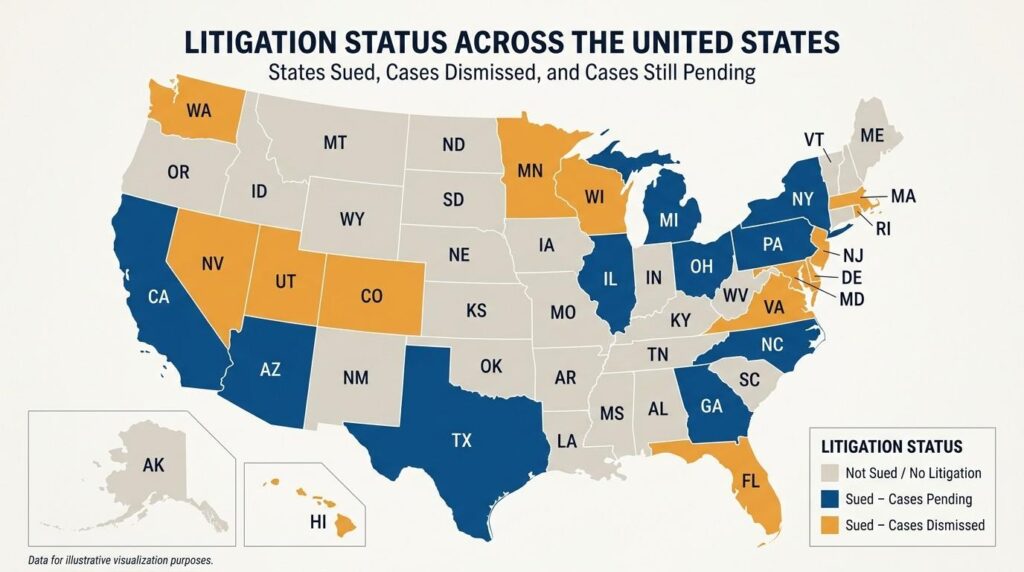
The DOJ wants complete, unredacted voter registration lists from the states. Many states said no and offered the public version instead. The DOJ then sued 30 of them, plus D.C.
Here is the scoreboard as of October 9, 2026. Each place was sued once, so the 31 lawsuits match the 30 states and D.C. When the DOJ refiled one case in a new court, the trackers still count it as a single lawsuit.
| Measure | Count |
|---|---|
| Places sued | 30 states and D.C. (31 lawsuits) |
| Dismissed by district courts | 26 (25 states and D.C.) |
| Settled | 1 (Oklahoma) |
| Still pending | 4 (Delaware, Hawaii, Idaho, Utah) |
| Appeals decided | 1 (Sixth Circuit, Michigan) |
| Court rulings in favor of the DOJ | 0 |
These numbers match the Brennan Center for Justice tracker, which was updated on October 8, 2026. The CBS News and University of Wisconsin trackers report the same totals. Counts change often, so treat any number as a snapshot.
What Data Does the DOJ Want?
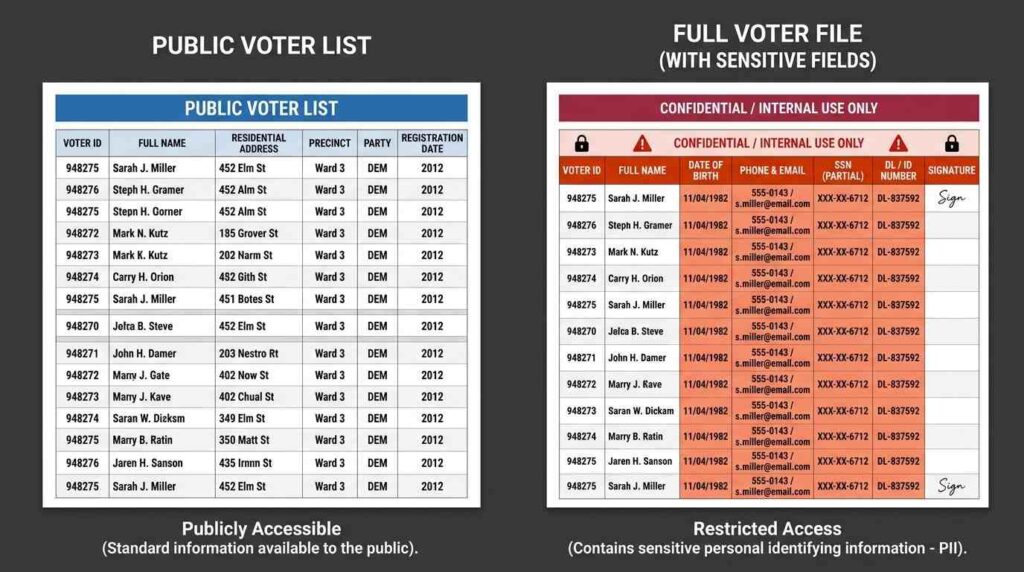
The DOJ began sending demand letters in mid 2025, and the Brennan Center reports that at least 48 states and D.C. received requests. Most states handed over a public version of their list or told the DOJ how to get one.
The dispute is about the private fields. Here is how the data breaks down:
| Data field | Usually public? | Requested by the DOJ? |
|---|---|---|
| Name and address | Depends on the state | Yes |
| Whether you voted in past elections | Often yes | Yes |
| Date of birth | Usually no | Yes |
| Driver’s license number | No | Yes |
| Last four digits of Social Security number | No | Yes |
The DOJ says it needs the full list to check whether states keep accurate rolls under federal law. States reply that they already remove voters who died or moved. They also point to state privacy laws and federal privacy laws.
Timeline of the Lawsuits
This timeline shows how the state voter registration data lawsuits built up over about a year.
| Date | What happened |
|---|---|
| May to August 2025 | The DOJ sends demand letters to nearly every state |
| September 2025 | First lawsuits filed, including Oregon, Maine, California, and Michigan |
| December 2, 2025 | The DOJ sues six more states: Delaware, Maryland, New Mexico, Rhode Island, Vermont, and Washington |
| January 15, 2026 | A California judge dismisses the first case |
| January 26, 2026 | An Oregon judge rules from the bench for the state |
| February 26, 2026 | The DOJ sues Utah, Oklahoma, Kentucky, West Virginia, and New Jersey |
| March 24, 2026 | Oklahoma settles and agrees to share its data |
| June 22, 2026 | A D.C. judge vacates the rebuilt SAVE database |
| June 24, 2026 | The Sixth Circuit affirms the Michigan dismissal |
| July 29, 2026 | New Jersey is dismissed a week after the state disclosed a registration error |
| September 25, 2026 | The Supreme Court stays the SAVE ruling |
| September 30, 2026 | A Georgia judge issues the 26th dismissal |
| October 9, 2026 | A D.C. judge vacates the DOJ’s nationwide voter list policy |
The December 2025 press release was issued under then Attorney General Pamela Bondi. Todd Blanche now holds the job.
The Laws Behind the Cases
Three federal laws appear in the complaints. Each one has limits that courts have focused on.
- Civil Rights Act of 1960, Title III. This law requires election officers to keep certain “records and papers” for 22 months. The Attorney General can demand them in writing, and the demand must state its basis and purpose. The Congressional Research Service explains the statute and the Sixth Circuit’s reading of it.
- National Voter Registration Act (NVRA). This law requires states to run list maintenance programs. It also opens some records to public inspection.
- Help America Vote Act (HAVA). This law requires each state to keep a computerized statewide voter list and to collect ID numbers for new registrants.
The DOJ says these laws let it audit state list maintenance. States say none of them gives the DOJ a right to private ID numbers. Judges have mostly agreed with the states.
Here is a pattern worth noticing. The first suits from fall 2025 usually added NVRA and HAVA claims. Most later suits rest on Title III alone, which suggests the DOJ sees that law as its best shot.
Why Courts Keep Ruling Against the DOJ
Different judges wrote different opinions in the state voter registration data lawsuits. Still, the same four ideas keep showing up.
1. A voter list is not a “record or paper” under Title III. In United States v. Benson, the Sixth Circuit said Michigan creates and maintains its own voter file. In plain terms, the file was not something that arrived at the Secretary of State from outside. The court also said the DOJ’s reading would put Title III on a collision course with the NVRA and HAVA, because those laws require states to keep updating their lists. The vote was 2 to 1, and you can read the full opinion on Justia.
2. The DOJ did not state a clear basis and purpose. Title III requires a written statement of why the DOJ wants the records. In Oregon, the judge questioned whether the DOJ’s letters met that rule. He also asked about a public letter from the Attorney General that tied voter rolls to other goals. Our guide to the Oregon voter data lawsuit dismissed explains that part in detail.
3. Federal law does not override state privacy law. In Georgia, Judge Victoria Calvert held that the Civil Rights Act does not preempt the state’s voter privacy law. She also noted that Georgia offered its public list. The judge said even a covered record could be satisfied by that public version.
4. The data would be centralized without a clear need. California Judge David Carter wrote that gathering this data in one federal place could chill voter registration. He called the demand unprecedented and illegal.
Judges from both parties reached these results. Reports on the Rhode Island and Michigan cases noted that Trump appointees ruled against the DOJ, and the New Hampshire judge was a George W. Bush appointee.
New Jersey shows how far the courts went. On July 21, the state disclosed that a Motor Vehicle Commission software error had created about 6,600 improper registrations, and fewer than 400 of those people voted.
The DOJ cited that error in its case. The judge still dismissed the suit on July 29 because a state’s computerized voter list falls outside Title III.
Where Every Case Stands in October 2026
Most state voter registration data lawsuits are now on appeal. The DOJ has appealed most dismissals. Only one has finished, and the DOJ lost it. The State Democracy Research Initiative tracker at the University of Wisconsin Law School logs each filing, and its latest update was October 7, 2026.
The table lists the 26 dismissals in date order. Appeal details can shift weekly.
| State | Dismissed | Appeal status (early October 2026) |
|---|---|---|
| California | Jan 15 | Ninth Circuit, argued May 19, waiting for a ruling |
| Oregon | Feb 5 | Ninth Circuit, argued May 19, waiting for a ruling |
| Michigan | Feb 10 | Sixth Circuit affirmed June 24, rehearing denied in August |
| Massachusetts | Apr 9 | First Circuit, briefing complete |
| Rhode Island | Apr 17 | First Circuit, briefing complete |
| Arizona | Apr 28 | Ninth Circuit, paused until California and Oregon are decided |
| Wisconsin | May 21 | Seventh Circuit, briefing complete |
| Maine | May 21 | First Circuit, briefing complete |
| Maryland | Jun 18 | Fourth Circuit, briefing underway |
| Pennsylvania | Jun 27 | Third Circuit, briefing underway |
| New Hampshire | Jun 29 | First Circuit, briefing underway |
| New York | Jul 10 | Second Circuit, briefing underway |
| West Virginia | Jul 13 | Fourth Circuit, DOJ brief due Oct 26 |
| Virginia | Jul 14 | Fourth Circuit, briefing underway |
| New Mexico | Jul 14 | Tenth Circuit, briefing nearly done |
| Connecticut | Jul 17 | Briefing underway |
| Kentucky | Jul 23 | Sixth Circuit, held in abeyance while the DOJ decides whether to seek review of the Michigan ruling |
| New Jersey | Jul 29 | Third Circuit, briefing underway |
| Illinois | Jul 31 | Seventh Circuit, briefing underway |
| Colorado | Aug 3 | Tenth Circuit, briefing underway |
| District of Columbia | Aug 6 | D.C. Circuit, notice of appeal filed |
| Nevada | Aug 14 | Ninth Circuit, paused |
| Minnesota | Aug 17 | Eighth Circuit, briefing complete |
| Vermont | Sep 17 | Appeal window open |
| Washington | Sep 22 | Appeal window open |
| Georgia | Sep 30 | Appeal window open |
Four district cases remain open. Delaware held oral argument on September 29. Hawaii and Idaho are paused until the Ninth Circuit rules, and Utah has finished its briefing.
For one example, see our guide to the Arizona voter data lawsuit dismissal shows what a paused appeal looks like in practice. Whatever the Ninth Circuit decides for California and Oregon will likely guide Arizona, Nevada, Hawaii, and Idaho.
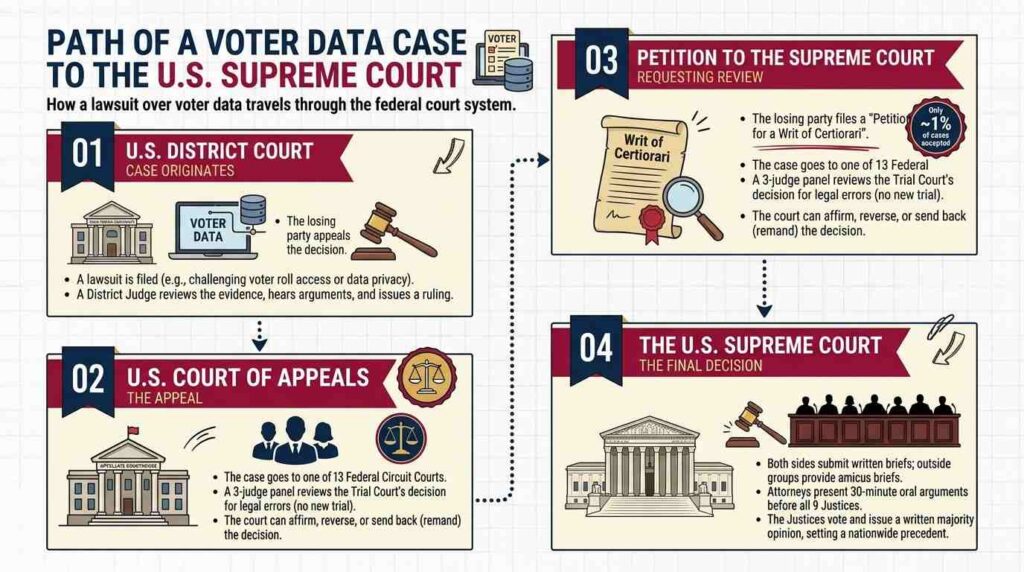
Will the Supreme Court step in? Attorney General Blanche has said a Supreme Court appeal is a possibility. Under normal rules, the DOJ’s deadline to seek review of the Michigan decision is November 12, 2026. A split between circuits would raise the odds of a hearing.
Which Appeals Courts Hold Which Cases
Most coverage lists cases by state. It is more useful to group them by appeals court, because one ruling can guide many cases. This view is our own sorting of public tracker data.
| Appeals court | Cases it holds | Why it matters |
|---|---|---|
| Ninth Circuit | California, Oregon, Arizona, Nevada, Hawaii, Idaho | One decision could shape six cases |
| First Circuit | Maine, Massachusetts, Rhode Island, New Hampshire | Four appeals, all in late briefing |
| Fourth Circuit | Maryland, Virginia, West Virginia | A ruling here could be the second appeals decision |
| Sixth Circuit | Michigan (decided), Kentucky (on hold) | Already ruled against the DOJ |
| Third Circuit | Pennsylvania, New Jersey | Includes the New Jersey registration error facts |
| Seventh Circuit | Wisconsin, Illinois | Wisconsin is further along |
| Tenth Circuit | New Mexico, Colorado, Utah (district court) | Utah is still before the trial judge |
Here is why this grouping matters. If the Ninth Circuit rules for the states, the DOJ would have lost in two circuits with a combined stack of paused cases behind them. If it rules for the DOJ, the split between circuits would make a Supreme Court hearing far more likely.
That is why the Ninth Circuit decision, argued on May 19, is the one to watch.
The October 9 Ruling That Changes the Picture
The October 9 decision came in a case called Common Cause against the DOJ, filed in April 2026. Judge Sparkle Sooknanan vacated what the DOJ called its Voter List Maintenance Policy, and Democracy Docket reported the ruling the same day.
This case is different from the state suits. It asked whether the DOJ’s whole nationwide program was legal, not whether one state must hand over one list.
Here is what the ruling covers:
- The judge found that the Civil Rights Act, the NVRA, and HAVA did not authorize the program.
- The program had states agree to remove flagged voters within 45 days after the DOJ checked their files.
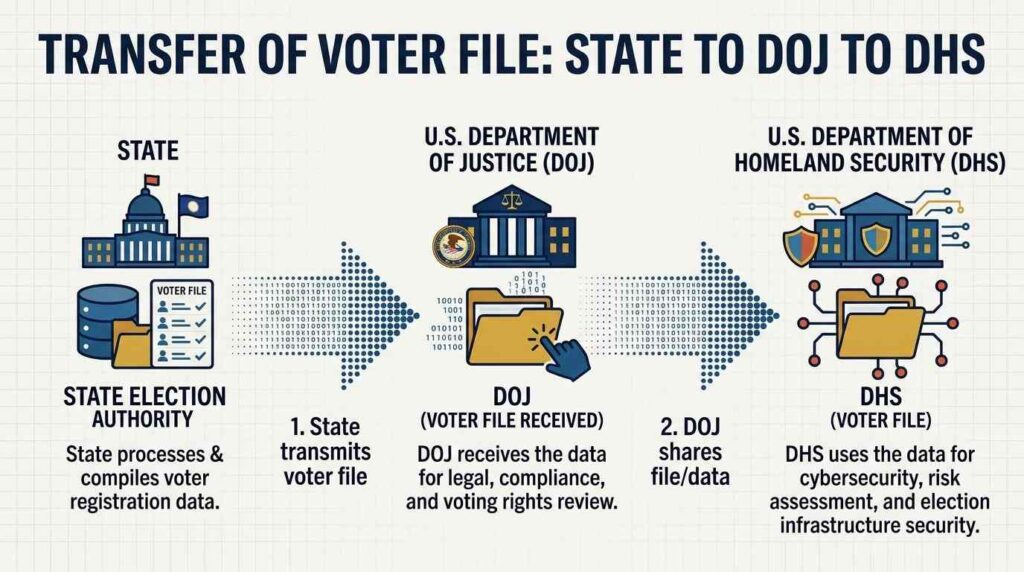
- The judge barred the DOJ from using files already received, including sharing them with the Department of Homeland Security (DHS).
- She said states may still keep their own rolls, including by using the SAVE database.
The judge wrote that the DOJ “cannot run roughshod over longstanding laws.” She also found that federal citizenship records can be out of date for people who became citizens after they first got a Social Security number. In her view, the policy had already removed U.S. citizens from voter rolls.
Expect an appeal. The DOJ can ask for a stay, so check the docket before you assume the order is in effect.
SAVE, DHS, and the Supreme Court
SAVE is a federal database that checks immigration and citizenship status. In 2025, DHS rebuilt it to pull in Social Security data and to let states run bulk searches. The League of Women Voters and others sued.
On June 22, 2026, Judge Sooknanan vacated the rebuilt system under the Social Security Act, the Privacy Act, and the Administrative Procedure Act. The D.C. Circuit refused to pause that order in a 2 to 1 vote.
On September 25, 2026, the Supreme Court stayed the ruling. Justices Jackson, Sotomayor, and Kagan dissented.
As reported, the stay rests on a federal immigration law, 8 U.S.C. 1373, and it stays in place while the D.C. Circuit appeal and any request for Supreme Court review are resolved.
So the SAVE ruling and the October 9 ruling work on different tracks. One keeps the upgraded database running for now. The other limits how the DOJ can use voter files in its own program.
The Court’s stay did not decide whether the DOJ may demand state voter lists. That question is still working its way up through the appeals courts.
DHS also faces court fights over personal records in other areas. Our Homeland Security student visa lawsuit guide covers one example that has nothing to do with elections.
Which States Shared Their Data?
Not every state fought. The Brennan Center counts at least 16 states that gave, or promised to give, their full lists. The October 9 opinion says at least 18 states turned files over, so the count depends on the date and the source.
The Brennan list includes these states:
- Alabama, Alaska, Arkansas, Florida, Indiana, Iowa, Louisiana, Mississippi
- Nebraska, Ohio, Oklahoma, South Carolina, South Dakota, Tennessee, Texas, Wyoming
The DOJ asked states to sign a confidential memorandum of understanding before sharing. Alaska and Texas signed. Mississippi, South Dakota, and Tennessee gave their rolls but refused to sign.
Some residents sued their own states. Suits in South Carolina and Nebraska delayed the transfers but did not stop them.
The South Carolina case ended with a settlement that added privacy protections, and the Nebraska case was dismissed as moot. A similar suit in Alaska is still early.
Privacy and Security Concerns
Privacy is the thread that runs through the state voter registration data lawsuits. A statewide voter file with ID numbers is a rich target. Critics say a single federal copy raises the risk of leaks and misuse.
There is also the question of use. At a March hearing in the Rhode Island case, a DOJ official said the agency planned to run voter data against SAVE. Our Rhode Island voter data lawsuit guide covers that hearing and the judge’s ruling.
The same concern shows up outside politics. Courts often weigh how much personal data is needed and who can access it. Our guide to the Life360 lawsuit shows how those questions arise with location data.
The DOJ sees it differently. It says accurate rolls protect elections and that noncitizens should not be on them.
Courts so far have not ruled on motive. They have ruled on whether the law gives the DOJ this power.
What This Means for Voters
Your registration and your right to vote have not changed because of these lawsuits. If your state won in court, its full list has not gone to the DOJ through the lawsuit. If your state shared its list voluntarily, the answer may differ.
Here is a hypothetical example. Dana became a citizen in 2015 and registered to vote soon after. Her Social Security record was never updated, so a bulk check flags her as a possible noncitizen and her state sends a notice.
This is the kind of error the court described. Dana could answer the notice with her proof of citizenship and contact her election office. This is only an illustration and not advice for any real person.
A few simple steps help any voter:
- Check your registration on your state’s official election site or at Vote.gov.
- Learn what your state treats as public and what it protects.
- If you receive a removal notice, read it closely and contact your local election office.
- Be careful with third party sites that ask for your Social Security number.
The National Voter Registration Act generally limits systematic removal programs in the 90 days before a federal election, with some exceptions. For the November 3 midterms, that window opened in early August. Rules and deadlines differ by state, so confirm yours with your election office.
Myths vs. Facts
| Myth | Fact |
|---|---|
| The DOJ has the voter data from every state | Most states have not shared full lists, and courts have sided with the states that refused |
| Only one party’s officials fought the requests | NBC News reported that Republican-led states such as Georgia and Idaho also pushed back |
| A dismissal ends the case for good | The DOJ has appealed most dismissals, so the final word is still ahead |
| The October 9 ruling stops states from cleaning their rolls | The judge said states can still maintain their own lists |
| The Supreme Court already decided this | The Court acted on the SAVE database, not on the Title III voter list question |
| You can join the lawsuit and get paid | These are government cases, so there is no claim form or payout |
When to Talk to a Lawyer
Most readers only want to understand the news, and that does not take a lawyer.
An election official who gets a data demand may need legal advice. So may a group that helps voters, or a voter who receives a notice about their own record. A journalist or researcher who plans to request voter data may also want guidance.
Look for an attorney with election law or privacy law experience in your state.
Not sure about titles? Our attorney vs lawyer guide explains who can represent you in court. Always confirm a license with your state bar.
FAQ
1. What are state voter registration data lawsuits?
They are federal lawsuits where the DOJ asks courts to order states to give it full voter registration lists. The lists include private fields such as driver’s license numbers and partial Social Security numbers. States have resisted, citing privacy laws.
2. How many states has the DOJ sued?
The DOJ has sued 30 states and Washington, D.C., for a total of 31 lawsuits. Georgia’s first case was filed in the wrong court and was refiled, but the trackers count Georgia once.
3. Has the DOJ won any of these cases?
No court has ruled for the DOJ on the merits. It lost 26 of the 31 district court cases and its first appeal, in the Sixth Circuit. Oklahoma settled by agreeing to share its data, and four cases are still pending.
4. Which states gave the DOJ their full voter lists?
At least 16 states have provided or promised full lists, according to the Brennan Center. That group includes Texas, Florida, Ohio, and Alaska. Check with your state election office for its current position.
5. Is my Social Security number in a federal database now?
It depends on your state. If your state shared its full list, the number may be included. If your state refused and won in court, the lawsuit did not send your data to the DOJ.
6. Could the Supreme Court decide these cases?
It is possible. The DOJ’s deadline to ask the Court to review the Michigan ruling is November 12, 2026. The odds go up if different circuits reach different answers.
7. Does the October 9 ruling stop states from checking their own voter rolls?
No. Judge Sooknanan said states may still maintain their own rolls, including through SAVE. The ruling limits the DOJ’s nationwide program and its use of files it already holds.
8. Can I join one of these lawsuits?
You cannot join the DOJ’s cases as a plaintiff. Some voter groups, such as the League of Women Voters and the ACLU, asked to intervene on the states’ side. These cases do not offer payouts.
Conclusion
State voter registration data lawsuits have gone badly for the DOJ so far. Courts have dismissed 26 of the 31 cases, one appeals court has backed Michigan, and a federal judge has now vacated the DOJ’s nationwide program. Still, the story is not over.
In the state voter registration data lawsuits, the Ninth Circuit has not ruled, many appeals are in progress, and the Supreme Court could be asked to weigh in. The November 12 review deadline is the next big date.
For voters, the safest move is to stay informed. Check your registration, learn what your state protects, and watch the trackers linked above. For more updates on court fights like this one, keep exploring the guides at Legal Expertise.