



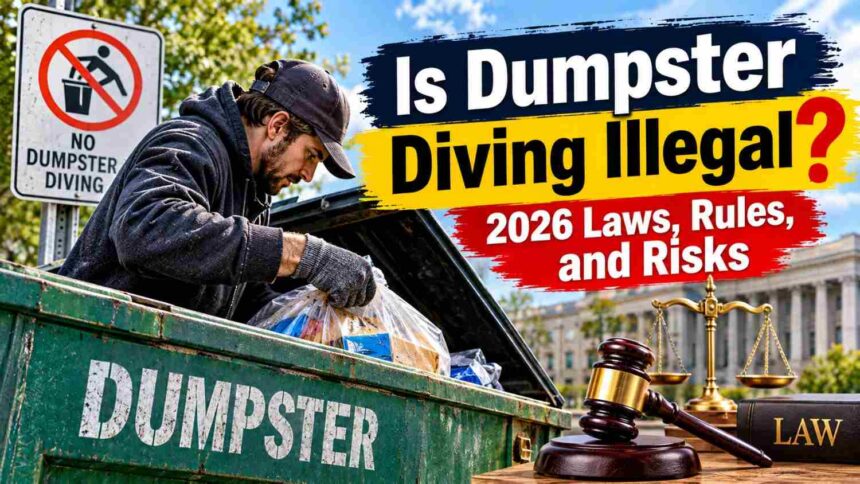
Is dumpster diving illegal? In most of the United States, the act of taking discarded items is not a crime by itself. The trouble usually starts with where the dumpster sits, how you reach it, and which local rules apply. This guide explains the law in plain words so you can see where the real risks are.
- Quick Answer: Is Dumpster Diving Illegal?
- What Federal Law Says
- Why Trespass Is the Biggest Risk
- City Scavenging Ordinances
- Can Police Search Your Trash?
- Privacy, Documents, and Identity Theft
- Can a Store or Landlord Stop You?
- State Differences to Know
- Health and Safety Risks
- How to Lower Your Risk
- How We Checked This Article
- Frequently Asked Questions
- Is dumpster diving illegal in the United States?
- Is it illegal to take things from a dumpster behind a store?
- Can you go to jail for dumpster diving?
- Is trash on the curb free to take?
- Can police search my garbage without a warrant?
- Is it illegal to take mail or documents from trash?
- Do I need permission to dumpster dive?
- What should I do if someone tells me to leave?
- Conclusion
Quick Answer: Is Dumpster Diving Illegal?
No federal law bans dumpster diving. Whether it is allowed in your case depends on three things. These are the location of the bin, any posted warnings or locks, and the rules in your city or county.
Here is the short version:
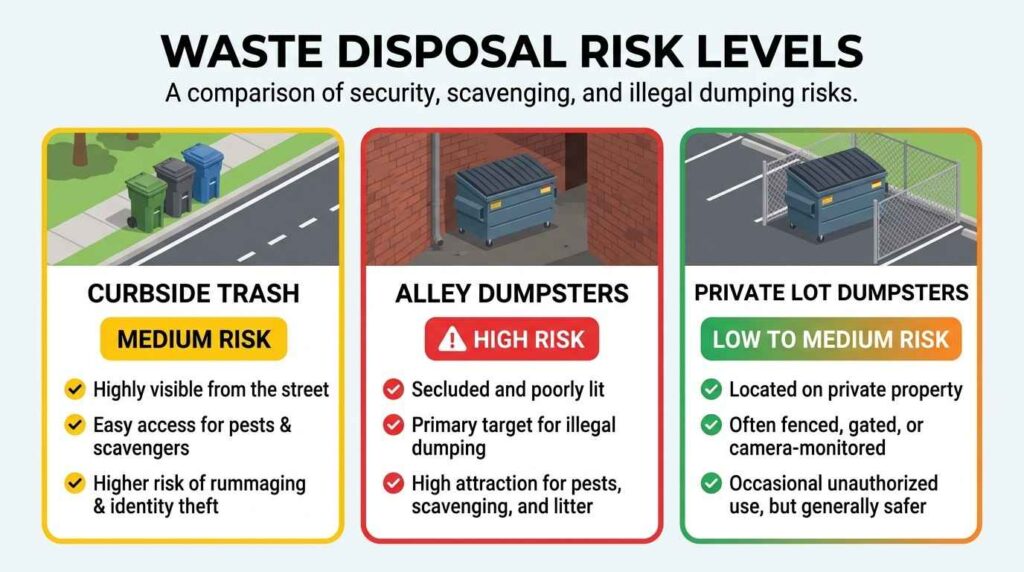
| Situation | Usual legal risk |
|---|---|
| Trash set out at a public curb | Lower, unless a local ordinance bans it |
| Open dumpster in a public alley | Depends on city rules |
| Dumpster in a private parking lot | Higher, because of trespass |
| Fenced, gated, or locked bin | High, and may involve more serious charges |
| Bin with a No Trespassing sign | High |
| Bin where a business told you to leave | Very high if you return |
Key point: The answer is never the same everywhere. Two people can do the exact same thing in two cities and get two different outcomes.
What Federal Law Says
There is no federal statute that makes dumpster diving a crime. The main federal court case people point to is California v. Greenwood.
The U.S. Supreme Court decided it on May 16, 1988, by a 6 to 2 vote.
In that case, police asked a trash collector to hand over a suspect’s garbage bags from the curb. The Court held that the Fourth Amendment does not bar a warrantless search of garbage left for collection outside the home. It wrote that plastic garbage bags left at the side of a public street are readily accessible to animals, children, scavengers, snoops, and other members of the public.
This is where many websites go too far. The ruling is about government searches and privacy. It does not say that anyone may take anything from any bin.
It also does not override trespass laws or city rules.
The Court even added that individual states may protect trash more strongly under their own constitutions. You can read the full opinion at Cornell Law School’s Legal Information Institute, or a short case summary on Wikipedia.
Why Trespass Is the Biggest Risk
For most people, the real danger is not theft. It is criminal trespass. If you step onto private property without permission, you may break the law even if the trash itself is free to take.
Trespass can apply in a few common ways:
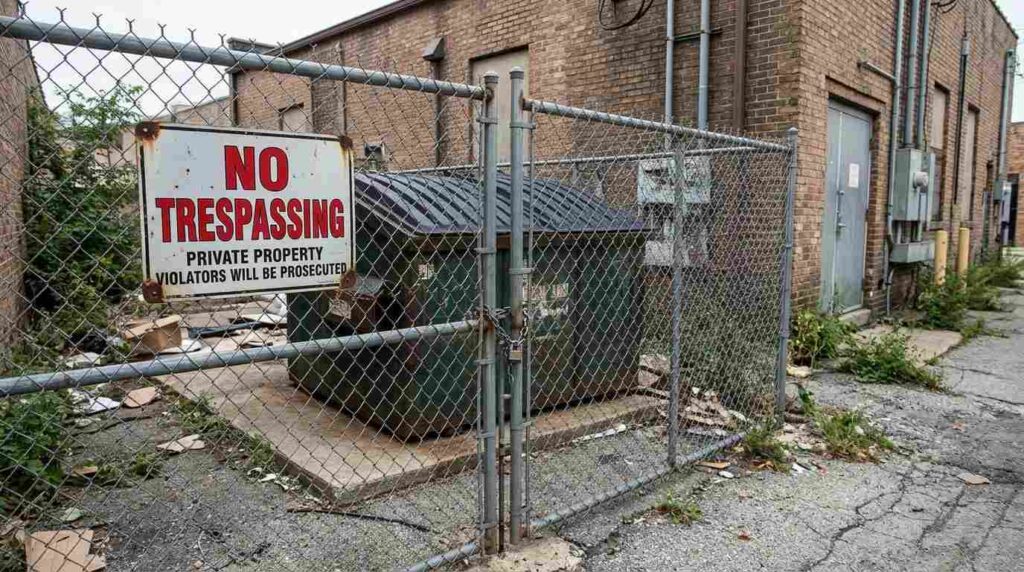
- The property has a No Trespassing sign.
- The bin sits behind a fence, gate, or wall.
- A business or owner has told you to leave before.
- The bin is inside a locked enclosure.
- You entered a parking lot after hours that is closed to the public.
Penalties depend on the state. In many places, simple trespass is a low level misdemeanor or a violation. A repeat offense after a warning can be treated more seriously.
If you open a lock or climb a fence, the situation can change fast. Prosecutors in some places may look at charges beyond simple trespass. That is why many guides tell people to never open a locked container.
Legal terms matter here, so it helps to know who handles what. If you ever need help with a charge, read our simple guide on the difference between an attorney and a lawyer so you know who to call.
City Scavenging Ordinances
Many cities have their own anti-scavenging rules. These laws often target people who take items from trash or recycling bins set out for collection. The reason is usually money, because cities may earn income from recycled goods.
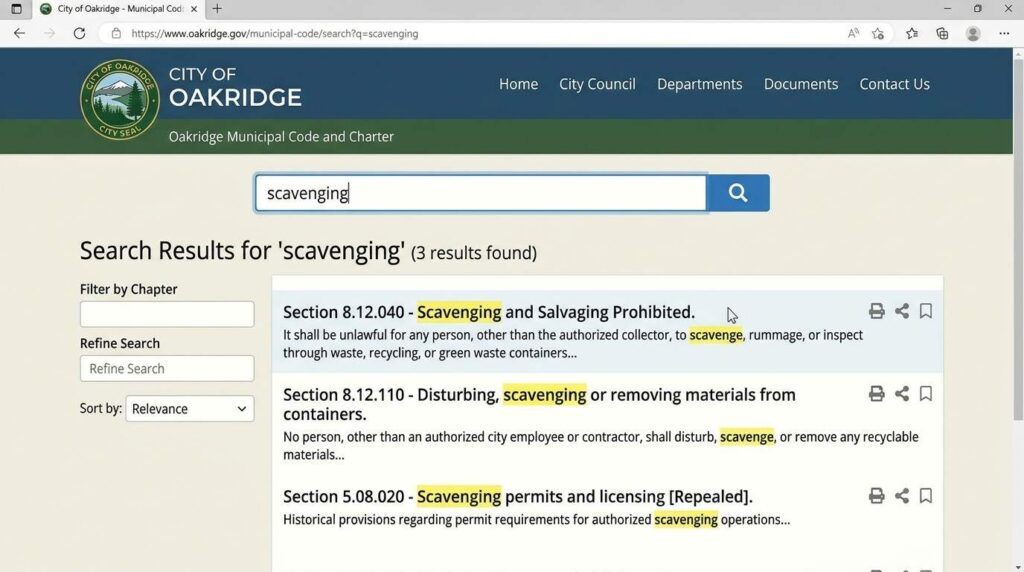
Here is a real example. Ogden, Utah has a code that says it is unlawful to remove, sort through, or scavenge solid waste placed in a solid waste container. The same section says a violation is a class B misdemeanor.
That one example shows why a state level answer is not enough. A city can make something a crime even when the state has no special law. Some cities set only a fine, while others treat it as a misdemeanor.
Many online lists name specific cities and fines. Be careful with those.
During our review, several popular guides gave conflicting section numbers and penalty amounts for the same city. Always check the current municipal code for your own city.
How to search a city code: Look for the words scavenging, solid waste, refuse, or recycling on your city’s official code website. Then read the whole section, including the penalty part.
Can Police Search Your Trash?
Yes, in many cases they can. Under the Greenwood rule, police may usually search trash you leave for pickup without a warrant. This is a rule about the Fourth Amendment, which limits government searches.
There are limits. The ruling covered garbage left outside the home’s curtilage, which is the area close to the house. Trash kept inside a fence by the back door may be treated differently.
States can also give more protection under their own constitutions. This is one reason legal outcomes differ across the country. If a police search of your trash is part of a case you face, a licensed criminal defense attorney in your state can explain how local law applies.
Tip: Think of Greenwood as a rule about privacy from police. Do not think of it as a free pass to take trash from anywhere.
Privacy, Documents, and Identity Theft
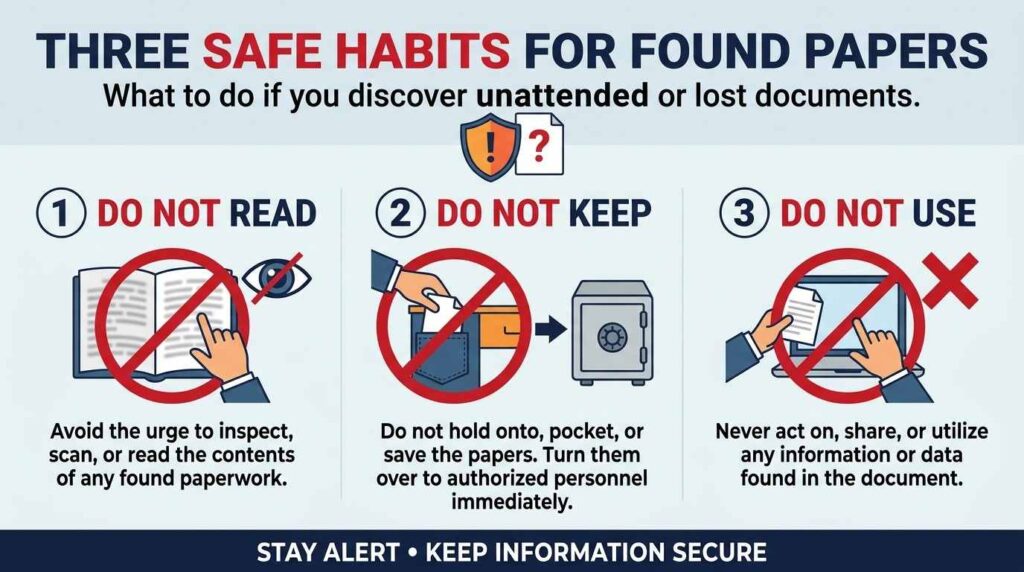
This part is often missing from other articles. Trash can hold bank statements, medical papers, and mail with names and addresses. Reading or using that data is a very different issue from taking an old chair.
If someone uses personal information from trash to commit fraud, federal law can apply. The identity fraud law, 18 U.S.C. section 1028, covers the unlawful use of identification documents and means of identification. Penalties for fraud can be severe.
Businesses also have duties here. The Federal Trade Commission adopted a Disposal Rule that requires many companies to take reasonable steps when they throw away consumer report information. You can read the rule notice in the Federal Register.
In plain terms, a company that tosses sensitive papers in an open bin may be the one in trouble. A person who finds those papers should not use them. If you find private records by accident, the safest step is to leave them alone.
For a look at how data and privacy disputes play out in court, see our update on the Life360 lawsuit, which covers claims about location data. It is a different topic, but it shows how privacy claims are handled. A consumer rights case like the Rebeca Mingura Credit One lawsuit also shows how people use the law to protect their personal contact details.
Can a Store or Landlord Stop You?
Yes. A property owner can set rules for their own bins. Many stores lock their dumpsters or post signs because of safety, liability, and brand concerns.
A store may also ask you to leave. If you return after a clear warning, trespass becomes a bigger risk. Some stores call the police for this reason.
There is another angle. Some stores say items in the bin still belong to them until the trash company picks them up. Courts and prosecutors do not all treat this the same way, and results depend on local law and the facts.
If a store sells you a product or service, its terms matter too. For example, our article on the Home Depot damage protection class action shows how courts read written store terms and deadlines. That is a different issue, but it is a good reminder that business rules count.
Ask first. The simplest fix is to ask the manager or owner for permission. Written permission is best, even if it is just a short text or email.
State Differences to Know
States do not treat this topic the same way. Most do not have a special dumpster diving law. They rely on trespass, theft, and local ordinances instead.
Here is a simple way to think about it:
| Level | What it means | What to check |
|---|---|---|
| State | Trespass and theft laws apply everywhere | Your state penal code |
| County | Some counties set solid waste rules | County code |
| City | Anti-scavenging rules are most common here | Municipal code |
| Property | Signs, fences, and owner rules | Posted notices |
Some well known court and code references show how much local detail matters. For example, California and Texas both have criminal trespass laws, but each state uses its own wording and penalties. A guide that says the answer is the same in all 50 states is leaving out key facts.
We also found that popular state by state charts often disagree with each other. Some give exact fines with no source. If you plan to rely on a chart, check the statute or code section it names.
Local rules can differ even for something as small as car window rules. Our guides on Georgia tint laws and Virginia tint law show how two states can answer a similar question in different ways. The same idea applies here.
Health and Safety Risks
Legal risk is only part of the story. Dumpsters can hold broken glass, sharp metal, mold, chemicals, and spoiled food. Cuts and infections are real risks.
Food needs extra care. Items thrown out may be past their safe date or may have sat in heat. Health agencies advise caution with any food that was not stored safely.
Here are simple safety points:
- Wear thick gloves and closed shoes.
- Use a flashlight instead of reaching in blind.
- Do not climb into compactors or machines.
- Skip raw meat, dairy, and open packages.
- Wash your hands and clean any item before use.
Never go into a compactor or a bin with moving parts. Serious injuries happen there.
How to Lower Your Risk
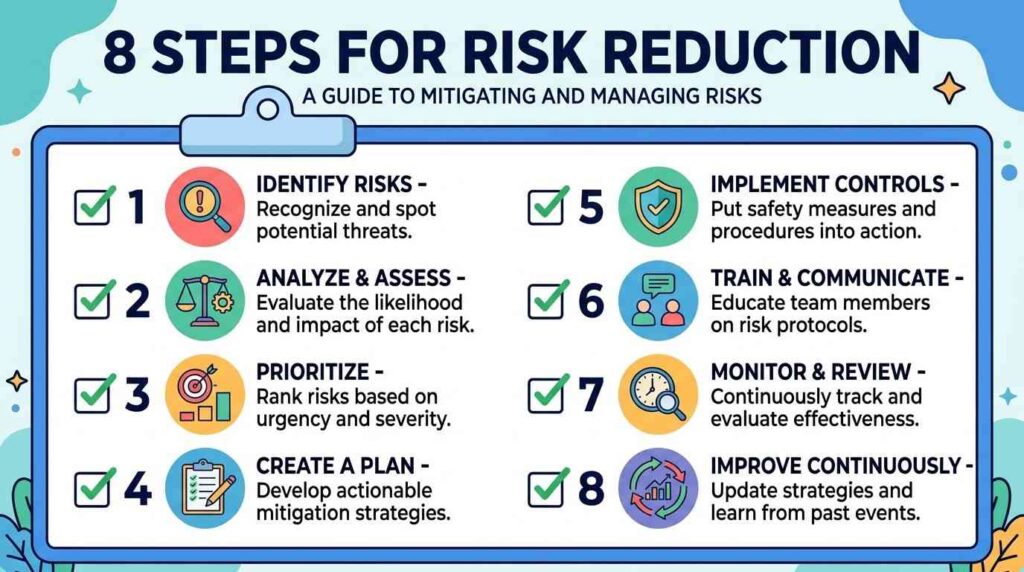
No tip can make any activity risk free. Still, these steps may help you avoid common problems.
- Read the signs. If a sign says no trespassing, treat it as a stop sign.
- Stay out of locked or fenced areas. Do not open locks or cut anything.
- Check your city code. Search for scavenging or solid waste rules.
- Ask for permission. Written permission helps if questions come up later.
- Leave the area clean. Pick up what you drop and close the lid.
- Respect privacy. Do not read or keep personal papers.
- Leave when asked. If an owner or officer tells you to go, go.
- Keep records. Note the date, place, and who gave you permission.
If an officer stops you, stay calm and polite. Do not argue about the law on the spot. If you receive a citation or a charge, speak with a qualified local attorney before you respond.
How We Checked This Article
We read the full text of the California v. Greenwood opinion and a city code that bans scavenging by name. We also compared several popular guides and found conflicting fines, code numbers, and city claims, so we did not repeat unsourced figures.

Frequently Asked Questions
Is dumpster diving illegal in the United States?
There is no federal ban. Legality depends on state trespass laws, city ordinances, and property rules. It can be legal in one place and a crime in another.
Is it illegal to take things from a dumpster behind a store?
It can be. If the bin is on private property, you may face trespass issues, especially with signs, fences, or a past warning. Asking the owner for permission is the safer path.
Can you go to jail for dumpster diving?
Jail is possible in some cases, but it is not the usual result. Penalties depend on the charge, such as trespass or a local ordinance, and on prior warnings. Ogden, Utah, for example, treats scavenging as a class B misdemeanor.
Is trash on the curb free to take?
Not always. Greenwood is about police searches, not a right for everyone to take curbside trash. Some cities ban scavenging from bins set out for collection.
Can police search my garbage without a warrant?
Often yes. Under California v. Greenwood, trash left for collection outside the home has no Fourth Amendment protection from warrantless searches. Some states give more protection under their own laws.
Is it illegal to take mail or documents from trash?
Taking the papers may not be the main problem, but using personal data for fraud can lead to serious federal charges. It is best to leave private records alone.
Do I need permission to dumpster dive?
On private property, yes, that is the safest rule. Permission can remove a trespass problem. Written permission is better than a spoken yes.
What should I do if someone tells me to leave?
Leave right away and stay calm. Returning after a clear warning can raise your legal risk a lot.
Conclusion
So, is dumpster diving illegal? Not by federal law, but it can be illegal because of trespass, locked or fenced areas, or a city rule against scavenging. The Greenwood case is about privacy from police and does not give you a right to enter private property.
Check your city code, read posted signs, and ask for permission when you can. Stay away from personal records and keep safety first.
Next step: If you face a citation or a charge, talk to a licensed attorney in your area before you respond. For more plain English legal explainers, browse the latest posts at Legal Expertise.