


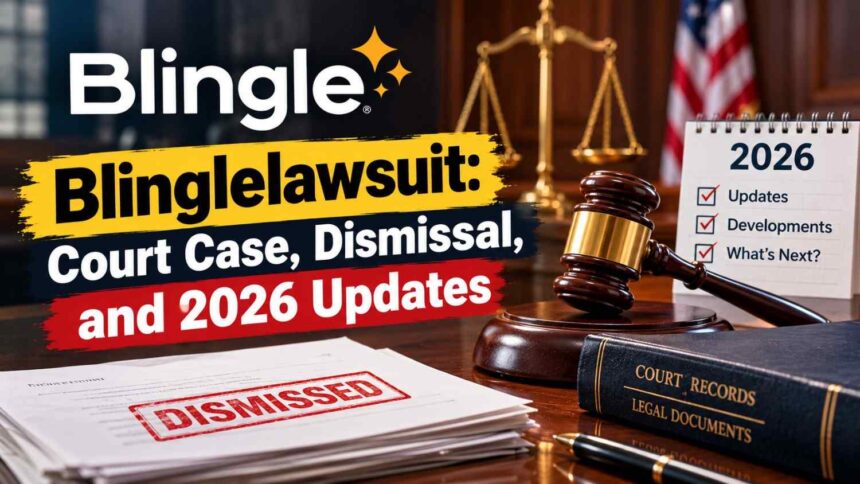
The Blinglelawsuit is a federal case filed in 2023 by eight Blingle franchisee businesses and their owners, who accused the holiday lighting franchise and its parent, Horsepower Brands, of selling them a business built to fail. The court dismissed the case in March 2024 because the franchisees had not completed the mediation their contracts required, and it never decided whether the claims were true.
- Quick Facts About the Blinglelawsuit
- What Is Blingle and Who Owns It
- Blinglelawsuit: What Was Actually Filed
- What the Franchisees Alleged
- The Fees at the Center of the Case
- How Blingle and Horsepower Brands Responded
- Why the Court Dismissed the Case
- Why Sources Disagree on the Filing Date
- Related Horsepower Brands Lawsuits
- What the Law Says About Franchise Sales
- What Franchise Buyers Should Check
- What Blingle Customers Should Know
- Common Mistakes to Avoid
- How We Checked This Article
- FAQ
- What is the Blinglelawsuit?
- Was Blingle found guilty of running a Ponzi scheme?
- Why was the Blinglelawsuit dismissed?
- Is the Blingle lawsuit still active?
- What were the earnings projections in the lawsuit?
- Is Blingle still operating?
- Are other Horsepower Brands franchisees suing?
- Should I avoid buying a Blingle franchise because of the lawsuit?
- Conclusion
That last point trips up a lot of readers. A dismissal on a contract technicality is not a win on the facts for either side. The allegations stayed allegations, and Blingle denies them.
This guide pulls together the court docket, trade press reports, and a later ruling in a related case. It also covers what the law says about franchise sales and what a buyer can do to protect themselves.
Quick Facts About the Blinglelawsuit
| Detail | What the Records and Reports Show |
|---|---|
| Case name | Waldron et al. v. SVHB Marketing LLC, doing business as Horse Power Brands, et al. |
| Court | U.S. District Court, Eastern District of Pennsylvania |
| Case number | 2:23-cv-03485 |
| Judge | Mitchell S. Goldberg |
| Filed | September 7, 2023 (per the Justia docket) |
| Plaintiffs | Eight franchisee businesses and their owners, 20 names on the docket listing |
| Defendants | Five Horsepower-related companies and nine individuals, 14 in all |
| Type of case | Franchise dispute, diversity jurisdiction, no jury demanded |
| Outcome | Dismissed in March 2024 over a mediation requirement |
| Ruling on the merits | None |
| Status on October 29, 2026 | Closed, no public sign it was revived |
What Is Blingle and Who Owns It
Blingle is a franchise that sells holiday, event, and landscape lighting services. It was once called Heroes Holiday Lighting, and Horsepower Brands rebranded it in 2021. Franchise Times reported that Blingle finished 2022 with 36 open units, up from one at the start of that year.
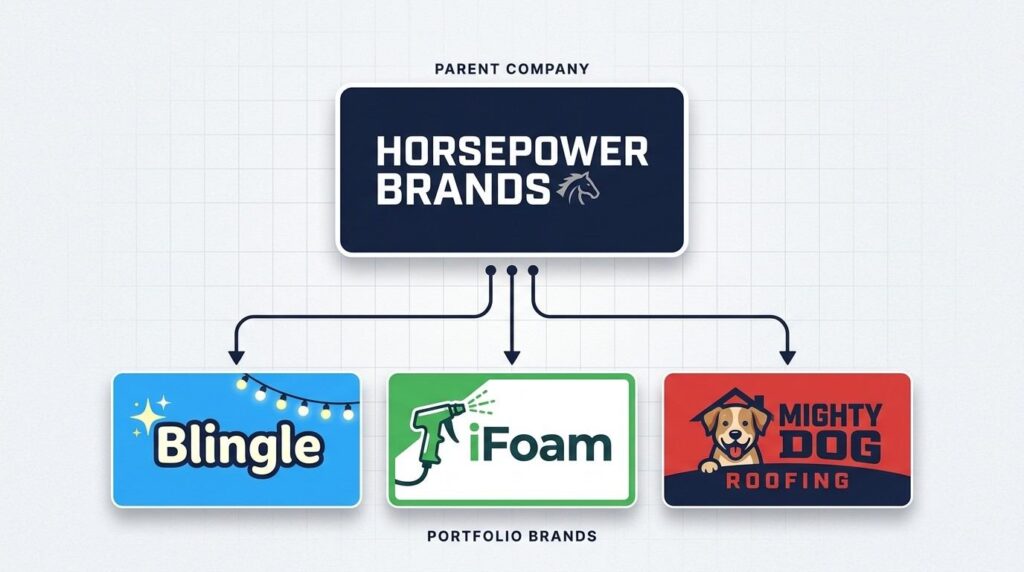
Horsepower Brands was founded in 2020 by Josh Skolnick and Zachery Beutler. Its stated goal was to buy 25 home service brands by 2025. Besides Blingle, it owns brands such as iFoam, Mighty Dog Roofing, Gatsby Glass, and Bumble Bee Blinds.
Why does the ownership matter? Many search results about the Blinglelawsuit mix Blingle with its sister brands. The 2023 case is about Blingle only, and the other brands have their own suits, covered below.
Blinglelawsuit: What Was Actually Filed
The case is Waldron et al. v. SVHB Marketing LLC. SVHB Marketing does business as Horse Power Brands. You can see the public listing on the Justia docket for the Waldron case.
The plaintiffs were franchisee businesses with names like MAW Lighting, Matador Lighting, and 4B’s Lighting. Their owners signed on too. The defendants included five Horsepower companies, such as HPB Lighting LLC and HPB Call Center LLC, plus founders and executives.
Plaintiffs’ lawyers Anna M. Berman and Lisa L. Martin asked the court to admit them for this case. The court also sealed the unredacted complaint and its exhibits on September 20, 2023. That means the full text of the original complaint is not public, so most of what we know comes from news coverage.
What the Franchisees Alleged
According to a Franchise Times report on the Blingle franchisee lawsuit, the franchisees said Blingle was sold as a hands-off business. They said an owner could keep a full-time job and did not need lighting experience.
Their main claims, as reported, were these:
- Inflated projections. A sales leader allegedly predicted $400,000 to $600,000 in year one and about $1 million in year two.
- A different story after signing. The former Blingle president allegedly said the year-one goal was to break even.
- A misleading example. At a discovery day, an Omaha location was shown with revenue of $822,928. The franchisees said the presentation left out that this location had run for about ten years and also did summer landscaping, which Blingle does not offer.
- Useless inventory. Franchisees said they had to buy inventory that did not matter to roughly 90 percent of their customers.
- Weak training. Some said they got videos about tasks that did not fit their work and no hands-on help.
- Losses. The suit said no listed franchisee had a profitable year, and many never had a profitable month.
The complaint called Blingle “nothing more than a Ponzi scheme.” Those are the plaintiffs’ words. No court has found that, and the label should be read as an allegation.
The Fees at the Center of the Case
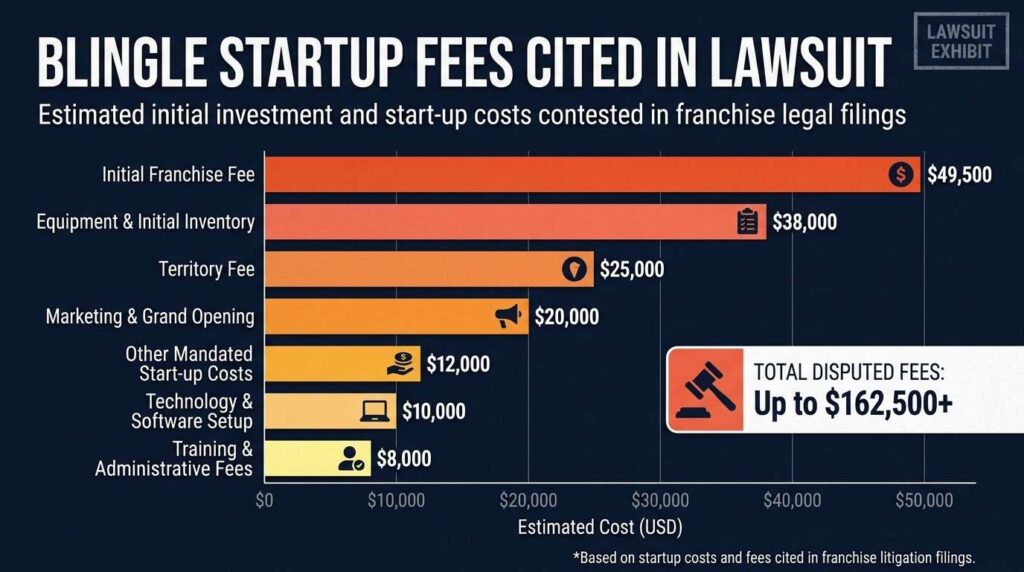
Money was the heart of the dispute. Franchise Times listed these costs as cited by the franchisees:
| Fee | Amount |
|---|---|
| Franchise fee | $59,500 |
| Royalty | 8.5 percent |
| Opening package | Up to $25,000 |
| Initial lighting package | $50,000 |
| SEO setup | $12,000 |
| Technology setup | $9,500, plus a monthly fee |
| Call center services | $3,600 per year |
| Initial training | $4,995 |
A March 2024 franchise data profile put the total startup cost for one unit between about $281,000 and $419,000. It also said more than $202,000 of that went to the franchisor or its affiliates before opening. Treat these numbers as dated, because current costs sit in the franchise disclosure document, which we explain below.
Fee fights are common among small businesses. Our Direct Fairways lawsuit guide covers another dispute that business owners can learn from.
How Blingle and Horsepower Brands Responded
Blingle did not accept the claims. President Kevin Jones told Franchise Times the brand saw “substantial” growth in the fourth quarter compared with 2022. He said the franchisees sued before they finished 12 months in business. He also said such litigation “often only benefits the lawyers.”
A franchisee on Blingle’s advisory council, Alex Quataert, said his first-year revenue was about $500,000, in line with what he expected. He added that some owners may have had unrealistic expectations. That view deserves weight too, because it comes from an operator, not a spokesperson.
Horsepower Brands has used similar language in other disputes. It has said franchisees sometimes fail to read the legally required disclosures. It has also said there is no guarantee of success or profit in any franchise.
Why the Court Dismissed the Case
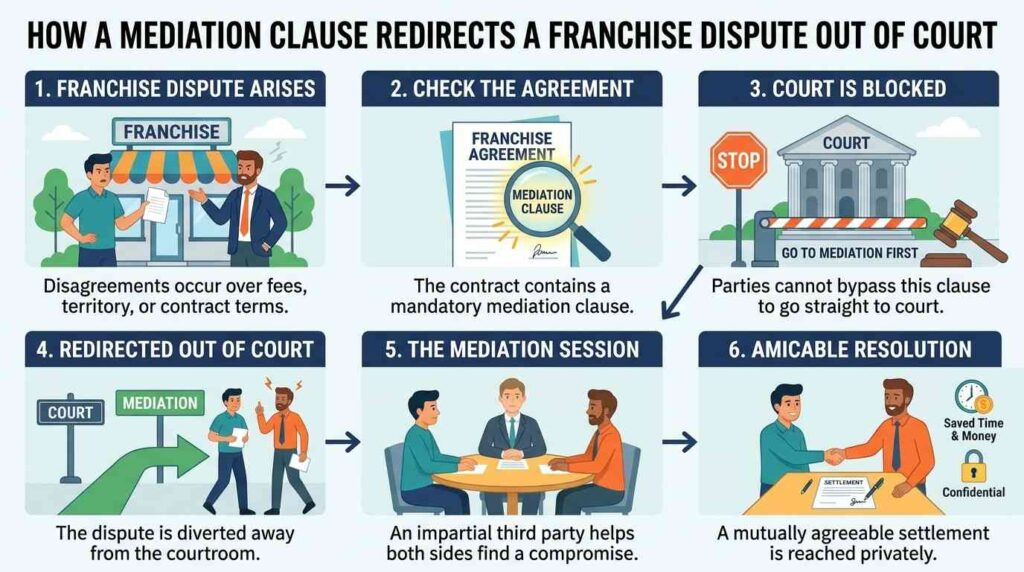
Franchise Times reported in 2025 and again in 2026 that the Blingle case was dismissed in March 2024 because the franchise agreements sent disputes to mediation outside court. The 2026 report used the word arbitration instead of mediation. The two words mean different things, so the exact clause matters, and we could not open the dismissal order itself.
Here is the plain meaning. Many franchise contracts say you must try mediation before you can sue. If you skip that step, a judge can end your case early without deciding who was right.
Hypothetical example: A buyer signs a contract that says all disputes go to mediation first. The buyer files a lawsuit instead. The franchisor points to the clause, and the court dismisses the suit. The buyer can still mediate, but the lawsuit is over and the filing fee is gone.
So what did the dismissal decide? Only that the case was filed too early or in the wrong place under the contract. It did not decide that the projections were fair or that the claims were false.
The mediation itself is private, and we found no public record of how it turned out. Courts handle business fights in steps like this, as our Dapper Development lawsuit guide shows.
Why Sources Disagree on the Filing Date
You will see two filing dates online. Franchise Times said the franchisees sued on August 8, and its story placed that in the summer of 2023. The Justia docket for case 2:23-cv-03485 shows the complaint was filed on September 7, 2023.
One blog says an earlier case was filed on August 8, 2023 and withdrawn two weeks later. That could explain the gap. We could not confirm it from a primary source, so we use September 7 as the filing date of the case on record.
This small detail is a good test of any article you read. If a page gives only one date and no case number, it may be repeating someone else’s work.
Related Horsepower Brands Lawsuits
The Blingle case was not the end of Horsepower litigation. Two later cases help show how courts treat these contracts. Neither involves Blingle, so read them as context only.
The iFoam Case
Werner and Leah Schaefer sued iFoam’s franchisor and Horsepower in Pennsylvania federal court. They said they were oversold a five-unit Houston area deal with inflated projections. They claimed about $2.2 million in losses.
On July 8, 2025, Judge Bartle ruled on a motion to dismiss. You can read the court opinion in Schaefer v. HPB Foam LLC. The result was mixed.
The court dismissed the Texas deceptive practices claim because the deal topped $500,000. It dismissed claims against the individual executives because the franchise agreement limited personal liability. It also held that claims based on oral statements outside the disclosure document and the agreement were barred by a disclaimer clause.
Some claims survived, though. Fraud and negligent misrepresentation claims based on the disclosure document and the agreements against HPB Foam LLC stayed alive. A contract claim by one plaintiff also survived.
Why this matters to a Blingle buyer: An oral promise at a sales meeting may be hard to enforce if the contract says only the written documents count. Get every promise in writing, and check that it matches the disclosure document.
Mighty Dog Roofing
A Franchise Times report on struggling Horsepower locations said that of 143 Mighty Dog territories, 40 had closed and 25 were at risk. An April 2026 Franchise Times story said Mighty Dog franchisees filed three lawsuits, in Pennsylvania, Nebraska, and New Jersey, involving 11 franchisees.
Horsepower’s chairman said it would be inappropriate to comment on pending cases. He said the company believes the claims lack merit.
Franchise Times also reported that none of these cases has produced a judgment against the franchisor so far. When locations close, owners often face debts and lease problems, much like the retailer in our Car Toys bankruptcies report.
What the Law Says About Franchise Sales
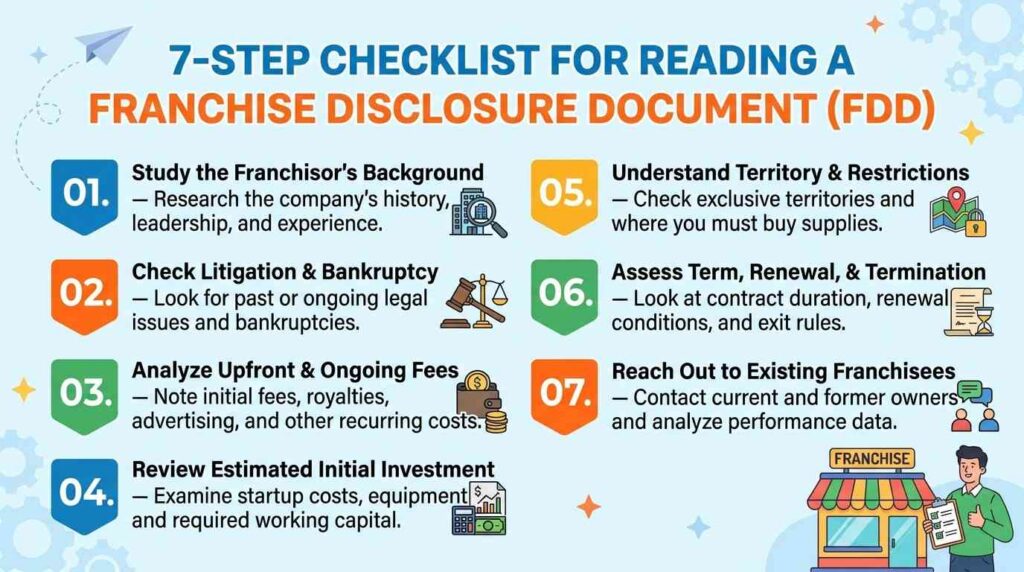
Franchise sales in the United States follow the FTC Franchise Rule. Under 16 CFR 436.3, a seller must give you the franchise disclosure document at least 14 calendar days before you sign a binding agreement or pay any money. That gives you time to read it, and to have a lawyer read it.
The FTC explains another key point in its consumer advice on franchising basics. Franchisors do not have to share earnings numbers. But any claim about sales, income, or profit must appear in Item 19 of the disclosure document.
Put those two rules together. If a salesperson tells you what you will earn, and the number is not in Item 19, that is a red flag. Ask for it in writing.
Franchise Times also noted that Texas and Pennsylvania give franchisees a private right to sue, while the federal Franchise Rule does not. In plain terms, the FTC can act against a seller, but a buyer cannot sue under the federal rule itself. State law and the contract usually decide what a buyer can do.
What Franchise Buyers Should Check
Nothing here is advice for your case. It is a general checklist that many franchise lawyers and regulators suggest.
- Read the full disclosure document. Focus on Item 19 for earnings, Item 3 for litigation, Items 5 to 7 for fees and total costs, and Item 20 for closures.
- Call current and former owners. The FTC says franchisors must provide contact details. Former owners often tell you what the document leaves out.
- Compare every claim to the document. If a number from a sales call is not in writing, ask for it in writing.
- Check the dispute clause. Look for mediation or arbitration steps, who pays, and where a case must be filed.
- Check for a disclaimer clause. After the Schaefer ruling, this clause deserves extra attention.
- Build your own numbers. Use your local market, your labor costs, and your slowest months, not the best example shown.
- Hire an independent franchise attorney. Pick one who does not work for the seller.
Many people wonder what kind of lawyer to hire. Our attorney vs lawyer guide explains the terms in plain English. A business owner facing a contract problem usually wants someone who handles franchise or commercial disputes.
What Blingle Customers Should Know
If you hire a Blingle installer for holiday lights, this lawsuit does not change your contract. The case was between franchisees and the franchisor. It did not accuse local installers of harming customers, and it did not create a class action for homeowners.
Still, a smart customer can take a few steps. Get the price, the install date, and the takedown date in writing. Ask who the local owner is, since each location is independently run.
Product marketing claims are a different area of law. For an example of a consumer class action over advertising, see our report on the HexClad lawsuit settlement. That case ended in a settlement, while the Blinglelawsuit ended in a dismissal.
Common Mistakes to Avoid
Franchise disputes often go wrong in the same ways.
- Treating a sales deck as a promise. Only the signed documents and the disclosure document count in most contracts.
- Skipping the mediation step. The Blinglelawsuit shows how that can end a case early.
- Ignoring the LLC paperwork. Many franchisees sign through a company, so ownership and authority questions can come up later.
- Copying the best location’s results. One top example is not an average.
- Waiting too long. Contracts can shorten the time to sue, and state law sets its own limits.
- Not planning for failure. If a franchise closes, debts and leases can remain. Our article on Mexican restaurant bankruptcies shows how fast chains and franchisees can fall.
How We Checked This Article
We reviewed the public Justia docket, Franchise Times reports from 2024 to 2026, the federal court opinion in the iFoam case, and FTC consumer guidance. We also compared several blog posts about the Blinglelawsuit. Where blogs disagreed with primary records, we used the records.
We cannot open the live court file. The free docket we reviewed was last copied on October 30, 2023, so it does not show the dismissal. The March 2024 dismissal comes from Franchise Times, and the exact order date and clause wording are not confirmed.
We found no public sign of a revived Blingle case or a settlement as of October 29, 2026. If you see a claim of a Blingle payout or verdict, ask for a case number and check the docket.
FAQ
What is the Blinglelawsuit?
It is a 2023 federal lawsuit by eight Blingle franchisee businesses and their owners against Horsepower Brands and related people. They claimed they were sold a franchise with inflated projections, weak training, and heavy fees. Blingle denies the claims.
Was Blingle found guilty of running a Ponzi scheme?
No. The Ponzi scheme wording came from the plaintiffs’ complaint. No court has made that finding, and the case was dismissed without a ruling on the facts.
Why was the Blinglelawsuit dismissed?
Franchise Times reported it was dismissed in March 2024 because the franchise agreements required mediation outside court. The court did not decide whether the allegations were true.
Is the Blingle lawsuit still active?
We found no public sign that it is. The case was dismissed in March 2024, and we found no public record of a refiled Blingle case or a settlement.
What were the earnings projections in the lawsuit?
The franchisees said a sales leader predicted $400,000 to $600,000 in year one and about $1 million in year two. They also said the former Blingle president later said the year-one goal was to break even. These are allegations.
Is Blingle still operating?
Yes, as far as public reports show. Franchise Times and trade sources described Blingle as an active brand after the dismissal, and the company has continued to promote new franchise openings.
Are other Horsepower Brands franchisees suing?
Yes. iFoam and Mighty Dog Roofing franchisees have filed their own suits, and a court ruled on a motion to dismiss in the iFoam case in July 2025. Mighty Dog franchisees filed three more suits, according to an April 2026 Franchise Times report.
Should I avoid buying a Blingle franchise because of the lawsuit?
We cannot tell you that. A lawsuit is not proof of wrongdoing, and a dismissal is not proof of innocence. A qualified franchise attorney can review the disclosure document and contract for your situation.
Conclusion
The Blinglelawsuit was a serious complaint, but it never reached a trial or a ruling on the facts. Eight franchisee businesses said they were sold a business with inflated numbers and heavy fees. Blingle and Horsepower Brands denied it, and the court dismissed the case in March 2024 over the mediation requirement.
The lasting lesson is practical: read the disclosure document, get every promise in writing, and learn what the contract says about disputes before you sign.
If you are weighing a franchise, talk with a qualified attorney licensed in your state. Bookmark this page, and we will update it if the court record changes.