



The United Airlines Yihsing Tien lawsuit is a federal disability discrimination case filed by a former flight attendant in California. In February 2026, the judge ruled for United. The fight did not stop there, because United then asked for $21,926.34 in court costs, and a judge is now reviewing that bill.
- The United Airlines Yihsing Tien Lawsuit at a Glance
- Who Is Yihsing Tien
- The Leave Letter Mix-Up and the Three Year Rule
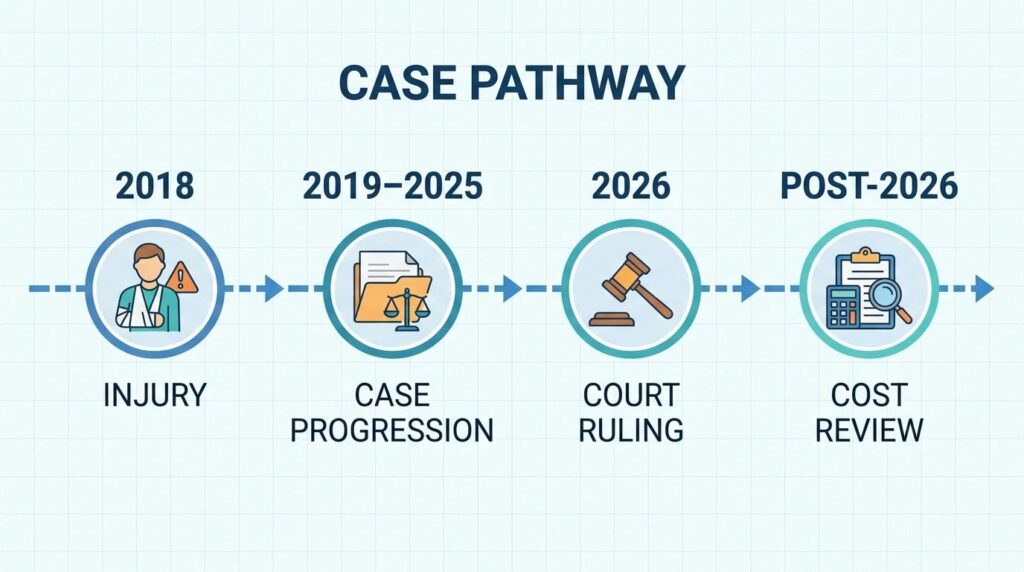
- Timeline of the Tien v. United Airlines Case
- The Nine Claims Tien Filed
- What the Court Decided in January 2024
- Railway Labor Act Preemption in Plain English
- Why United Won at Summary Judgment in 2026
- The Bill of Costs Fight
- Costs Versus Attorney Fees
- What News Reports Got Wrong
- What Happens Next in the Case
- Disability and Medical Leave Rights in California
- Lessons From the Tien Case
- How to Read the Court Documents Yourself
- Frequently Asked Questions
- What is the United Airlines Yihsing Tien lawsuit about?
- Did Yihsing Tien win or lose the lawsuit?
- Why was Tien fired?
- How much does United want Tien to pay?
- Is there an appeal in the Tien case?
- Can a flight attendant be fired for being on long medical leave?
- How long do you have to file a disability discrimination complaint in California?
- Conclusion
Yihsing “Angela” Tien was hurt on a work trip in 2018. She went on medical leave and lost her job in January 2022 under a three year leave limit in her union contract. She said United treated her unfairly, but the court said the evidence did not show disability bias.
The United Airlines Yihsing Tien Lawsuit at a Glance
The United Airlines Yihsing Tien lawsuit, formally Tien v. United Airlines, Inc., asked a federal court to find that United unfairly fired a disabled flight attendant. On February 2, 2026, Judge Jeffrey S. White granted summary judgment to United. That means he decided a trial was not needed.
| Item | Detail |
|---|---|
| Case name | Tien v. United Airlines, Inc., et al. |
| Case number | 4:23-cv-02622-JSW |
| Court | U.S. District Court, Northern District of California |
| Judge | Jeffrey S. White |
| Plaintiff | Yihsing “Angela” Tien, former flight attendant |
| Main claims | Disability discrimination, failure to accommodate, failure to engage in the interactive process, medical leave retaliation, wrongful termination |
| Result | Summary judgment for United on February 2, 2026 |
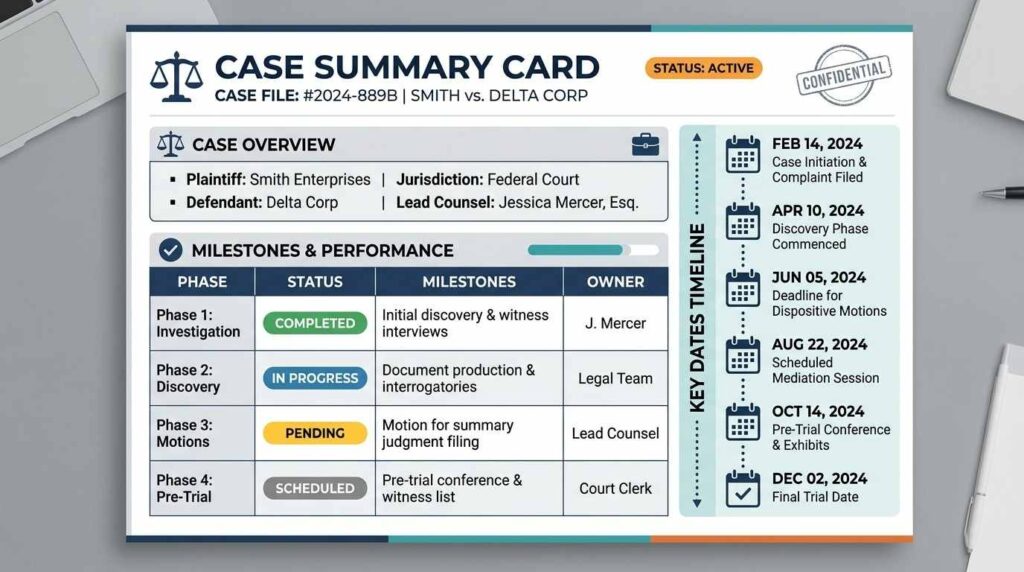
| Costs | United asked for $21,926.34. The clerk cut it to $12,516.47. A judge agreed to review it. |
| Appeal | Ninth Circuit briefing dates were reported for June and July 2026 |
Who Is Yihsing Tien
Yihsing Tien, who also goes by Angela Tien, joined United as a flight attendant around 2013. Court records say she worked there until January 2022. Her lawyers describe her as a strong performer with no discipline on her record.
The job is physical. United’s job description in the court record lists standing, kneeling, bending, and twisting. It also says crew members push or pull carts that can need up to 45 pounds of force to get moving.
On October 30, 2018, Tien fell at a hotel during a work trip. The court record lists injuries to both knees, her left elbow, her left shoulder, and her left wrist. United accepted her workers’ compensation claim, and she also used sick bank hours for paid leave.
Her doctors decided she could not do flight attendant duties at that time. A hotel fall can also lead to a claim against the property owner, which is a separate path from workers’ compensation. Our slip and fall lawsuit guide on steps, costs, and legal deadlines explains how that kind of claim works.
The Leave Letter Mix-Up and the Three Year Rule
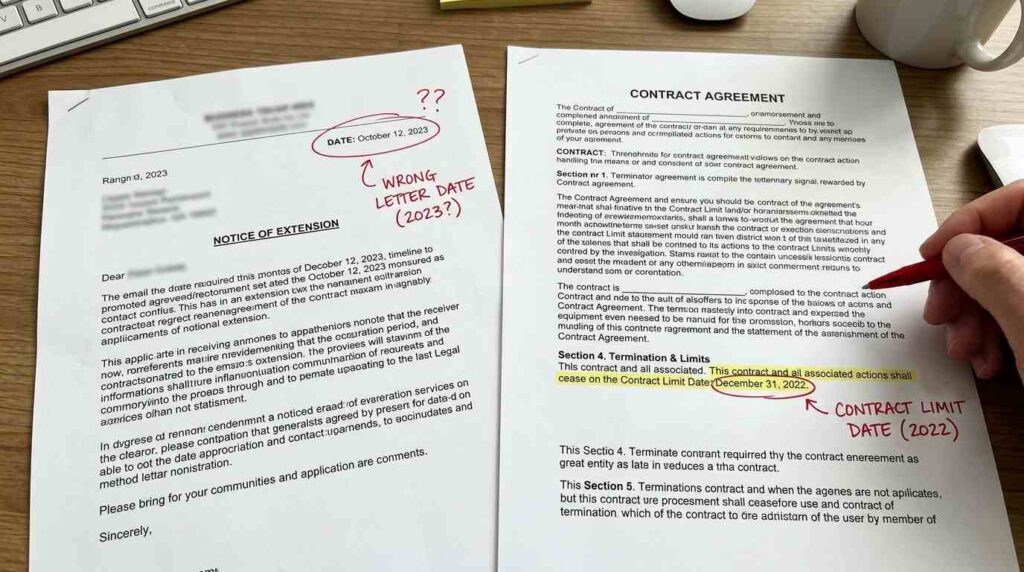
The heart of the Tien lawsuit is one wrong date. In January 2019, United approved Tien’s request for medical leave. A letter dated January 25, 2019 said she would be separated on January 25, 2023 if she stayed unable to return.
That date did not match her union contract. The Joint Collective Bargaining Agreement (JCBA) between United and the Association of Flight Attendants caps medical leave in Section 15.E. The cap is the shortest of three periods: the length of the disability, three years, or the employee’s total active service.
At the end of that cap, the employee is administratively terminated. In August 2017, the union and United had agreed that leave for on the job injuries follows the same cap. So the real deadline was January 2022, not January 2023.
The court record says a United employee noticed the error and told Tien’s base. United still never sent a corrected letter. On January 27, 2022, it told her she had passed the contract limit and was released effective January 25, 2022.
Tien wrote back that she would have returned, with some accommodation, if she had been asked. United answered that the three year limit comes from the contract and cannot change because of an earlier supervisor’s letter. The record also shows that a union representative told her in February 2020 that she could stay on leave for up to three years.
Timeline of the Tien v. United Airlines Case
Dates matter here, and news stories often blur them. This table uses court records and reports of court filings.
| Date | What happened |
|---|---|
| October 30, 2018 | Tien falls at a crew hotel and is hurt |
| January 2019 | Medical leave approved. Letter lists January 25, 2023 as the separation date |
| January 25, 2022 | Employment ends under the three year leave cap |
| 2023 | Lawsuit filed. Request to send the case back to state court is denied on August 23, 2023 |
| October 2023 | Second amended complaint filed |
| January 22, 2024 | Judge White rules on United’s motion to dismiss |
| January 8, 2026 | Magistrate Judge Thomas Hixson issues a discovery order |
| February 2, 2026 | Summary judgment for United. Judgment entered |
| Spring 2026 | United files a bill of costs for $21,926.34. The clerk reduces it to $12,516.47 |
| April 2026 | Judge White agrees to review the costs |
| June 22 and July 22, 2026 | Reported Ninth Circuit due dates for Tien’s brief and United’s response |
The Nine Claims Tien Filed
Tien’s second amended complaint listed nine claims. Most came from California’s Fair Employment and Housing Act (FEHA).
- Harassment based on an actual or perceived disability
- Disability discrimination
- Retaliation
- Failure to engage in the good faith interactive process
- Failure to provide reasonable accommodation
- Violation of the California Family Rights Act (CFRA)
- Retaliation and wrongful termination in violation of public policy
- Intentional infliction of emotional distress
- Injunctive relief
What the Court Decided in January 2024
United first asked the court to dismiss the case. That motion tests whether the complaint, taken as true, states a valid claim. You can read the full order on Justia.
Four items were thrown out. Harassment and emotional distress failed because Tien did not describe specific incidents. The FEHA retaliation claim failed because United granted her leave and she described no protected activity after she was fired. The injunctive relief claim was dismissed as a remedy, not a claim.
Five claims survived: discrimination, the interactive process, reasonable accommodation, CFRA, and wrongful termination. The judge said she had done the “bare minimum” on some of them and faced an uphill fight on causation. That is where the later line that five of nine claims survived comes from.
Railway Labor Act Preemption in Plain English
United argued the case belonged in labor arbitration, not court. The Railway Labor Act (RLA) covers airline labor relations. It sends “minor disputes,” which are fights about rights created by a union contract, to a separate system.
Courts use a two part test from the Ninth Circuit. First, does the claim only enforce a right that exists because of the union contract? Second, would the court have to interpret the contract, not just look at it?
In 2024, Judge White said no. Disability and leave claims under FEHA and CFRA come from state law, so they are usually not preempted. In 2026, he drew a narrower line. Any theory that United should be stopped from using the JCBA, or that Section 15.E did not apply, would need contract interpretation. Those theories were preempted, and that weakened her argument that she relied on the letter date.
Why United Won at Summary Judgment in 2026
Summary judgment is different from a motion to dismiss. By this stage, both sides had finished discovery and filed evidence. The judge asks whether a reasonable jury could find for the plaintiff on this record. A copy of the February 2026 ruling is on CaseMine.
Discrimination. United said it ended her job because of the contract cap, not her disability. The judge agreed that following a union contract can be a lawful, non-discriminatory reason. Tien pointed to no specific biased statements, and the record showed no exceptions to the cap for other workers.
She also said other flight attendants told her United dislikes people on medical leave. The court called her beliefs subjective and not enough to create a real dispute. It also separated her case from Tanaka v. UPS, where the employer’s own words tied the leave to the disability.
Accommodation and the interactive process. The only accommodation Tien asked for was medical leave, and United gave it. United also asked if she wanted to move to another position, and she said no. While she was on leave, United kept mailing notices about its accommodation program.
CFRA leave. Her only CFRA leave request came in January 2019, and she was let go in 2022. The court said that gap was too long to suggest retaliation for taking leave. Judgment was entered, and the case was closed.
A January 2026 discovery order on GovInfo shows the sides were still fighting over evidence shortly before the ruling.
The Bill of Costs Fight
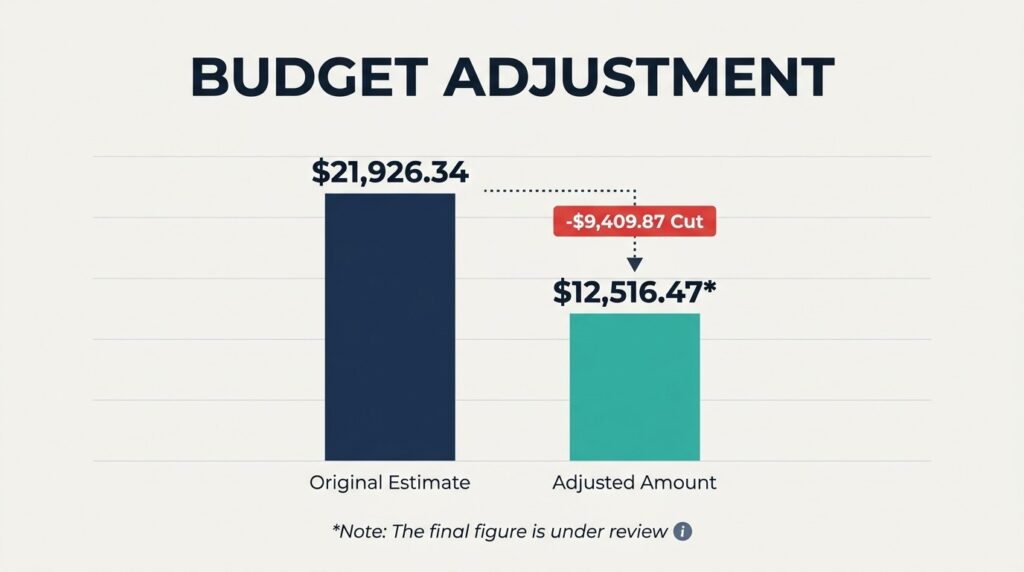
After the ruling, United filed a bill of costs for $21,926.34. The clerk cut that figure to $12,516.47. Tien’s lawyers then asked the judge to look again.
Their filing made three main points. They said the amount was more than twice her income from all sources over the past year. They compared it to United’s reported $59.1 billion in operating revenue for fiscal year 2025, about 0.000037 percent of that revenue. They also said her case was not frivolous, since five of nine claims survived the first motion.
In April 2026, Judge White said he would approve her request for a closer review. He pointed to her limited means, the public interest issues, and the risk of chilling important civil rights suits. WorkersCompensation.com reported those details in May 2026.
Some headlines make the bill sound final. Based on the reports I found, the amount was under challenge, not collected.
Costs Versus Attorney Fees
Many headlines call this a demand for “legal fees.” That is not quite right. Under Federal Rule of Civil Procedure 54(d)(1), a winning party can usually recover certain costs, but not attorney fees, unless a law says otherwise. Costs cover items like court fees, deposition transcripts, and copies.
In the Ninth Circuit, the winner is presumed to get costs. The loser can argue otherwise. In Association of Mexican-American Educators v. California, the court listed reasons to deny costs. They include the loser’s limited money, the chilling effect on civil rights cases, the public importance of the issues, how close the case was, and the gap in resources between the parties.
Those reasons match what Judge White cited. For a wider look at how legal costs work, see our wrongful death attorney guide to claims, costs, and compensation.
There is one more wrinkle. California’s FEHA limits when a winning employer can recover fees and costs in state court. Lawyers sometimes debate how that rule fits with Rule 54(d) when a FEHA claim is heard in federal court. Reports on this case do not say how the court will treat that point.
What News Reports Got Wrong
When a case goes viral, details drift. These are the most common errors I found when comparing stories with the court record. For a wider habit of double checking, see our guide on how to check any online legal platform before you trust it.
- “Dismissed for failing to state a claim.” Several outlets said this. In fact, five of nine claims survived the motion to dismiss, and the rest were decided at summary judgment after discovery.
- “United is suing Tien.” United did not file a new lawsuit. It filed a bill of costs inside the same case.
- “Fired in 2023.” The court record shows employment ended January 25, 2022. January 2023 was the wrong date in the 2019 letter.
- “Ninth Circuit Judge Jeffrey White.” One report used this title. Judge White is a U.S. District Judge. The Ninth Circuit is a separate appeals court.
- “Right wrist.” One report listed a right wrist injury. The court order says left wrist.
What Happens Next in the Case
Two things were still open in the latest reports I could find. One is the review of the cost bill in district court. The other is Tien’s appeal at the Ninth Circuit Court of Appeals.
An appeals court can affirm, reverse, or send the case back. Reports said briefs were due in June and July 2026. As of October 16, 2026, I found no public report of a final appeals decision in the United Airlines Yihsing Tien lawsuit.
On costs, the judge could approve the reduced amount, cut it further, or deny costs completely. Dockets change, so check the live record before relying on any date here.
Some lawsuits end without a ruling at all. Parties can settle at almost any stage. Our article on the Walmart $5.6 million overcharging settlement shows how that works in a class action, which is a different setup from a single employee case.
Disability and Medical Leave Rights in California
The Tien lawsuit sits on top of some basic rules. FEHA bars disability discrimination by employers with five or more employees. It also requires reasonable accommodation and a good faith interactive process when an employee has a known disability and asks for help.
CFRA gives eligible employees job protected leave for their own serious health condition. The court described eligibility as 12 months of service and 1,250 hours in the past year, with up to 12 workweeks of leave. Federal law adds the Americans with Disabilities Act, enforced by the Equal Employment Opportunity Commission. The EEOC disability resources page has plain language guides.
On deadlines, the California Civil Rights Department says a complaint must generally be filed within three years of the act. You must file with the department even if you plan to sue in court. The EEOC has shorter deadlines, generally 180 days, extended to 300 days where a state agency also enforces the law. Confirm current deadlines with the agency.
These rights have limits. A union contract cap can be a lawful reason for ending employment if there is no proof of bias. That was the core of United’s win.
Lessons From the Tien Case
These points come from the court’s own reasoning. They are not legal advice, and every situation is different.
- Dates in writing matter. The wrong letter date shaped the entire dispute.
- Requests need to be clear. The court noted that Tien asked for leave and nothing else.
- Contracts can be a lawful reason. A plaintiff then needs proof of pretext, such as exceptions made for others.
- Evidence beats belief. Specific statements and comparison cases carry more weight than a general sense of unfairness.
- Timing links claims. The long gap between her 2019 leave request and her 2022 firing weakened the CFRA claim.
- Losing can cost money. Even a good faith case can lead to a bill of costs in federal court.
Liability cases often turn on proof, not sympathy. Our article on the Janice Griffith lawsuit and what it teaches about liability explores that idea in a personal injury setting. If you face a similar leave or termination issue, a licensed employment attorney in your state can review your documents and deadlines.
How to Read the Court Documents Yourself
You do not need a law degree to follow a docket. Start with the case number, which here is 4:23-cv-02622. The order’s heading, such as “granting in part and denying in part,” tells you the result in seconds.
Read the background and the conclusion first. The middle explains why the judge ruled that way. For an example of breaking down a court order, see our ELANCO homeschool diploma lawsuit explained. Always confirm key facts on the official court record.
Frequently Asked Questions
What is the United Airlines Yihsing Tien lawsuit about?
It is a federal case in which former flight attendant Yihsing “Angela” Tien said United discriminated against her because of a disability and fired her unfairly. She was hurt in a 2018 hotel fall and lost her job in January 2022 under a three year leave cap. United said it followed the union contract.
Did Yihsing Tien win or lose the lawsuit?
She lost at the district court level. On February 2, 2026, Judge Jeffrey S. White granted summary judgment to United. Five of her nine claims had survived an earlier motion to dismiss, but they did not survive summary judgment.
Why was Tien fired?
United said her medical leave reached the three year maximum in Section 15.E of the union contract. Tien said an earlier letter gave her a later date. The court found the contract cap was a legitimate reason and saw no proof of disability bias.
How much does United want Tien to pay?
United first asked for $21,926.34 in costs. The clerk reduced that to $12,516.47. A judge agreed to review the request, so the final figure may change. It covers costs, not attorney fees.
Is there an appeal in the Tien case?
Reports said the case moved to the Ninth Circuit, with briefs due in June and July 2026. I found no public report of a final appeals ruling as of October 16, 2026.
Can a flight attendant be fired for being on long medical leave?
It depends on the facts, the contract, and the law that applies. Here, the court found a union contract cap was a lawful reason. The California Civil Rights Department says employers generally cannot fire someone for being out sick if the person is entitled to leave as an accommodation or under leave laws.
How long do you have to file a disability discrimination complaint in California?
The California Civil Rights Department says a complaint generally must be filed within three years of the act. Federal EEOC deadlines are usually shorter. Confirm the current rules with the agency or a licensed attorney.
Conclusion
The United Airlines Yihsing Tien lawsuit shows how one wrong date can shape years of litigation. The court found that United relied on a real union contract limit, and it saw no proof of disability bias. The fight over about $12,500 in costs now raises a bigger question about whether losing a civil rights case should carry a price.
Keep the key facts in mind. Tien was injured in 2018, her employment ended in January 2022, the court ruled for United on February 2, 2026, and cost and appeal questions were still open in the latest reports. Bookmark this page and check the docket for fresh updates.