



Walmart has agreed to pay $5.6 million to settle a lawsuit that accused the company of overcharging customers at the register. Four county district attorneys in California brought the case. They said Walmart charged shoppers more than the price on the shelf, and sold some weighed items, mostly produce and bakery goods, with less inside than the label said.
- What Happened in the Walmart Overcharging Case
- Who Filed the Lawsuit and Why
- The Laws Walmart Allegedly Broke
- How Much Walmart Is Paying, and Where It’s Going
- Walmart’s History With Price Mistakes
- How This Compares to Other Retailer Settlements
- What a “Scanner Violation” Really Means
- How Inspectors Catch These Mistakes
- What This Means for Everyday Shoppers
- What to Do If You Think You Were Overcharged
- How Walmart Says It Will Fix Things
- Frequently Asked Questions
- Conclusion
If you think you were personally hurt by a pricing mistake, talk to a consumer protection lawyer about your options.
Here’s what Walmart was accused of, how the settlement works, what the law says, and what to do next time your receipt doesn’t match the shelf tag.
What Happened in the Walmart Overcharging Case
The lawsuit was first filed back in 2022, then updated later. It claimed Walmart charged customers more than the lowest price it had advertised or posted in stores. It also claimed some weighed items, like produce, baked goods, and other prepared foods, weighed less than what the label said. Walmart and the counties announced the settlement on August 8, 2025.
Walmart runs 280 stores in California, including 10 in Santa Clara County. That’s a big part of why four counties’ prosecutors teamed up on this case instead of just one.
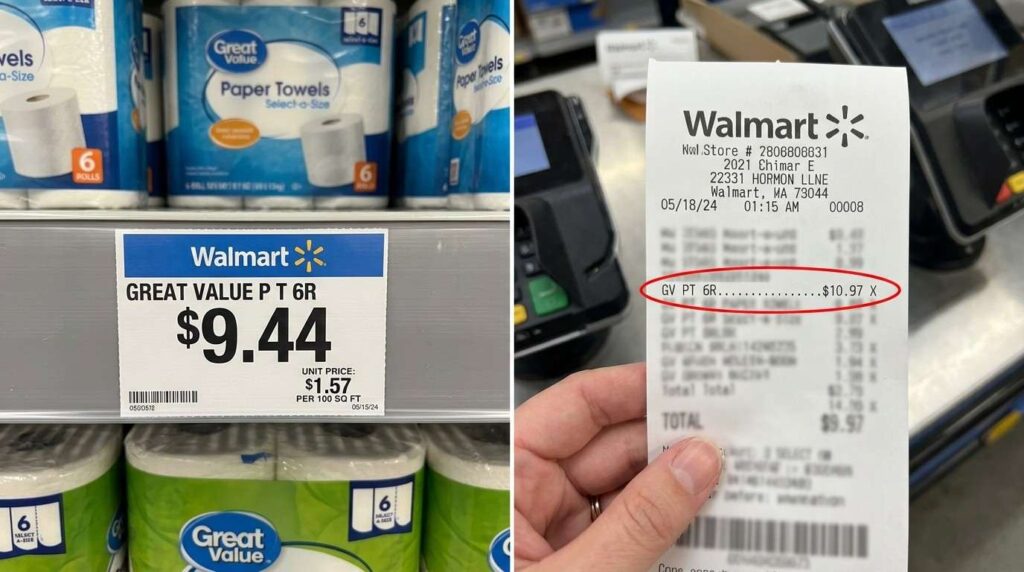
People sometimes call this a price scanner violation. It just means the price on the shelf tag or in an ad doesn’t match what actually shows up at checkout. With thousands of sales happening every day across hundreds of stores, even a small mistake rate adds up to a lot of overcharged customers.
Who Filed the Lawsuit and Why
Four California district attorney’s offices brought the case together: Santa Clara County, San Diego County, San Bernardino County, and Sonoma County. Counties often join forces like this because big retailers operate across county lines.
Santa Clara County District Attorney Jeff Rosen put it simply: when someone brings an item to the register, the price has to be right. Shoppers expect that. California expects it. And his office plans to make sure the law backs that up.
These investigations don’t just start from customer complaints. Inspectors from the Santa Clara County Weights and Measures Division, the Division of Agriculture, and the Department of Environmental Health helped look into the pricing and weight problems, including undercover shopping trips to test whether shelf prices matched register prices.
Curious how cases like this get started? Our guide on how consumer fraud investigations work walks through it.
The Laws Walmart Allegedly Broke
The case relied on two California consumer protection laws: the False Advertising Law and the Unfair Competition Law. Both are written broadly on purpose, so the state can go after a company for misleading pricing even without proving it meant to trick anyone. California also has a specific rule saying a store can’t charge more than the price it advertised, posted, or quoted.
That’s different from one shopper suing on their own. This kind of case is brought on behalf of the public, and the money goes to the state, the counties involved, and future consumer protection work, not to individual shoppers. For more on how these laws differ from a regular fraud or breach-of-contract claim, see our explainer on unfair competition law in California.
How Much Walmart Is Paying, and Where It’s Going
The $5.6 million breaks down into two pieces: $5.5 million in civil penalties, and $139,908.92 to cover the cost of the investigations.
Santa Clara County alone will get about $1.375 million of that, which goes into its Consumer Protection Fund. The settlement also stops Walmart from running false or misleading ads going forward, and it requires the company to have staff in charge of keeping prices and weights accurate in its California stores. That last part matters: it’s meant to stop this from happening a third time, not just punish Walmart for the past two.
This isn’t a class action, so don’t expect a refund check in the mail. It’s a government enforcement case, not a lawsuit that pays out individual shoppers.
Walmart’s History With Price Mistakes
This isn’t new for Walmart. Back in 2012, it paid $2.1 million for overcharging shoppers, breaking a judgment from 2008. That earlier case made Walmart give customers $3 off the lowest advertised price whenever they got overcharged, or the item free if it cost less than $3. A check in 2010 found the mistakes were still happening in 11 counties, so the program got pushed back another year.
A company this big runs constant sales, discounts, and different prices in different regions across hundreds of stores. Every price change is another chance for a shelf tag and a scanner to fall out of sync. Want to know how repeat offenses affect a company legally? Read our piece on what happens when a business violates a prior consent judgment.
If you or your team have ever caught a Walmart (or another store’s) price mismatch yourselves, a short, real example fits well here. Even one specific story with a date will do more for this section than any general commentary.
How This Compares to Other Retailer Settlements
Walmart isn’t the only big retailer California has gone after for this. A few other chains have settled similar cases in the last couple of years.
| Retailer | Settlement Amount | Year | Main Allegation |
|---|---|---|---|
| Walmart | $5.6 million | 2025 | Overcharging and inaccurate weights |
| Safeway, Albertsons, Vons | Nearly $4 million | 2024 | Overcharging and inaccurate weights |
| Home Depot | Close to $2 million | 2024 | Scanner price violations |
| Lowe’s | $1,089,999.90 | 2025 | Scanner price violations and false advertising |
| Carquest Auto Parts | $750,000 | 2024 | Scanner price violations |
Safeway, Albertsons, and Vons paid nearly $4 million after being accused of the same kind of overcharging. Their deal also included a promise that lets a customer collect up to $5 if they catch an overcharge. Lowe’s agreed to pay $1,089,999.90 and start a new price accuracy program, add staff for it, run more audits, and stop raising prices right before the weekend. Home Depot paid close to $2 million around the same time, after regulators found its shelf prices didn’t match its registers.
Big or small, grocery store or hardware store, the same kind of case keeps showing up.
What a “Scanner Violation” Really Means
The name sounds technical, but it’s simple. A scanner violation happens when the price on a shelf tag, sign, or ad doesn’t match what the register charges once the barcode gets scanned.
Most of the time, it’s not someone trying to trick you. A sale ends and nobody pulls the old sticker. A price update doesn’t reach every register at once. Regulators don’t need to prove anyone did it on purpose; the law just cares whether you got charged more than the posted price.
Weighed items add another way things can go wrong. If a pack of chicken or a box of berries is priced by weight, a bad scale or a mislabeled package can overcharge you without a scanner ever being involved.
How Inspectors Catch These Mistakes
County Weights and Measures offices exist just for this. Inspectors show up at stores, often without warning, and shop like a regular customer. They buy some items, check what they paid against the shelf price, and weigh packaged goods against their labels.
One mistake usually isn’t enough to trigger a case. What gets a store in real trouble is a pattern: enough wrong prices across a sample of items that it clearly isn’t random. Inspectors don’t need to check every single transaction to make that case.
What This Means for Everyday Shoppers
Even at a store you trust and shop at every week, prices aren’t always right. Big retailers change prices constantly, and mistakes slip through no matter how large the company is.
That doesn’t mean every overcharge is dishonest. Most come from a label that didn’t get updated or a system glitch, not a scheme. But across millions of purchases, small mistakes add up fast. A separate Consumer Reports check found Kroger shoppers were overcharged about $1.70 per item on average because of expired sale tags, roughly 18.4% more than they should have paid. That kind of small, repeated overcharge is exactly why regulators keep an eye on pricing across the whole industry, not just one company.
If legalexpertise.net has gotten reader questions or complaints about retail overcharging, a line or two of real data here (how many, what kind of stores, what people asked) makes this section stronger, and gives search engines something no other article has.
What to Do If You Think You Were Overcharged
You don’t need a lawyer to fix a single mistake at the register.
- Check your receipt against the shelf tag before you leave. Snap a photo of the shelf price if you can, especially on sale items.
- Ask an employee or manager to fix it right there. Most stores, Walmart included, will refund the difference on the spot.
- Hold onto your receipt and any photos. You’ll want them if the store doesn’t fix it right away.
- Report a pattern of mistakes to your local Weights and Measures office. One error happens; a repeated pattern at the same store is what gets investigated.
- File a complaint with your state Attorney General’s office if a store keeps refusing to fix clear pricing errors.
- Think about small claims court for a bigger, unresolved problem. Our guide on filing a small claims court case explains how.
If the problem is bigger than just you, like it’s happening to a lot of customers, that’s a different situation, and it usually needs a government case or a class action instead. Read more in our article on how class action lawsuits work.
How Walmart Says It Will Fix Things
Walmart didn’t admit to doing anything wrong, which is normal in settlements like this. A company spokesperson said Walmart was glad the matter was settled.
Beyond the money, Walmart now has to keep staff on hand whose job is making sure prices and weights are right in its California stores, and it can’t run false or misleading ads. That kind of requirement often matters more than the size of the check; it’s built to stop the problem from happening a third time.
Other stores in similar cases have made similar changes: more audits, more staff dedicated to price accuracy, and rules against bumping prices right before a busy weekend.
Frequently Asked Questions
Is the Walmart $5.6 million settlement a class action?
No. It’s a case brought by California district attorney’s offices, not a class action. There’s no process for individual shoppers to file for their own payout from this case.
Did Walmart admit it did anything wrong?
No. Like most settlements like this, Walmart agreed to pay and make changes without admitting fault.
What products were affected?
Mostly weighed items, produce, baked goods, other prepared foods, plus regular items sold above their posted price.
How do I know if I was overcharged at Walmart?
Check old receipts against any flyers or shelf tags you kept. Going forward, just compare the shelf price to your receipt before you leave the store.
Can I sue Walmart myself for a small overcharge?
Technically, yes, through small claims court. But most people find it faster to just ask for a refund at customer service first. Small claims makes more sense if a store won’t fix a clear, documented mistake.
Has Walmart faced this kind of lawsuit before?
Yes. It paid $2.1 million in 2012 for a similar overcharging case in California. This keeps coming up for the company.
Are other big retailers facing similar lawsuits?
Yes. Safeway, Albertsons, Vons, Home Depot, Lowe’s, and Carquest Auto Parts have all settled similar cases with California district attorneys in the past couple of years.
Who enforces price accuracy laws in California?
County District Attorney offices, working with county Weights and Measures divisions, handle this kind of enforcement.
Conclusion
Walmart’s $5.6 million settlement fits a bigger pattern in retail. California regulators are clearly focused on price accuracy, and Walmart is just the latest big chain to pay for the gap between shelf prices and what actually rings up.
For shoppers, the lesson is simple: check your receipt against the shelf price, especially on sale items and anything sold by weight, and speak up right away if something’s off. If you think a pattern of pricing errors affected you and a store won’t make it right, a consumer protection attorney can help you figure out your options.