



The Ford F-150 oil consumption lawsuit is a set of class action cases. They say 2018 to 2020 F-150 trucks with the 5.0L Coyote V8 burn too much engine oil. Ford denies that the engine is defective.
- What Is the Ford F-150 Oil Consumption Lawsuit?
- Which F-150 Trucks Are Covered?
- The Two Cases: Lyman v. Ford and Bryan v. Ford
- What Owners Say Is Wrong With the 5.0L Engine
- How Much Oil Burning Is Too Much?
- What Ford Says in Its Defense
- The July 2026 Court Ruling in Plain English
- What the Court Records Show About Ford’s Knowledge
- TSB 19-2365: The Ford Fix and Why Owners Doubt It
- Is There a Recall or a Settlement?
- Can You Join the Ford F-150 Oil Consumption Lawsuit?
- What Could Owners Receive?
- Warranty and Lemon Law Basics
- Records Many Owners Keep
- Common Pitfalls to Avoid
- Used Trucks and Out of Warranty Owners
- When to Talk to a Lawyer
- FAQ
- What is the Ford F-150 oil consumption lawsuit?
- Is there a Ford F-150 oil consumption lawsuit settlement?
- Which F-150 years are affected?
- How much oil use is normal for the Ford 5.0L?
- Is there a recall tied to the Ford F-150 oil consumption lawsuit?
- Can I join the Ford F-150 oil consumption lawsuit if I bought my truck used?
- What is TSB 19-2365?
- How long will the Ford F-150 oil consumption lawsuit take?
- Conclusion
On July 22, 2026, a federal judge let the key fraud claims in one case move toward a jury. As of October 14, 2026, we found no settlement and no recall.
This matters because oil loss can hurt an engine. It also costs owners money for extra oil, repairs, and lost resale value.
What Is the Ford F-150 Oil Consumption Lawsuit?
The Ford F-150 oil consumption lawsuit asks one big question. Did Ford know the 5.0L V8 burned too much oil, and did it keep that from buyers?
Owners say yes. Ford says no.
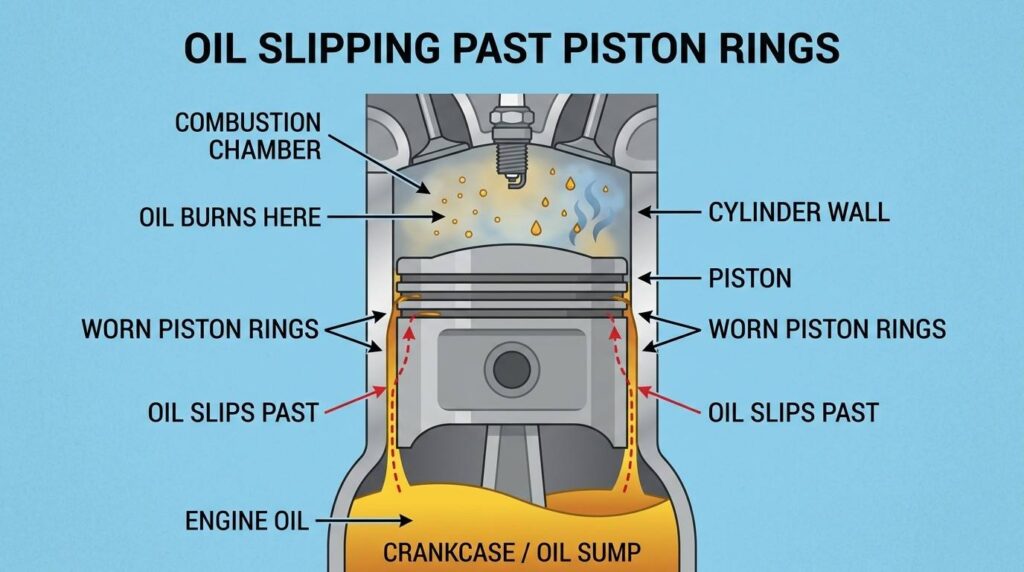
Two class actions are pending in the U.S. District Court for the Eastern District of Michigan. Both say oil slips past the piston rings and burns in the combustion chamber.
Owners say this forces them to add oil between changes. They also say it can lead to engine damage.
Quick answer: The lawsuits cover 2018, 2019, and 2020 Ford F-150 trucks with the 5.0L V8. They claim a defect lets the engine burn oil at a high rate. Ford says the engine works as designed and that its fixes work.
Which F-150 Trucks Are Covered?
The court papers name model years 2018, 2019, and 2020. They name only trucks with the 5.0L Coyote V8. Neither case in the Ford F-150 oil consumption lawsuit targets the EcoBoost engines.
Some websites list other years, such as 2011 to 2019 or 2018 to 2023. We could not match those ranges to the court records. When you read about this case, check the model years against the court order.
| Truck Detail | Named in the Cases? |
|---|---|
| 2018 F-150 with 5.0L V8 | Yes |
| 2019 F-150 with 5.0L V8 | Yes |
| 2020 F-150 with 5.0L V8 | Yes |
| 2021 and newer F-150 | Not named |
| F-150 with EcoBoost V6 | Not named |
The Two Cases: Lyman v. Ford and Bryan v. Ford
The Ford F-150 oil consumption lawsuit is really two separate cases. They share the same trucks and the same basic claim. The court docket for the newer case lists the older one as a possible companion case, according to CourtListener.
| Detail | Lyman v. Ford | Bryan v. Ford |
|---|---|---|
| Court | E.D. Michigan | E.D. Michigan |
| Case number | 2:21-cv-10024 | 2:25-cv-12714 |
| Filed | 2021 | August 28, 2025 |
| Judge | Gershwin A. Drain | Jonathan J.C. Grey |
| Plaintiffs | Named owners from several states | Daniel Bryan and 11 others from nine states |
| Latest news | Ruling on Ford’s summary judgment motion, July 22, 2026 | Ford asked to dismiss claims of seven owners, reported September 22, 2026 |
The plaintiffs in both cases are represented by several firms, including The Miller Law Firm and Sauder Schelkopf. Ford has fought both cases.
A quick note on timing. The Lyman case has been open for more than five years. Class actions move slowly, and owners should plan for a long wait.
What Owners Say Is Wrong With the 5.0L Engine
The Ford F-150 oil consumption lawsuit points to the piston ring assembly and the cylinder coating. Plaintiffs say these parts let engine oil seep into the combustion chamber. The oil then burns instead of staying in the crankcase.
Owners say this causes several problems. They add oil often, and the oil life monitor may warn them early. Some say the engine runs rough or loses power.
One plaintiff in the court record described a sudden loss of power on a freeway at about 60 miles per hour. He said the truck was very low on oil at the time. That testimony helped the judge decide the case should not end early.
Here is a simple what if example. Picture an owner named Dan with a 2019 F-150. He changes his oil on schedule, yet he adds a quart every 1,200 miles, or about four quarts between changes.
How Much Oil Burning Is Too Much?
Ford does not print an oil use limit in the owner’s manual. In court filings, Ford says it uses an internal target of 10,000 miles per quart. Ford calls that a lab benchmark, not a promise to owners.
Let us turn that into real numbers. At 10,000 miles per quart, a truck would use about half a quart in a 5,000 mile oil change interval.
A truck that burns a quart every 1,000 miles would use five quarts in the same time. That is ten times the benchmark.
The 5.0L Coyote holds 8.8 quarts of oil, according to court filings summarized by CarComplaints. Five quarts is more than half of that. You can see why owners worry.
| Oil Use | Quarts Used in 5,000 Miles | Compared With Ford’s Benchmark |
|---|---|---|
| 1 quart per 10,000 miles | 0.5 | Matches the benchmark |
| 1 quart per 2,500 miles | 2 | Four times higher |
| 1 quart per 1,000 miles | 5 | Ten times higher |
What Ford Says in Its Defense
In the Ford F-150 oil consumption lawsuit, Ford admits some trucks had oil use problems early on. It says it found a cause in 2019.
Ford points to deceleration fuel shutoff, a fuel saving feature that creates strong engine vacuum. Ford says that vacuum can pull oil past the piston rings.
Ford also says a running change to the valve stem seals in early 2018 played a role. It issued a technical service bulletin, TSB 19-2365, in December 2019. Ford says oil related warranty repairs dropped after that.
Ford makes two more arguments. First, it says owners got free repairs under warranty, so they suffered no loss. Second, it says it did not know about a defect before these owners bought their trucks.
The judge rejected the second argument for most of the claims. We explain how in the next section.
The July 2026 Court Ruling in Plain English
The biggest ruling in the Ford F-150 oil consumption lawsuit so far came on July 22, 2026. Judge Drain issued an opinion in Lyman v. Ford, and you can read the full order on Justia.
Ford had asked the court to end the case before trial. The judge said yes to some claims and no to most.
This was a summary judgment ruling. That is not a verdict. It only decides whether a jury should hear a claim.
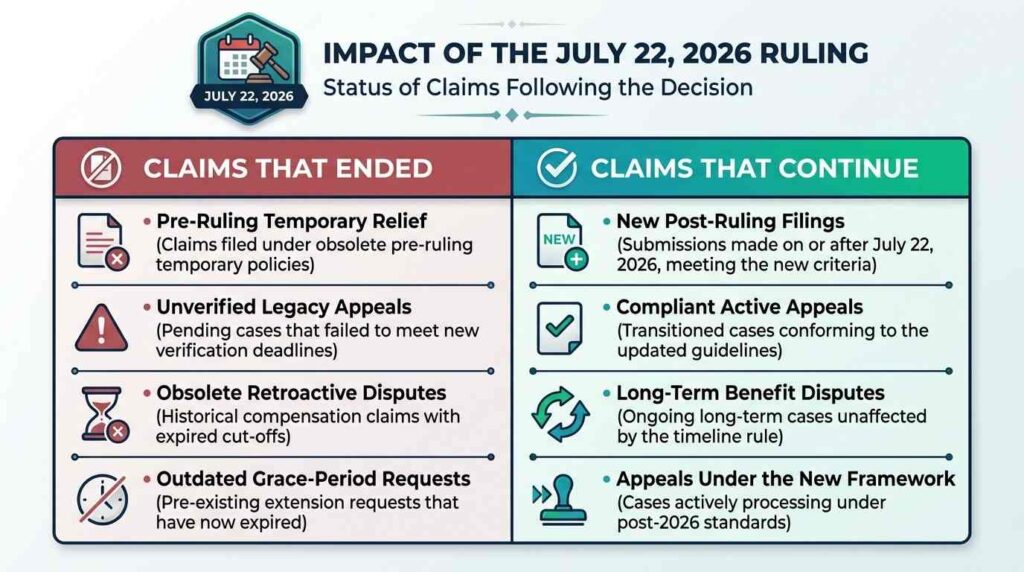
Claims that ended:
- The federal Magnuson-Moss Warranty Act claim
- Express warranty claims
- The implied warranty claim
- Negligent misrepresentation claims
- One Illinois couple’s fraudulent concealment claim
The order says the plaintiffs did not oppose dropping the first four groups of claims. So the judge did not rule on their merits.
The Illinois claim failed for a different reason. The judge found too little proof of a special trust relationship under Illinois law.
Claims that continue: consumer protection and fraudulent concealment claims for named plaintiffs in California, Ohio, Pennsylvania, Virginia, and Washington. The Illinois consumer fraud claim also continues.
The judge also rejected Ford’s “free repair” argument. The plaintiffs want benefit of the bargain damages, which means the gap between what they paid and what the truck was worth with the defect.
The court said a later repair does not erase that gap.
What the Court Records Show About Ford’s Knowledge
The judge wrote that, viewing the evidence in the plaintiffs’ favor, a jury could find that Ford knew about the oil problem before the named owners bought their trucks. The order lists internal Ford documents. We summarize them here, as reported in the court order and by Yahoo Autos.
- June 2016: A Ford engineer wrote that oil consumption was “not solved” for the new engine.
- June 29, 2016: A Ford internal alert said the engine did not fully meet the 10,000 miles per quart target.
- July 2016: A program review rated excessive oil consumption as “red,” a sign of a serious issue.
- August 2016: Two tests showed 5,473 and 7,964 miles per quart. A Ford expert called them “meaningfully worse.”
- October 2016: Ford approved a piston change with more ring tension. Documents said it met the target.
- June 2017: After production began, a Ford engineer called new data “awful” at 3,782 miles per quart.
The plaintiffs’ expert says Ford then approved a lower ring tension design to protect fuel economy. Ford disputes the claims against it. None of this is a finding of fault.
This part of the case shows why the lawsuit has lasted so long. Discovery let the owners see Ford’s own paperwork. Judges often rely on that paperwork when they decide whether a jury should hear a case.
TSB 19-2365: The Ford Fix and Why Owners Doubt It
A technical service bulletin is a set of repair instructions sent to dealers. It is not a recall. Ford does not have to announce it to the public, yet the Ford F-150 oil consumption lawsuit puts this bulletin at the center.
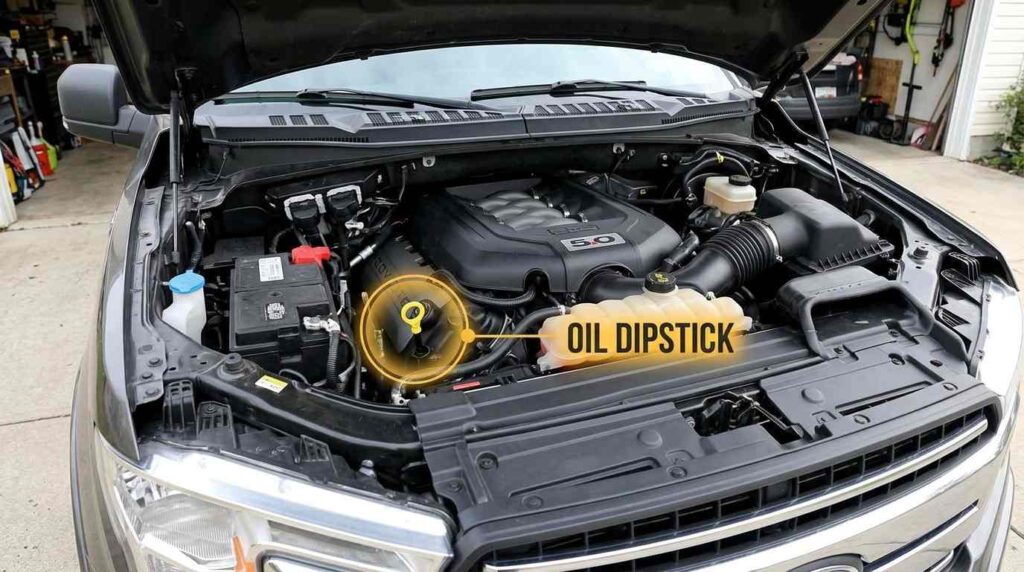
According to the lawsuit and repair sites, TSB 19-2365 has several steps. Dealers update the powertrain control module software and install a new dipstick with a wider two quart operating range. They also change the oil and filter.
Some owners say it helped. Others say their trucks still burn oil.
Owners also point to the new dipstick. They say it makes a low reading look normal.
Ford says the software change reduces vacuum during fuel shutoff and cuts oil use. The plaintiffs say the bulletin does not repair the piston rings or the cylinder coating. A jury or a settlement may one day decide who is right.
This pattern is common in consumer cases. A company offers a limited fix, and owners say it falls short. Our guide to the Samsung S22 software update lawsuit shows the same kind of dispute over a software fix.
Is There a Recall or a Settlement?
We found no recall for oil consumption in these trucks. We also found no announced settlement in court records or major news as of October 14, 2026. Ford has used TSBs, not a safety recall.
You can check any recall for your truck with your VIN on the NHTSA recall page. Do this even if you think no recall exists. Recall lists change.
Be careful with websites that promise payout dates or a national settlement. We found no court filing that backs those claims. A settlement needs court approval and a public notice.
Court cases also change fast. Check the dockets on CourtListener or Justia for the newest filings. For help tracking a case, see our Life360 lawsuit status guide for an example of how we report case status and options.
Can You Join the Ford F-150 Oil Consumption Lawsuit?
At this stage, most owners cannot sign up to join the Ford F-150 oil consumption lawsuit. In a class action, a few named plaintiffs sue for a larger group. The court must certify the class under Federal Rule of Civil Procedure 23 before the group is official.
Reports on the cases do not describe a certified class. If a court certifies a class, owners who fit the class definition are usually included automatically. They may be able to opt out.
If a settlement happens, the court orders a notice to class members. The notice explains how to file a claim and by what date. Our Cash App spam text lawsuit settlement guide shows how that claim process often works.
Watch out for lead generation sites. Some collect your phone number and sell it to law firms. Read the fine print before you submit your details.
What Could Owners Receive?
No court has set an amount for owners, so no one can promise a payout from the Ford F-150 oil consumption lawsuit. Here is what plaintiffs ask for in cases like this one.
- Benefit of the bargain damages for the drop in value at purchase
- Money back for extra oil and repair costs
- Attorney fees and court costs paid by the defendant
- Other relief the court allows, such as repairs or longer warranty coverage
In other auto defect class actions, settlements have included repair promises, reimbursements, and cash. We cannot say what a result here would look like.
Large cases can end with big numbers, but they take time. See our report on the Google Android cellular data lawsuit for an example of verdicts and settlements in class action cases.
Warranty and Lemon Law Basics
Ford’s standard warranty gives 3 years or 36,000 miles of basic coverage. The powertrain warranty runs 5 years or 60,000 miles, whichever comes first. You can see the terms on the Ford warranty page.
The powertrain warranty covers the engine. Many 2018 to 2020 trucks are now past it. A truck bought used may have started its clock on the first owner’s date.
Lemon laws differ by state. Many focus on new vehicles and set limits on time, mileage, and repair attempts. Some states set a short window to act.
Remember that dropped warranty claims in Lyman do not decide your rights. Each owner’s rights depend on state law, the sale papers, and the facts. A lawyer in your state can explain them.
Records Many Owners Keep
This is general information, not legal advice. If you follow the Ford F-150 oil consumption lawsuit, you will see consumer groups suggest keeping records for any vehicle problem. Good records also help a dealer or a court understand what happened.
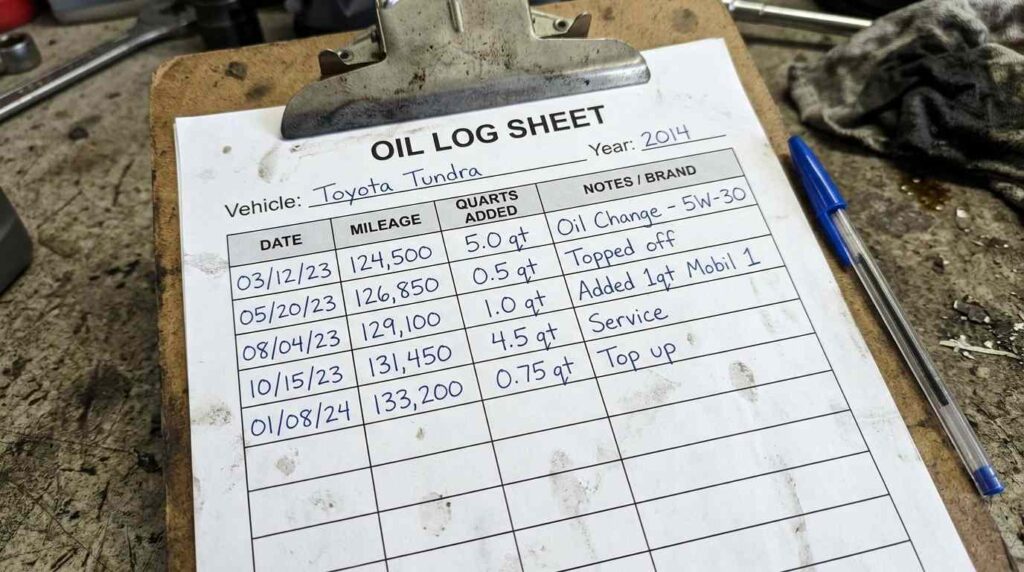
- Receipts for every oil change and every quart you add
- A log with the date, mileage, and amount of oil added
- Repair orders from each dealer visit, even if no repair was done
- Emails and letters with Ford or the dealer
- Your purchase or lease papers and your VIN
- A note of any warning lights or power loss
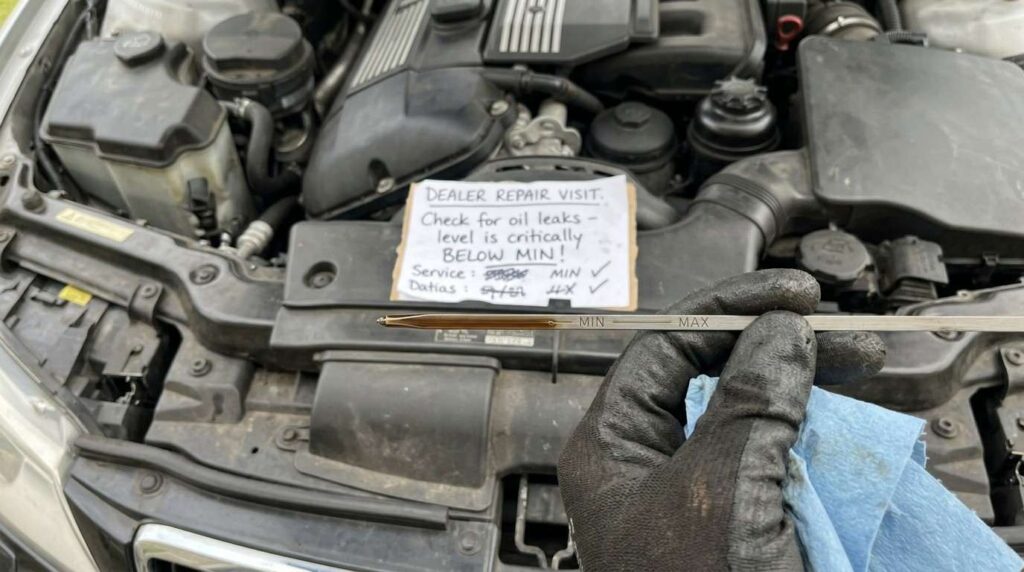
You can also report the problem to NHTSA. Check the oil level only on level ground with the engine off.
Do not fill above the maximum mark. Overfilling can harm an engine, so ask a qualified technician.
Common Pitfalls to Avoid
Owners who follow the Ford F-150 oil consumption lawsuit often run into the same problems. Here are the big ones.
- Waiting too long. Warranty clocks and legal deadlines both run out.
- Verbal complaints only. Without paper, a dealer may have no record of your visit.
- Throwing away records. Old receipts can matter later.
- Trusting rumor sites. Some pages post false settlement dates.
- Ignoring a low oil level. Running low can damage the engine, no matter who is at fault.
Every kind of lawsuit has deadlines. Our slip and fall lawsuit guide explains legal deadlines and costs in plain terms. The time limits in a vehicle case differ, so ask a local lawyer.
Used Trucks and Out of Warranty Owners
Many F-150 owners bought their trucks used. They ask whether the Ford F-150 oil consumption lawsuit includes them. The answer depends on how a court defines the class, and no class has been certified in the reports we reviewed.
Out of warranty owners often face a hard choice. A dealer may charge for oil consumption tests or repairs. Owners should ask for any quote in writing.
If you paid out of pocket, keep the invoice. Some settlements reimburse owners for past repairs, while others only cover future work. The settlement terms decide.
When to Talk to a Lawyer
You may want a lawyer if your engine failed, if the dealer refuses to help, or if a deadline is near. A Ford F-150 oil consumption lawsuit attorney can review your sale papers and tell you whether a state lemon law applies.
Many offer a free first call.
Pick carefully. Check the lawyer’s license with your state bar. Be careful with online legal platforms that make big promises, and read our guide on how to check an online legal platform before you trust one.
Ask about fees up front. Ask whether they have handled auto defect cases. Never pay for a promise of a payout.
FAQ
What is the Ford F-150 oil consumption lawsuit?
It is a pair of class actions in federal court in Michigan. They claim 2018 to 2020 F-150 trucks with the 5.0L V8 burn too much oil. They also claim Ford knew and did not tell buyers.
Is there a Ford F-150 oil consumption lawsuit settlement?
We found no settlement as of October 14, 2026. The Lyman case is still moving toward trial or a deal. Any settlement would need court approval and a public notice.
Which F-150 years are affected?
The court papers name model years 2018, 2019, and 2020 with the 5.0L Coyote V8. Other years may have oil use problems too. They are not named in these cases.
How much oil use is normal for the Ford 5.0L?
Ford does not state a number in the owner’s manual. In court filings, Ford says its internal target is one quart per 10,000 miles. Ford says that is a lab benchmark and not a promise.
Is there a recall tied to the Ford F-150 oil consumption lawsuit?
We found no recall. Ford issued technical service bulletins to dealers instead. Check your VIN on the NHTSA recall page for the latest.
Can I join the Ford F-150 oil consumption lawsuit if I bought my truck used?
The answer depends on the class definition, and no class has been certified in the reports we reviewed. Used buyers may be included in a class if the court allows it. A lawyer can review your facts.
What is TSB 19-2365?
It is a Ford service bulletin from December 2019 for 5.0L F-150 trucks. It calls for a software update, a new dipstick, and an oil and filter change. Plaintiffs say it does not fix the root cause.
How long will the Ford F-150 oil consumption lawsuit take?
No one can say. Lyman v. Ford was filed in 2021 and is still open in 2026, and class actions often take years.
Conclusion
The Ford F-150 oil consumption lawsuit is still alive in 2026. The July 22 ruling kept the core fraud claims in Lyman v. Ford moving.
Ford denies the charges, and no court has found it liable.
For now, owners can focus on what they control. Keep clear records, check recalls with your VIN, and watch the dockets for news. If your engine failed or a deadline is near, talk to a licensed attorney in your state.