



Oregon voter data lawsuit dismissed is the short way to describe a big court result from January 2026. A federal judge told the Justice Department it could not force Oregon to hand over its full voter list. That list includes birth dates, driver’s license numbers, and partial Social Security numbers.
- Oregon Voter Data Lawsuit Dismissed: The Quick Answer
- Timeline of the Case
- What Data Did the DOJ Want?
- Why the Judge Dismissed the Case
- What Dismissed Means in Court
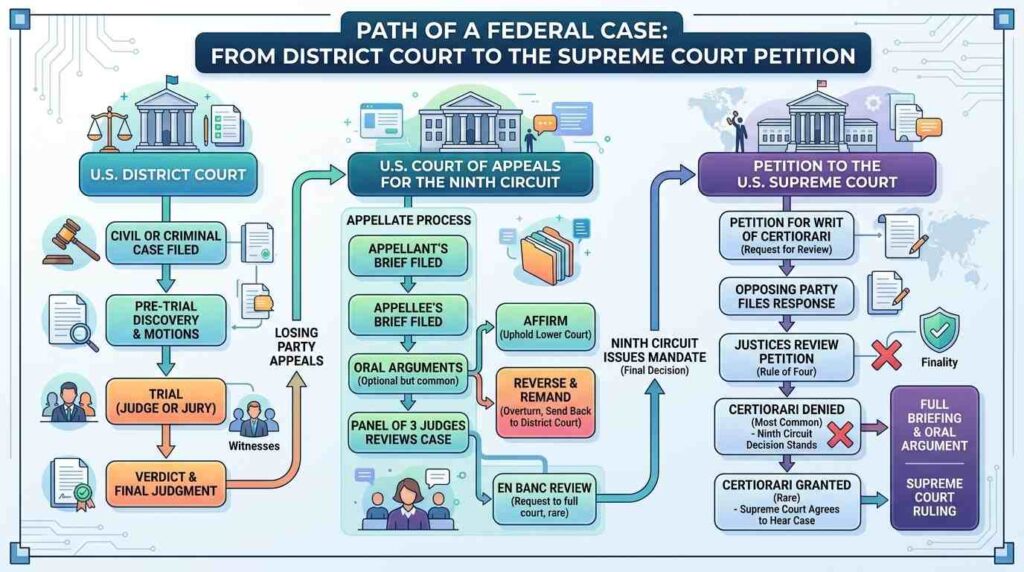
- The Appeal at the Ninth Circuit
- How Other States Fared
- Four Questions That Decide These Cases
- What This Means for Oregon Voters
- Myths vs. Facts
- How to Check Case Updates Yourself
- When to Talk to a Lawyer
- FAQ
- 1. Was the Oregon voter data lawsuit dismissed?
- 2. Why did the judge dismiss the DOJ lawsuit?
- 3. Did the DOJ appeal the Oregon ruling?
- 4. Did Oregon share any voter information?
- 5. What voter details did the DOJ ask for?
- 6. Did other states also beat the DOJ?
- 7. Can I get money from this case?
- 8. Does the ruling change how I vote in Oregon?
- Conclusion
The DOJ is appealing, so this isn’t the end of the story. Below you’ll find what happened, why the judge ruled the way he did, where the appeal stands now, and what it all means for you.
Oregon Voter Data Lawsuit Dismissed: The Quick Answer
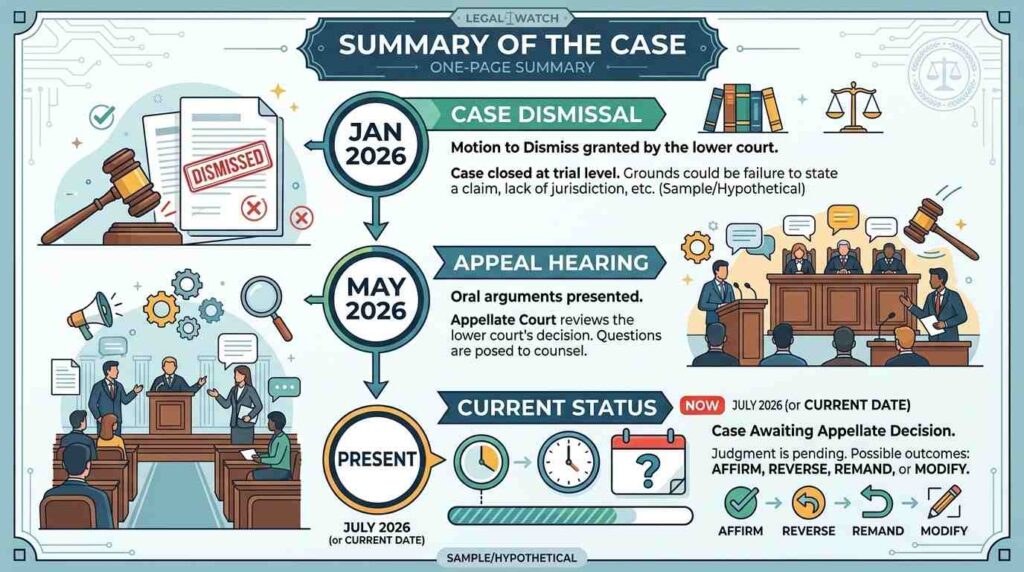
On January 26, 2026, U.S. District Judge Mustafa Kasubhai threw out United States v. Oregon (Case No. 6:25-cv-1666). He said so from the bench after a hearing in Eugene. The written order came on February 5, 2026.
The DOJ wanted the complete statewide voter list with nothing blacked out. The judge ruled that its written demand did not meet the requirements of the Civil Rights Act of 1960. He also turned down its claims under two other federal election laws.
The DOJ appealed to the Ninth Circuit Court of Appeals (Case No. 26-1231). Until that court says otherwise, the dismissal stands.
Timeline of the Case
A lot of news stories skip steps, which makes the case hard to follow. This table puts the key events in order.
| Date | Event |
|---|---|
| July 2025 | The DOJ writes to Oregon asking about voter list upkeep and for a full electronic copy of the voter list |
| August 2025 | The DOJ sends a second letter. Oregon replies that the DOJ has no such authority and offers the public voter list instead |
| September 16, 2025 | The DOJ sues in the U.S. District Court for the District of Oregon |
| January 14, 2026 | The judge tentatively rules for Oregon at a hearing |
| January 26, 2026 | The judge dismisses the case from the bench |
| February 5, 2026 | The court enters its written order |
| Late winter 2026 | The DOJ appeals and asks the Ninth Circuit to move faster |
| May 19, 2026 | A Ninth Circuit panel hears the Oregon and California appeals |
Several groups joined the case on Oregon’s side. They include Our Oregon, the League of Women Voters of Oregon, and the ACLU of Oregon.
What Data Did the DOJ Want?
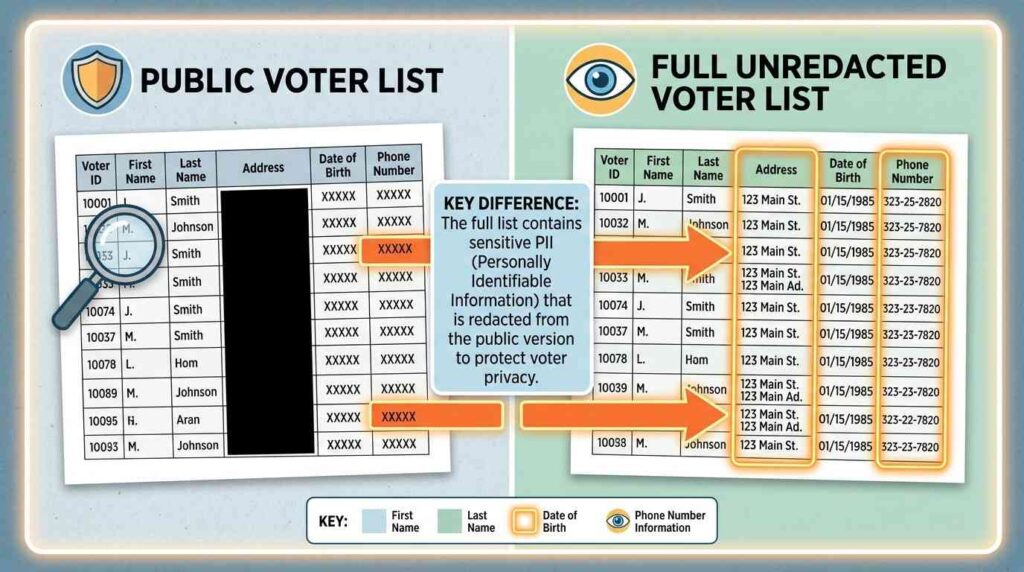
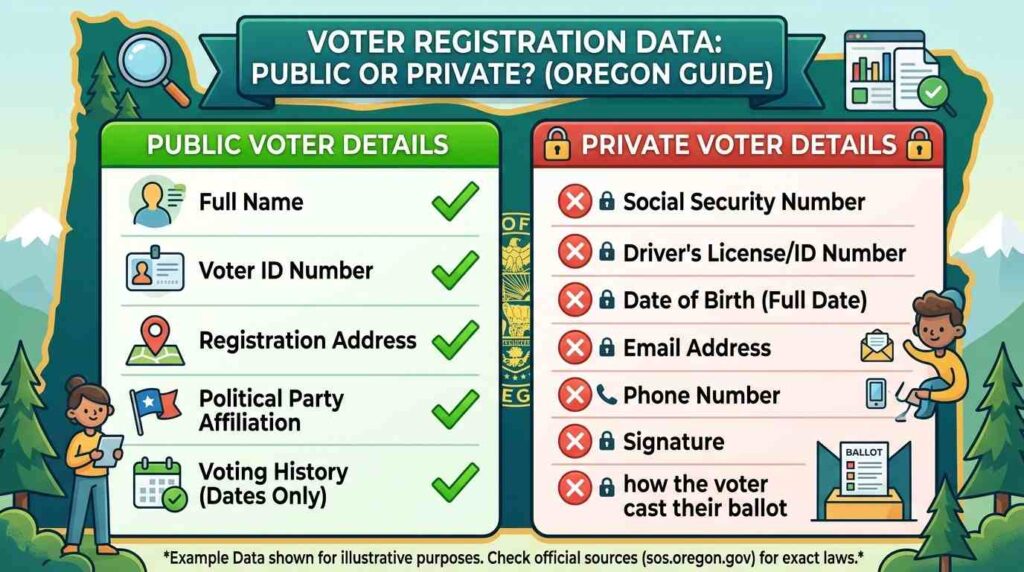
The DOJ asked for Oregon’s statewide voter registration list in full. That means each voter’s name and birth date, plus home address and driver’s license number. It also includes the last four digits of the Social Security number where the state has one.
CBS News reported that the list covers nearly 3.8 million registered voters. Election officials in many states say handing this kind of file to the federal government would break state and federal privacy laws.
Oregon didn’t refuse to share anything. The state offered the public version of the list, which leaves out the sensitive fields.
Why the Judge Dismissed the Case
The DOJ leaned on three federal laws: the Civil Rights Act of 1960, the National Voter Registration Act (NVRA), and the Help America Vote Act (HAVA). The judge rejected its claims under every one of them.
The Civil Rights Act of 1960
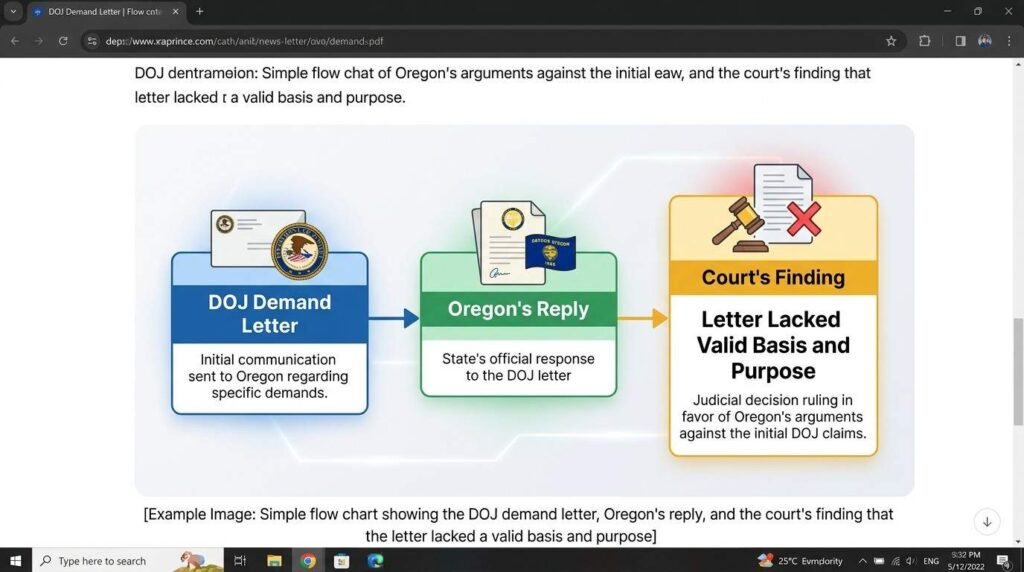
This was the DOJ’s main tool. The law lets the U.S. Attorney General demand election records in writing, but the demand has to state its basis and purpose.
The judge found the DOJ’s August letter fell short. He also read the congressional record from the time the law passed. In his view it tied these demands to investigations of discrimination in elections.
The NVRA and HAVA
Both laws tell states to keep their voter lists accurate. The DOJ argued that this duty gave it a right to see the whole list. The court didn’t buy it.
The judge pointed out that Congress never gave the federal government that kind of power. Under the Constitution, states and Congress run elections.
The Bondi Letter
A few days before the hearing, Attorney General Pam Bondi wrote to Minnesota’s governor. Her letter linked access to voter rolls with demands about immigration enforcement. The judge asked both sides how that letter affected the DOJ’s stated purpose in Oregon.
Reports on the written opinion say he treated the letter as a reason to doubt the DOJ’s explanation. He also warned that courts should no longer simply take the department at its word.
What Dismissed Means in Court
When a judge dismisses a case, the case ends in that court. That doesn’t always mean the fight is over for good.
There are two kinds to know about. A dismissal with prejudice closes the claim for good. A dismissal without prejudice lets the claim come back if the problem can be fixed.
A case can also end before any full trial. This page on how a court closure can leave the merits undecided explains the idea using a business dispute.
In this case, the judge ruled on the law. He decided the DOJ had no valid legal path to demand the data. That’s why the appeal is about legal questions and not new facts.
The Appeal at the Ninth Circuit
The Ninth Circuit covers Oregon, California, and several other western states. When the appeal was argued, Oregon’s Attorney General said the DOJ had lost every case decided on the merits at the trial level, six at that point.
What Happened at Oral Argument
The panel heard the Oregon and California appeals together on May 19, 2026. That was also primary election day in Oregon.
The judges spent a lot of time on one narrow question. Does a state voter database count as a “record” or “paper” under the Civil Rights Act? Oregon’s lawyer said the unredacted list doesn’t exist as a standalone document. He explained that the state keeps individual voter files and builds a separate public list.
Judge Salvador Mendoza Jr. asked whether the public notice about how the data would be used was too broad. Reports described the panel as mostly skeptical of the DOJ. Even so, a tough panel doesn’t guarantee an outcome.
Where Things Stand Today
As of early October 2026, we could not find a published Ninth Circuit decision in the Oregon appeal. A ruling could uphold the dismissal, reverse it, or send part of the case back to the trial court. Check the docket for anything new before you rely on this section.
How Other States Fared
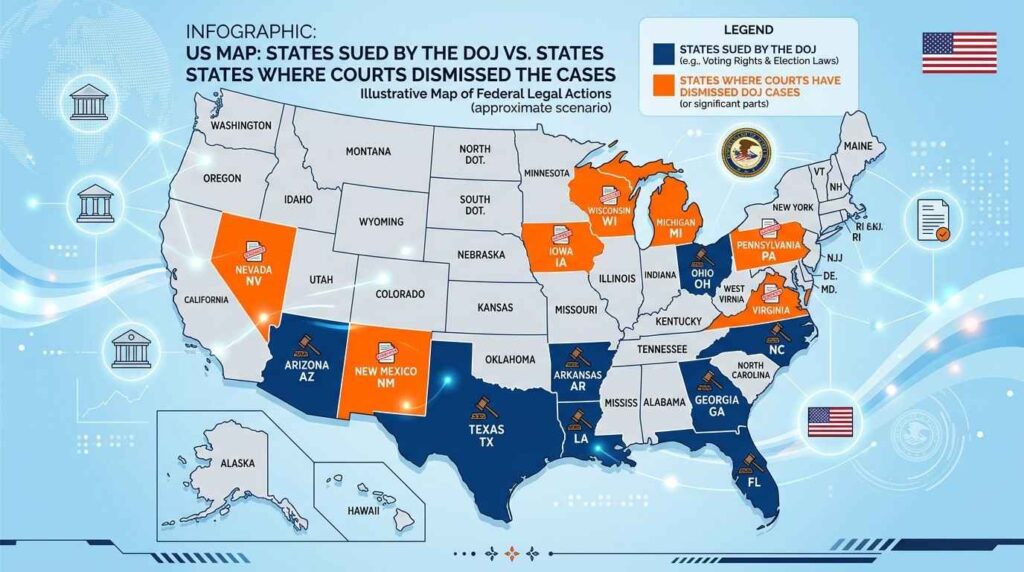
Oregon is far from alone. By May 2026, the DOJ had sued 29 states and Washington, D.C.
| Place | Court | Result |
|---|---|---|
| Oregon | District of Oregon | Dismissed January 26, 2026. On appeal |
| California | Central District of California | Dismissed in January 2026. Judge David O. Carter called the request unprecedented and illegal |
| Michigan | Western District of Michigan and Sixth Circuit | Dismissed. The Sixth Circuit affirmed 2 to 1 on June 24, 2026 and denied rehearing on August 17, 2026 |
| Georgia | Northern District of Georgia | Dismissed because the DOJ sued in the wrong city |
| New Mexico | District of New Mexico | Pending when last reported. The state pointed the court to the Oregon opinion |
Why Michigan Matters Most
The Sixth Circuit handed the DOJ its first appeals court loss on this issue. It held that Title III of the Civil Rights Act of 1960 does not let the DOJ demand Michigan’s full voter database. It also found the demand letters didn’t meet the law’s requirements.
Kentucky is in the Sixth Circuit too, so the ruling binds the DOJ’s pending case there. The Ninth Circuit doesn’t have to follow it, but it may find it persuasive. If two circuits disagree, the Supreme Court could step in.
The Overall Score
In early August 2026, the Brennan Center counted the DOJ at zero wins in 21 court cases over state voter data. That number changes as new rulings come in. The Center updated its public tracker on October 2, 2026.
Four Questions That Decide These Cases
Look across the rulings and the same four questions keep coming up. They work as a quick way to judge any new headline about voter roll lawsuits.
- Did the DOJ state a real basis and purpose? Courts in Oregon and Michigan said the letters fell short.
- Is a voter database a “record” or “paper” under the 1960 law? This is the heart of the Ninth Circuit fight.
- Do the NVRA and HAVA give a right to private data? So far, courts have said no.
- Did the DOJ sue in the right court? Georgia’s dismissal turned on this, not on the main issue.
If a future ruling answers the second question differently, expect a split between circuits. That’s the most likely road to the Supreme Court.
What This Means for Oregon Voters
Your private voter details have not been handed to the federal government through this lawsuit. Oregon still controls the full file. Your registration and your right to vote haven’t changed.
Can You Join the Lawsuit?
No. This is a case between the United States and the State of Oregon. It isn’t a class action, so there’s no claim form and no payout. This page on how class actions differ from individual lawsuits shows why that difference matters when headlines talk about who can file.
What About Your Privacy?
Oregon says federal law doesn’t force it to share the sensitive fields. The League of Women Voters of Oregon and the ACLU of Oregon took part to defend voter privacy. The League keeps a case page for United States v. Oregon with the filings.
Keep in mind: if a higher court changes the ruling, the situation could change too.
Myths vs. Facts
Posts about legal cases online often get details wrong. This article on how legal claims get distorted online makes the same point. Look for a real case number and a docket before you trust a claim.
| Myth | Fact |
|---|---|
| The DOJ lost, so the case is over | The DOJ appealed to the Ninth Circuit |
| The judge said the government can never see voter data | The judge said the DOJ didn’t meet the legal test under these laws |
| Oregon refused to share any voter data | Oregon offered the public voter list |
| Voters can claim money from this case | It isn’t a class action and has no payout |
| Only Oregon beat the DOJ | Courts in several states have ruled against it |
How to Check Case Updates Yourself
You don’t have to take any one blog’s word for it. The sources are open to everyone.
- Search the case name and number. Use “United States v. Oregon” and 26-1231 for the appeal.
- Read the state’s updates. The Oregon Department of Justice announcement covers the Ninth Circuit argument.
- Follow court reporters. Courthouse News covered the hearing in detail in Ninth Circuit digs into DOJ demand for Oregon voter records.
- Use a case tracker. Democracy Docket keeps a page on the Oregon DOJ voter data case.
- Compare other states. The Michigan Attorney General posted about the Sixth Circuit rehearing denial.
Court records are public, but every court has its own search tools. This guide to searching court cases online gives a good example, even though it covers a New York system.
Also remember that a win on paper can take a long time to become real. One consumer case shows that even a court-upheld ruling can take years to enforce. Appeals add even more waiting.
When to Talk to a Lawyer
Most readers just want to understand the news, and that doesn’t take a lawyer. Professional help makes sense in a few situations. You might be an election official who has to answer a data request, or you might run a group that advises voters on privacy.
You may also have received a notice about your own voter record. Or you could be a journalist or researcher planning to request voter data.
In those cases, look for an attorney with election law or privacy law experience in your state. Before you trust any legal site online, run a few checks. This guide on how to verify a legal website lists simple steps.
For related reading, the ACLU’s release on the California dismissal covers the same issue from another state.
FAQ
1. Was the Oregon voter data lawsuit dismissed?
Yes. Judge Mustafa Kasubhai dismissed the DOJ’s case on January 26, 2026. The written order followed on February 5, 2026.
2. Why did the judge dismiss the DOJ lawsuit?
He found the DOJ did not meet the Civil Rights Act of 1960, which requires a stated basis and purpose. He also rejected its NVRA and HAVA claims. He said Congress never gave the federal government the power the DOJ claimed.
3. Did the DOJ appeal the Oregon ruling?
Yes. The Ninth Circuit heard arguments on May 19, 2026. As of early October 2026, no published decision could be found.
4. Did Oregon share any voter information?
Yes. Oregon offered the public voter list. It refused the full file with sensitive details.
5. What voter details did the DOJ ask for?
Names, birth dates, addresses, driver’s license numbers, and partial Social Security numbers.
6. Did other states also beat the DOJ?
Yes. The Sixth Circuit backed Michigan, and a judge dismissed California’s case. Counts change often, so check a tracker.
7. Can I get money from this case?
No. It isn’t a class action, so there’s no claim form or fund.
8. Does the ruling change how I vote in Oregon?
No. Registration and voting rules stay the same. The case was about who can access the full voter file.
Conclusion
The Oregon voter data lawsuit dismissed ruling was an early win for the state’s privacy argument. The judge found the DOJ’s demand didn’t fit the laws it relied on. A federal appeals court in Michigan has since reached a similar result.
The case isn’t fully closed. The Ninth Circuit heard the appeal in May 2026, and a decision could still land. Keep the four questions above in mind, and read the court papers when you can.
For more plain-English legal updates, explore more guides on Legal Expertise.