



The latest hair relaxer lawsuit update is this: no settlement exists yet, 12,743 federal cases are pending, and the first trial is set for September 7, 2027. On October 22, 2026, the judge also let key cancer experts testify, which kept the cases moving toward trial.
- Hair Relaxer Lawsuit Update: Where the Case Stands Today
- What Changed in the Past Few Months
- The October 22 Expert Ruling, Explained
- Bellwether Trials and the Final Five Cases
- How Fast the Case Count Is Growing
- Is There a Hair Relaxer Settlement Yet?
- What the Science Says
- Who Is Being Sued and Which Products Are Named
- State Court Cases and Attorney General Lawsuits
- The FDA Formaldehyde Rule
- Who Can File and What Evidence Helps
- Class Action or MDL?
- Common Mistakes to Avoid
- What to Watch Next
- Frequently Asked Questions
- What is the latest hair relaxer lawsuit update?
- How many hair relaxer lawsuits are pending?
- Has anyone received a hair relaxer settlement?
- When will the hair relaxer lawsuit settle?
- Is the hair relaxer lawsuit a class action?
- Can I still file a hair relaxer lawsuit?
- What cancers are covered?
- Do I need a lawyer to file?
- Conclusion
This matters if you used chemical relaxers and now worry about your health. Filing deadlines can be short, and they change from state to state.
This is general information only and not a substitute for advice from a qualified attorney licensed in your jurisdiction. Court dates shift often, so confirm any date with the court docket or a lawyer before you act.
Hair Relaxer Lawsuit Update: Where the Case Stands Today
Thousands of women say chemical hair relaxers caused uterine, endometrial, or ovarian cancer. Their federal cases sit together in one court in Chicago. That setup is called multidistrict litigation, or MDL.
Here is the quick snapshot.
| Item | Current status |
|---|---|
| Court | U.S. District Court, Northern District of Illinois |
| Judge | Mary M. Rowland |
| Case name | In re: Hair Relaxer Marketing, Sales Practices, and Products Liability Litigation, MDL No. 3060 |
| MDL created | February 2023 |
| Pending federal cases | 12,743 (November 2, 2026 count) |
| Total filed since 2023 | About 17,018 |
| Settlement | None announced |
| Jury verdicts | None |
| Final bellwether pool | Five cases |
| First trial date | September 7, 2027 |
| Next big motion deadline | Reported as January 11, 2027 |
Remember that no court has decided that relaxers cause cancer. No company has been found liable. The companies deny wrongdoing and are fighting the claims.
What Changed in the Past Few Months
A lot happened this fall. Here are the key events in order.
- July 27, 2026: Judge Rowland lifted a pause on discovery for the “second wave” defendants. These are companies added to the case after the first group.
- September 1, 2026: A new case management order cut the bellwether pool from ten cases to five. It also pushed second-wave discovery into July 2027.
- September 11, 2026: Arizona sued L’Oréal, saying it sold relaxers without warning about a cancer risk.
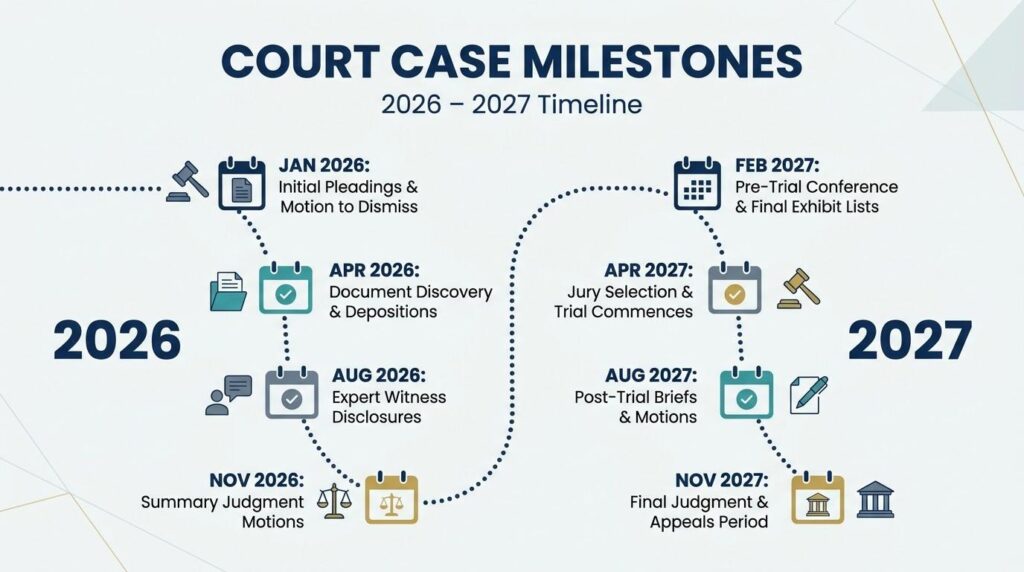
- September 24, 2026: The judge set the first federal trial for September 7, 2027. She also ordered monthly status meetings in 2027.
- October 22, 2026: The court ruled on key expert testimony, and the parties named the final five bellwether cases.
- Late October 2026: Minnesota’s attorney general filed a consumer protection lawsuit against L’Oréal over hair relaxers.
- November 2, 2026: The federal count reached 12,743 pending cases.
Dates in this litigation move a lot. Some law firm sites show older deadlines that no longer apply. Always check the most recent order.
The October 22 Expert Ruling, Explained
This was the biggest legal win for plaintiffs so far this year. It also confuses a lot of people, so let’s break it down.
Before a jury hears a scientist, the judge acts as a gatekeeper. She decides if the expert’s methods are reliable under Federal Rule of Evidence 702. Lawyers call this a Daubert challenge.
The first question is called general causation. It asks a broad science question: can chemical hair relaxers cause uterine and ovarian cancer at all? The second question is specific causation. It asks whether relaxers caused one particular woman’s cancer.
On October 22, Judge Rowland ruled on general causation. According to plaintiffs’ lead lawyers, she refused to exclude the plaintiffs’ epidemiology expert, Dr. Cote. She also allowed large parts of a toxicologist’s testimony about how chemical mixtures could disrupt hormones and enter the body through the scalp.
The judge also decided that experts may study relaxers as finished products. They do not have to pinpoint one single ingredient or one exact chemical mix. Their opinions still need reliable science behind them.
Why does this matter? In some mass torts, judges excluded the plaintiffs’ causation experts and the litigation fell apart. The acetaminophen MDL is the best known example. Hair relaxer plaintiffs avoided that outcome, at least for now.
But the fight is not over. Reports from law firms tracking the docket say challenges to other experts are still pending. Case-specific expert motions and summary judgment motions come next.
Ask yourself what this ruling does not do. It does not say relaxers cause cancer. It only says a jury may hear the science.
Bellwether Trials and the Final Five Cases
A bellwether trial is a test trial. With thousands of similar claims, the court picks a few to try first. The results show both sides how juries may react.
Verdicts in bellwether cases do not bind the other 12,000 plaintiffs. Still, they shape settlement talks. A big plaintiff win pushes companies to negotiate. A defense win pushes the other way.
The selection process took a long time:
- Each side first picked cases, leaving 32 discovery cases.
- Lawyers proposed 12 cases for the trial pool, but the judge rejected their list.
- On April 2, 2026, Judge Rowland chose ten cases herself.
- This fall, the pool shrank to five, and the parties named them on October 22.
The judge used strict rules. Each case had to name at least three defendants. Women with certain health conditions and women with separate talc cancer claims were left out. Only uterine, endometrial, and ovarian cancer cases could qualify.
The final five plaintiffs come from New York, New Jersey, and Maryland. Four have endometrial or uterine cancer claims, and one has an ovarian cancer claim. They used well-known brands such as Dark & Lovely, Optimum, ORS Olive Oil, Just for Me, and Crème of Nature.
The court has not said which case goes first. That decision matters a great deal.
Example: Say the first case involves a woman who used relaxers for 30 years and had a hysterectomy. A jury finds for her. Defendants then face real pressure to talk about a global deal.
Now flip it. A jury sides with the companies in the first trial. Plaintiffs would still have four more bellwether cases, but their leverage would drop.
How Fast the Case Count Is Growing
New lawsuits keep arriving. The Judicial Panel on Multidistrict Litigation (JPML) publishes monthly pending docket reports that track the numbers. Lawyers who follow the docket report these counts:
| Report date | Pending cases |
|---|---|
| February 2025 | 9,863 |
| December 2025 | 10,844 |
| February 2026 | 11,195 |
| July 1, 2026 | 11,877 |
| September 1, 2026 | 12,129 |
| October 1, 2026 | 12,381 |
| November 2, 2026 | 12,743 |
That makes this one of the largest product liability MDLs in the country. The count can dip when the judge clears out cases that missed paperwork deadlines.
Different websites quote different totals. They pull numbers on different days. Use the date next to any number you read.
Is There a Hair Relaxer Settlement Yet?
No. As of November 2026, no global settlement has been announced, and no plaintiff has been paid through the MDL.
A settlement master, Ellen Reisman, has helped with talks since 2025. That shows the parties can talk. It does not mean a deal is close.
Online, you will see payout guesses from about $100,000 to $1.75 million. Treat them as speculation. No court has approved a payout chart, and no one has tried a case to verdict.
Mass torts settle in a clear order:
- The science survives expert challenges.
- Bellwether cases get tried, and juries put a value on the harm.
- Both sides build a settlement grid, which sets values by cancer type, age, treatment, and use history.
Right now, the case sits between steps one and two. Some analysts think a global framework would not appear before late 2027 or 2028. That is an informed guess, not a promise.
Other mass torts show how different the paths can be. In the Depo-Provera litigation, the parties reached a settlement framework before any bellwether trial. You can read how that case played out in our Depo-Provera lawsuit update. Hair relaxer cases look slower, because the court is pushing toward trial first.
What would shape the value of a hair relaxer claim? Courts and settlement programs usually look at:
- The type and stage of cancer
- The treatment you needed, such as surgery, chemotherapy, or radiation
- How long and how often you used relaxers
- Proof of which products you used
- Your age and any loss of fertility
- Lost income and ongoing care needs
What the Science Says
The lawsuits took off after a study from the National Institutes of Health. It appeared in the Journal of the National Cancer Institute on October 17, 2022. You can read the abstract at the journal’s DOI page.
The study followed more than 33,000 women from the Sister Study for almost 11 years. During that time, 378 women developed uterine cancer. The NIH Record summary says frequent users, defined as more than four uses in the past year, were more than twice as likely to develop the disease.
The lead author put numbers on it. About 1.64 percent of women who never used straighteners would develop uterine cancer by age 70. For frequent users, that figure rose to 4.05 percent.
Context matters here. Uterine cancer is still fairly rare. The American Cancer Society noted that the study did not prove straighteners cause cancer, and the researchers did not track brands or ingredients. You can read that plain-language review for more detail.
Other research points the same way. A 2023 study in Environmental Research looked at 44,798 Black women. It found that long-term relaxer use was linked to uterine cancer in postmenopausal women, but not in premenopausal women. An earlier NIH study from 2019 linked relaxers to a 30 percent higher breast cancer risk.
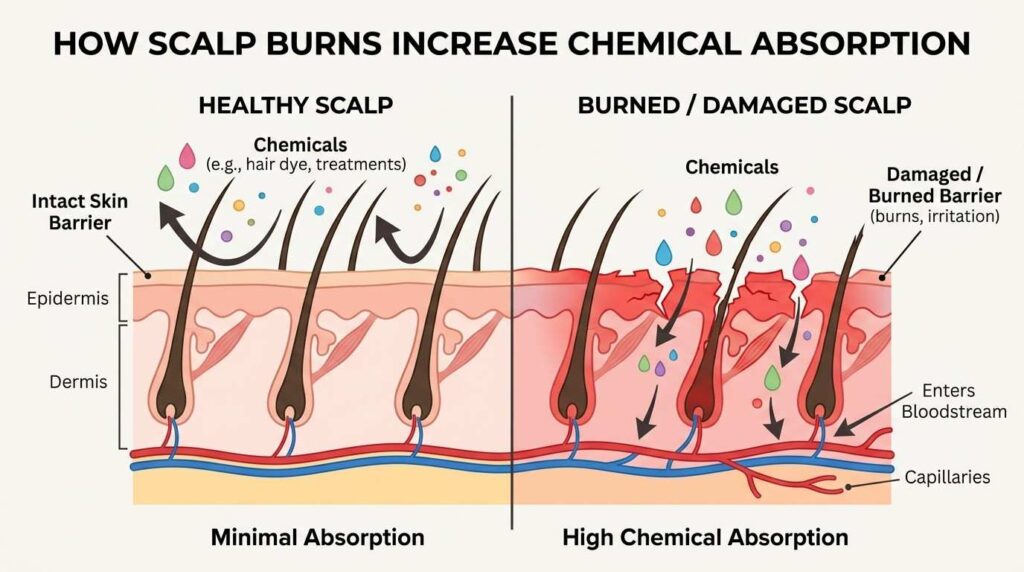
Why would relaxers raise risk? Plaintiffs point to endocrine-disrupting chemicals such as phthalates, parabens, and formaldehyde releasers. These chemicals can mimic hormones. Burns and sores on the scalp from relaxers may let more chemicals enter the body.
Chemical exposure cases often turn on proof of exposure and proof of cause. Our explainer on the MSU chemical exposure lawsuit shows how courts weigh those questions in another setting.
Who Is Being Sued and Which Products Are Named
Plaintiffs name many makers and sellers. The list grew over time as lawyers added second-wave defendants.
Companies named in the litigation include:
- L’Oréal USA and its SoftSheen-Carson unit
- Revlon
- Strength of Nature
- Namaste Laboratories and Dabur
- Avlon Industries
- House of Cheatham
- Advanced Beauty and Dudley Beauty
- Wella
- John Paul Mitchell Systems
- Sally Beauty Supply
Popular brands in the claims include Dark & Lovely, Optimum, Just for Me, ORS Olive Oil, Crème of Nature, Soft & Beautiful, and African Pride.
The French parent company, L’Oréal S.A., was dismissed in May 2025. The American subsidiary, L’Oréal USA, remains in the case.
Revlon has been through Chapter 11 bankruptcy before. That raises a fair question about how claims get paid when a company’s finances are tight. If you want the basics, see our guide on what a bankruptcy is and how it works.
State Court Cases and Attorney General Lawsuits
Not every case sits in Chicago. Lawyers reported hundreds of state cases in Illinois and Georgia in mid-2025, plus a mass tort program in Philadelphia. Courts in New York, Delaware, and California also hold cases.
In October 2025, the Georgia Supreme Court allowed a fibroid case against L’Oréal and Strength of Nature to move forward. That ruling covers a state case and does not bind the federal court.
Government action is new in 2026. Arizona sued L’Oréal in September. Minnesota’s attorney general followed in October with a consumer protection suit against L’Oréal. These suits focus on how the products were advertised, including marketing aimed at Black women.
State suits do not replace personal injury claims. A state may win penalties or changes to marketing, but you still need your own claim for your own injury.
The FDA Formaldehyde Rule
Many people ask why these products are still on shelves. Cosmetics in the United States do not need FDA approval before they sell.
The FDA has been working on a rule to ban formaldehyde and formaldehyde-releasing chemicals in hair smoothing and straightening products. Advocates asked for this in 2021. The agency has missed several of its own deadlines, and CNN reported another miss in January 2026.
The FDA’s 2026 regulatory plan lists November 2026 as the target for a proposed rule. As of this writing, I found no proposed rule published in the Federal Register. A proposal would be only the first step, because the public gets a chance to comment before any final ban.
This rule would cover smoothing and straightening products. It would not ban formaldehyde from all cosmetics.
Who Can File and What Evidence Helps
Each firm sets its own screening rules. Here is what most look for in federal cases:
- You used chemical relaxers or straighteners, often for years
- You were diagnosed with uterine, endometrial, or ovarian cancer
- You can show which products you used and how often
- Your state’s filing deadline has not passed
Some firms also review fibroid, endometriosis, and breast cancer claims. Those claims face a harder road in the federal bellwether track, because the judge limited the trial pool to three cancer types. Some fibroid cases are moving in state courts.
For general background on injury claims, browse our personal injury articles.
Evidence checklist:
- Pathology reports, biopsy results, and surgical records
- Oncology notes and a clear diagnosis date
- Receipts, photos of packaging, salon records, or loyalty account history
- Written statements from family or stylists who saw your use
- Pharmacy records for cancer medicine
Filing deadlines. Every state has a statute of limitations. Many states allow two years, some allow three, and a few allow one year. California allows two years for injury claims, and New York allows three.
Many states use a discovery rule. The clock may start when you learned, or should have learned, that your illness might link to the product. That date can be hard to pin down.
Example: Two women get the same diagnosis in March 2025. One lives in a two-year state, and the other lives in a three-year state. Their last safe filing dates differ by a full year. This is why a licensed lawyer in your state should check the exact date.
Wondering whether to call an attorney or a lawyer? Our plain-English guide on attorney vs lawyer explains the terms. Most mass tort firms work on contingency, so you pay nothing unless you recover money.
Class Action or MDL?
The hair relaxer cases are not a class action. They are an MDL. The cases share one judge for pretrial work, but each woman keeps her own claim.
| Class action | MDL | |
|---|---|---|
| Case structure | One combined case | Many separate cases, one judge |
| Payment | Often similar per person | Based on each person’s injury |
| Control | Class lawyers decide for everyone | Each plaintiff keeps her claim |
| Hair relaxer cases | No | Yes |
Some plaintiffs asked the court in 2026 to approve medical monitoring classes. These would pay for cancer screening for people who used relaxers but have no diagnosis. That request is separate from the injury cases.
Consumer class actions look different. They usually argue that a product was mislabeled or unsafe, and they rarely pay for personal injury. Our guide to the Hello toothpaste lawsuit shows how that kind of case works.
Common Mistakes to Avoid
- Waiting for a settlement before acting. Filing deadlines keep running while the case moves.
- Trusting payout numbers. No official matrix exists.
- Tossing old products and receipts. Proof of use is a key part of a claim.
- Assuming a discontinued brand ends the claim. Many women used products that are no longer sold.
- Missing court paperwork. The judge dismissed some plaintiffs for not filing required forms on time.
- Guessing your deadline. The rules vary, so get a lawyer to confirm.
What to Watch Next
Here are the dates worth marking. Schedules can change, so treat each as a target.
| Target date | Event |
|---|---|
| November 2026 | FDA’s target for a proposed formaldehyde rule |
| December 2026 | Expert discovery for the five bellwether cases, reported to close around December 21 |
| January 11, 2027 | Reported deadline for summary judgment and case-specific expert motions |
| 2027, monthly | Status conferences before trial |
| July 15, 2027 | End of second-wave defendant discovery |
| September 7, 2027 | First bellwether trial |
Also watch for rulings on the remaining expert challenges, news about which case goes first, and any move by more states to sue.
Frequently Asked Questions
What is the latest hair relaxer lawsuit update?
The newest news is the October 22, 2026 expert ruling and the naming of five final bellwether cases. The first trial is set for September 7, 2027. No settlement exists.
How many hair relaxer lawsuits are pending?
Lawyers tracking the docket report 12,743 pending federal cases as of the November 2, 2026 count. About 17,018 have been filed since the MDL began. State cases are extra.
Has anyone received a hair relaxer settlement?
No. As of November 2026, no global settlement has been announced. No plaintiff has been paid through the MDL.
When will the hair relaxer lawsuit settle?
No one knows. A deal usually follows expert rulings and bellwether verdicts, so talks may not mature until after the 2027 trials. Beware of any site that gives you a firm date.
Is the hair relaxer lawsuit a class action?
No. The federal cases are an MDL, and each woman keeps her own claim. Payment would depend on her injury.
Can I still file a hair relaxer lawsuit?
Possibly. New cases are still being filed. Your state’s statute of limitations controls, so a licensed attorney should check your dates.
What cancers are covered?
The federal bellwether pool covers uterine, endometrial, and ovarian cancer. Other conditions, such as fibroids, may appear in other courts or claims.
Do I need a lawyer to file?
The law does not require one. But these cases involve complex court rules, expert proof, and strict deadlines. Most firms charge nothing unless you win.
Conclusion
This hair relaxer lawsuit update comes down to a few clear facts. The MDL has more than 12,700 pending cases, the judge let key causation experts testify, and the first trial is set for September 7, 2027. There is still no settlement and no verdict.
If you used chemical relaxers and have a qualifying diagnosis, do not wait for a settlement headline. Start gathering your records now, and ask a licensed attorney in your state to review your deadline. Check this page again soon, because the court calendar keeps changing.