



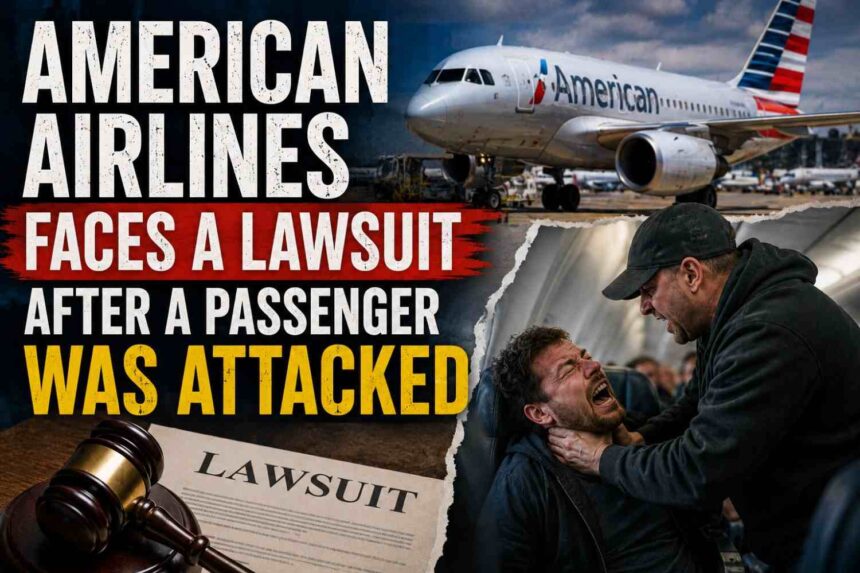
American Airlines faces a lawsuit after a passenger was attacked by a seatmate in more than one recent case. Victims claim the airline failed to stop the harm or even made the situation worse.
- What the Recent Lawsuits Actually Claim
- How Airline Liability Works When One Passenger Attacks Another
- Domestic Flights and International Flights Follow Different Rules
- Evidence That Usually Makes or Breaks These Cases
- Practical Steps to Take If Something Happens on Your Flight
- Common Defenses Airlines Raise
- Other Recent American Airlines In-Flight Incidents
- When Professional Help Makes Sense
- Frequently Asked Questions
- Conclusion
These claims matter because passengers sit inches from strangers for hours. When violence happens, many people ask the same question. Does the airline share responsibility?
Laws change by state and by flight type. Always talk to a licensed lawyer about your own situation.
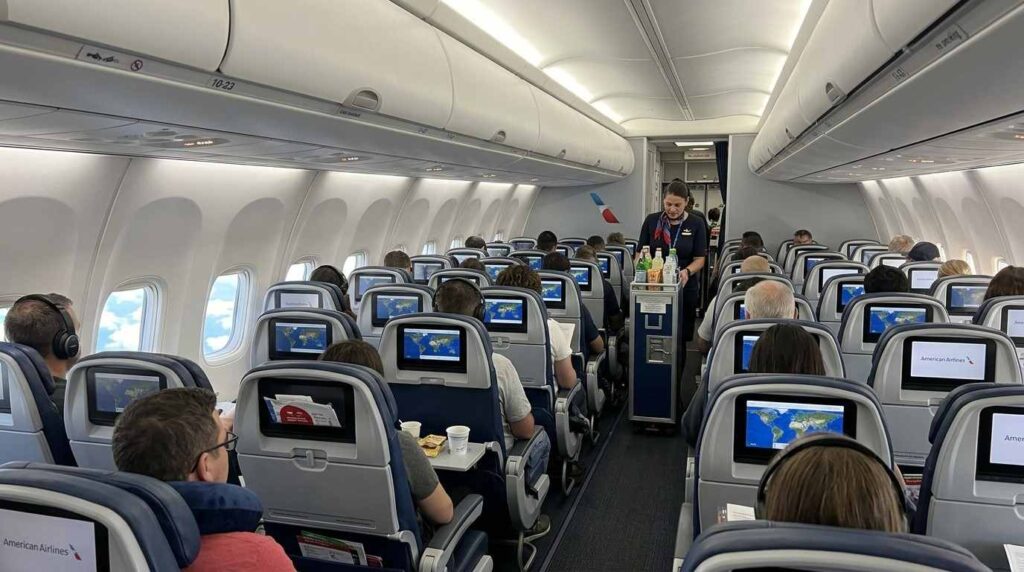
What the Recent Lawsuits Actually Claim
Two cases stand out in public reports from 2024 to 2026.
In the first, an 82-year-old Florida man named Walter Loughney flew American Airlines flight 2485 from Palm Beach to Charlotte on May 16, 2024. He sat in seat 18D. The woman next to him, Allisen Elizabeth Werner, started singing and yelling from the moment she boarded.
Loughney asked to move seats more than once. Crew told him the flight was full. Later, Werner allegedly punched him and beat him hard enough to cause head and brain injuries. A flight attendant stood close enough to reach out and did nothing, according to the complaint.
Police arrested Werner after landing. A grand jury later charged her with assault. She missed a court date and became a fugitive. Loughney sued American Airlines for failing to protect him after clear warning signs.
In the second case, Miami attorney David Cruz flew American Airlines flight 2290 from Miami to Los Angeles on September 30, 2025. He used a non-revenue buddy pass. He sat in 17B with an empty seat beside him at first.
Crew later moved a passenger who had already caused trouble into seat 17A. That man then elbowed Cruz three times in the arm and ribs, threw a bottle of wine that soaked his clothes and papers, and knocked over Cruz’s drink.
Cruz says he asked for help. Flight attendants did not stop the man. After landing, one flight attendant allegedly yelled at Cruz about his travel status and accused him of lying. Airline security later contacted him about alleged misconduct. Cruz filed a federal lawsuit in August 2026 seeking more than $75,000 for emotional distress, anxiety, and humiliation.
These two cases show different facts but the same core claim. The airline knew or should have known a passenger was a risk and failed to act.
External reporting on the Cruz case appears in the New York Post. Coverage of the Loughney case is available through People magazine.
How Airline Liability Works When One Passenger Attacks Another
Airlines are common carriers. That means they owe passengers a higher duty of care than ordinary businesses. They must take reasonable steps to keep people safe.
A lawsuit does not succeed just because an attack happened. The passenger usually must prove four things:
- The airline had a duty to protect passengers.
- The airline broke that duty.
- The broken duty caused the injury.
- The passenger suffered real harm.
Examples of a broken duty include ignoring repeated complaints, continuing to serve alcohol to a clearly drunk passenger, or moving a disruptive person next to someone else instead of isolating them.
Federal rules also ban airlines from boarding or serving alcohol to people who appear intoxicated. Crew must deal with interference that affects flight safety. Those rules do not create automatic money awards, but they help show the standard of care.
For deeper background on how personal injury claims and attorney roles work, see our guide on attorney vs lawyer differences.
Domestic Flights and International Flights Follow Different Rules
Domestic U.S. flights use state negligence law. There is no automatic payout. You must prove the airline was at fault. Damages can include medical bills, lost wages, pain, and emotional harm. Some states allow punitive damages when the conduct is especially bad.
International flights usually fall under the Montreal Convention. That treaty makes the airline liable for death or bodily injury caused by an “accident” on the plane or during boarding and getting off. An accident means an unusual or unexpected event outside the passenger.
A passenger attack can count as an accident if the airline’s actions played a part, such as serving more alcohol or ignoring clear danger. Pure emotional harm without physical injury often faces limits under the treaty. The Convention sets a first level of liability that is hard for the airline to escape. Above that level the airline can limit what it pays if it proves it was not negligent or that a third party alone caused the harm.
Knowing which set of rules applies is often the first step in any claim.
Clear explanations of Montreal Convention rules appear in aviation law resources such as this Lexology overview of U.S. air carrier liability.
Evidence That Usually Makes or Breaks These Cases
Courts and lawyers look for concrete proof. Useful items include:
- Exact times and words used when you asked crew for help
- Names or descriptions of nearby passengers who saw what happened
- Photos of bruises, wet clothes, or the cabin area
- Medical records from the day of the flight or soon after
- Any written complaint you filed with the airline
- Flight numbers, seat numbers, and the date
Airlines keep internal reports and alcohol service records for limited time. Report the event right away and keep your own copies of everything.
Readers tracking related criminal charges in New York can use our WebCrims NY search guide.
Practical Steps to Take If Something Happens on Your Flight
Stay as safe as you can. Move seats if crew allows it. Tell a flight attendant clearly and ask for help in front of other people if possible.
After landing:
- Speak to airport police or local officers and file a report.
- Get medical care the same day if you have any injury or feel shaken.
- Write down every detail while it is fresh.
- Send a written complaint to the airline and keep the confirmation.
- Talk to a licensed attorney before giving long statements to airline investigators.
These steps protect both your safety and any future claim. They do not guarantee a result.
Common Defenses Airlines Raise
Airlines often say the attack was a sudden criminal act by another passenger that no one could predict. They may claim crew acted reasonably on a full flight. On international flights they may argue the event does not meet the legal definition of an accident or that no bodily injury occurred.
Strong evidence of prior complaints, visible intoxication, or crew statements can weaken those defenses. Results still turn on the exact facts of each case.
Additional reporting on similar passenger claims appears in the Independent and detailed aviation coverage from View from the Wing.
Other Recent American Airlines In-Flight Incidents
Other lawsuits involve different facts. One passenger alleged a seatmate engaged in prolonged lewd conduct on an international red-eye. Crew allegedly moved the complainant instead of addressing the other person. A federal court allowed certain injury claims under the Montreal Convention to continue.
In another case a passenger claimed a person behind him lunged over the seat and struck him in the head during descent. Some victims sue only the individual attacker. Others name the airline because of its resources and insurance.
These examples show the range of claims airlines now face.
For comparison with how complex multi-party lawsuits move through federal court, see our timeline of the Trump White House ballroom lawsuit.
When Professional Help Makes Sense
Speak with a licensed attorney soon if you have physical injuries, large medical bills, or lasting emotional harm. Deadlines are strict. The Montreal Convention often uses a two-year limit. State personal injury deadlines vary from one to several years.
An attorney can review the flight type, the evidence, and the realistic options. Many personal injury lawyers work on contingency. You pay a percentage only if money is recovered.
You can also review how standing and procedural rules affect claims in our coverage of the Pima County Sheriff lawsuit and the Blind Frog Ranch lawsuit update.
Frequently Asked Questions
Can I sue American Airlines if another passenger attacks me?
Yes, if evidence shows the airline failed in its duty of care. Success depends on the specific facts and whether the flight was domestic or international.
Does the Montreal Convention cover domestic U.S. flights?
No. Domestic flights use state negligence law.
What if a flight attendant watched and did nothing?
That fact can support a negligence claim if proven. Courts look at what the crew knew and how they responded.
Can emotional distress alone support a claim?
On international flights the Montreal Convention usually requires bodily injury. Domestic rules vary by state. Medical records help in either case.
How long do I have to file?
International claims under the Montreal Convention often face a two-year limit. State deadlines differ. Act quickly.
Should I report the attacker to police?
Yes. A police report creates an official record and may lead to criminal charges. Civil claims against the airline remain separate.
Does buddy-pass or non-revenue status change my rights?
No. Travel status does not remove the airline’s duty of care. Allegations that crew treated a non-revenue passenger differently can become part of the case, as seen in the Cruz filing.
What damages can a victim seek?
Medical costs, lost income, pain and suffering, and emotional harm are common. Punitive damages are possible in some domestic cases but limited under the Montreal Convention.
Conclusion
American Airlines faces a lawsuit after a passenger was attacked in multiple documented cases. The claims focus on alleged failures to isolate known risks, respond to complaints, and protect passengers once trouble started.
The difference between domestic negligence rules and the Montreal Convention decides many outcomes. Strong evidence and timely action give victims the best chance to protect their rights.