


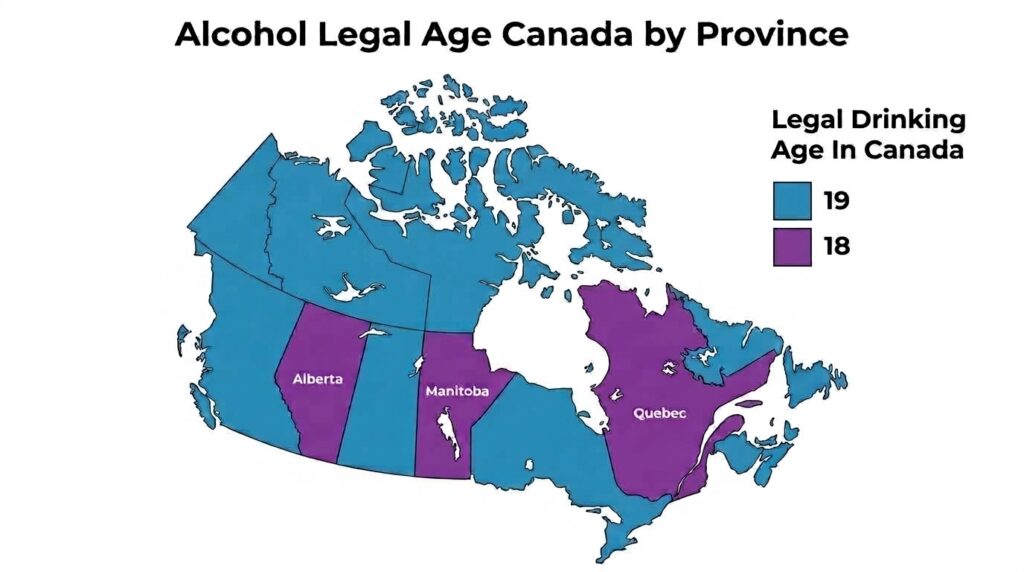
The alcohol legal age in Canada is 18 in Alberta, Manitoba, and Quebec. It is 19 in every other province and territory. Canada has no single national drinking age, because each province and territory writes its own liquor law.
- What Is the Alcohol Legal Age in Canada?
- What Is the Legal Drinking Age in Canada by Province and Territory?
- How Old Do You Have to Be to Drink in Canada?
- Can You Drink at 18 in Canada?
- Why Does Canada Not Have One National Drinking Age?
- What Is the Drinking Age in Toronto, Montreal, Vancouver and Calgary?
- What is the drinking age in Toronto and Ontario?
- What is the drinking age in Montreal and Quebec?
- What is the drinking age in Vancouver and British Columbia?
- What is the drinking age in Alberta (Calgary, Edmonton and Banff)?
- What is the drinking age in Manitoba, Nova Scotia and other provinces?
- What Does the Legal Drinking Age Cover, and What Does It Not?
- What the drinking age usually covers
- Can minors drink with their parents?
- What about public places, parks and beaches?
- What about festivals, concerts and events?
- What about hotels, minibars and room service?
- Can you order alcohol for delivery?
- Can you work with alcohol before you can drink it?
- What about school and team events?
- Common mistakes to avoid
- What ID Do You Need to Buy Alcohol in Canada?
- What Are the Penalties for Underage Drinking in Canada?
- What Is the Legal Alcohol Limit for Driving in Canada?
- What Are Canada’s Drinking Laws and Alcohol Guidelines?
- Can Visitors Drink in Canada? Canada vs USA
- How much alcohol can you bring into Canada?
- Can you carry alcohol from one province to another?
- Can you drink on trains and buses?
- What Should Travellers Know Before Drinking in Canada?
- How Does Age Affect Alcohol Risk?
- Age 15 to 17: Why delaying matters
- Age 18 to 19: The legal line, and the risk line
- Age 20 to 24: The highest-risk group
- Age 25 and older: Long-term health risks
- Signs alcohol may be becoming a problem
- Advice for parents by age
- What Is the Legal Age for Smoking, Vaping and Cannabis in Canada?
- Did Canada’s Drinking Age Change to 21?
- Frequently Asked Questions
- Conclusion
This matters more than most people think. A drink that is legal in Gatineau, Quebec can be illegal across the river in Ottawa, Ontario. Break the rule, and you could get a ticket, lose your bottle, or get banned from a venue. Drinking and driving is far more serious.
This guide covers the drinking age in every province, how ID checks work, what the penalties look like, what travellers should know, and how alcohol risk changes with age. We use official sources and tell you where to double-check.
QUICK ANSWER
The legal drinking age in Canada is 18 in Alberta, Manitoba and Quebec, and 19 in the other ten provinces and territories.
The age of the place where you are is the one that counts. Carry government-issued photo ID.
What Is the Alcohol Legal Age in Canada?
The alcohol legal age in Canada is 18 in Alberta, Manitoba and Quebec, and 19 in every other province and territory. Canada has no national drinking age. Each province and territory sets its own, so the age that applies is the one where you buy, are served or drink alcohol.
The Canada Border Services Agency uses the same split. Its alcohol and tobacco limits page says travellers must meet the minimum age of the province or territory where they enter Canada.
Experts call this the minimum legal drinking age, or MLDA. It is the youngest age at which you can legally buy alcohol, be served it in a licensed place, or drink it.
What Is the Legal Drinking Age in Canada by Province and Territory?
Alberta, Manitoba and Quebec set the legal drinking age at 18, and the other ten provinces and territories set it at 19. Those ten are British Columbia, New Brunswick, Newfoundland and Labrador, the Northwest Territories, Nova Scotia, Nunavut, Ontario, Prince Edward Island, Saskatchewan and Yukon. Check the rule where you are standing.
Saskatchewan is 19, not 18. Some websites get this wrong. The province has turned down calls to lower its age from 19 to 18.
How Old Do You Have to Be to Drink in Canada?
You must be 18 in Alberta, Manitoba or Quebec, and 19 everywhere else in Canada. If you are not sure which rule applies, 19 is the one age that is legal in every province and territory. Carry government-issued photo ID, because staff can ask for proof of age at any time.
Many people think that turning 18 always lets you drink. In Ontario, the age of majority is 18, but the drinking age is 19. Prince Edward Island and Saskatchewan work the same way.
Can You Drink at 18 in Canada?
Yes, but only in Alberta, Manitoba and Quebec. In the other ten provinces and territories, you must be 19 to buy alcohol or be served. An 18-year-old who crosses from Gatineau, Quebec into Ottawa, Ontario, or from Alberta into British Columbia, is no longer of legal age.
The Ottawa River is the border between Quebec and Ontario. An 18-year-old on a patio in Gatineau can be served legally. Twenty minutes later, on the Ottawa side of the bridge, the same person cannot.
If your group has mixed ages, plan around the youngest person and the province you are in. It is easier to pick a place where everyone is legal than to sort it out at the door.
The three provinces where the legal drinking age is 18 are Alberta, Manitoba, and Quebec. The next section explains why Canada does not have one national drinking age.
Why Does Canada Not Have One National Drinking Age?
Provinces and territories regulate how alcohol is sold and consumed within their borders, so each one sets its own minimum age. The federal government handles criminal law, such as impaired driving, and customs at the border. The usual legal basis cited is the Constitution Act, 1867, which gives provinces power over property and civil rights.
Is there a federal drinking age in Canada? No. Ottawa does not set one, and it handles only federal matters like the Criminal Code and border rules.
A short history of Canada’s drinking ages
Ages were once higher. Public sources say that many places required people to be 20 or 21 before provinces began lowering the limit in the 1970s.
WorldAtlas reports that lower ages were meant to match the age of majority. Then Ontario and Saskatchewan moved to 19 to curb rising alcohol use among high school students. That history is why the map is still split today.
What Is the Drinking Age in Toronto, Montreal, Vancouver and Calgary?
The drinking age is set by the province, not the city. Toronto and Ottawa follow Ontario’s 19, and Vancouver and Victoria follow British Columbia’s 19. Montreal, Calgary, Edmonton, Banff and Winnipeg follow their provinces’ 18, while Halifax follows Nova Scotia’s 19.
What is the drinking age in Toronto and Ontario?
The drinking age in Toronto and across Ontario is 19. Ottawa, Niagara Falls and Windsor follow the same rule because the legal age is set by the province, not the individual city.
The Alcohol and Gaming Commission of Ontario (AGCO) says the legal drinking age in licensed places is 19. Staff must check ID for anyone who appears under 19, under Ontario Regulation 746/21.
The Liquor Licence and Control Act, 2019 (S.O. 2019, c. 15, Sched. 22) also bans selling liquor to anyone who appears under 19. The AGCO adds that minors cannot have liquor in retail stores, under the Registrar’s Standards for Grocery and Convenience Stores and the Registrar’s Interim Standards and Requirements for Liquor.
Two small Ontario details are worth knowing. The AGCO lists a warning sign rule about drinking during pregnancy, called Sandy’s Law. It also offers a “find a licensed alcohol retailer” tool if you want to check that a shop is legal.
What is the drinking age in Montreal and Quebec?
The drinking age in Montreal and across Quebec is 18. It is the same in Quebec City and Gatineau. If you search for the Montreal drinking age or Quebec drinking age, the rule is the same because the legal age is set by the province.
Spirits are sold through the government retailer, the SAQ, while beer and wine are also available in grocery stores.
Quebec has kept the legal drinking age at 18. In 2018, Premier François Legault said the province had no intention of changing the alcohol age.
What is the drinking age in Vancouver and British Columbia?
The drinking age in Vancouver, Victoria, and across British Columbia is 19. The rule is the same in Whistler and on Vancouver Island. You will also see it searched as BC drinking age, legal drinking age in BC or drinking age in British Columbia.
Here is what that means for a young visitor. Someone who is 18 and lives in Calgary can legally drink in Alberta. On a ski trip to Whistler, the same person cannot.
What is the drinking age in Alberta (Calgary, Edmonton and Banff)?
The drinking age in Alberta is 18. That includes Calgary, Edmonton, Banff, and Jasper, so the Alberta drinking age applies in the Rockies too.
Remember the border. A day trip from Banff into British Columbia puts an 18-year-old under the 19 rule, and drinking age in Banff, Canada follows Alberta, not BC.
What is the drinking age in Manitoba, Nova Scotia and other provinces?
Manitoba’s drinking age is 18, and Nova Scotia’s is 19. Winnipeg follows Manitoba, and Halifax follows Nova Scotia.
Saskatchewan, New Brunswick, Newfoundland and Labrador, Prince Edward Island, Yukon, the Northwest Territories and Nunavut all use 19. Some northern communities add local alcohol restrictions, so ask before you travel.
Manitoba drinking age, Winnipeg drinking age, Nova Scotia drinking age and legal drinking age in Nova Scotia all point to this section.
What Does the Legal Drinking Age Cover, and What Does It Not?
The legal drinking age controls who can buy alcohol, be served in licensed places, and have or drink it. It does not set driving limits, tobacco or cannabis ages, or the rules for every private home. Those come from separate laws, so you can meet the drinking age and still break another alcohol rule.
What the drinking age usually covers
It covers buying alcohol, being served in a bar or restaurant, and having or drinking it. Ontario’s law is a good example. It says a person under 19 may not “have, consume, attempt to purchase, purchase or otherwise obtain liquor.”
Can minors drink with their parents?
Sometimes, but only in narrow cases that vary by province. Ontario’s law has an exception for a parent or guardian who supplies liquor to a child in a residence or a prescribed private place. It does not let a licensed restaurant or bar serve that child.
Think of a father who pours his 17-year-old a small glass of wine at home in Ontario. That fits the exception. If the two order wine at a restaurant, the venue cannot serve the teen.
What about public places, parks and beaches?
Drinking in parks, beaches and streets is generally restricted. City bylaws differ, so look for posted signs or event permits. Travel guides also warn that being drunk in public can lead to a fine or a brief detention.
What about festivals, concerts and events?
Events that sell or serve alcohol need permission. In Ontario, the AGCO issues special occasion permits for private events, public events, charity events and bring-your-own events.
Organizers set up ID checks at the door or at the drinking area. Many events use wristbands to show who has been checked, so expect to show ID again if you look young.
What about hotels, minibars and room service?
Hotels follow provincial rules, so a minibar does not change the age limit. In Ontario, the AGCO issues mini bar licences and endorsements, and it lists room service endorsements too. Minibar alcohol is a regulated sale, not a free-for-all.
Can you order alcohol for delivery?
Yes, in many places, but delivery is still a sale. The AGCO issues general and affiliate delivery licences in Ontario, and the 19-year rule still applies.
Can you work with alcohol before you can drink it?
Yes, in some provinces. In Ontario, the minimum age to work in a licensed venue, an authorized grocery store or a winery, distillery or brewery retail store is 18 if you handle alcohol. That includes giving out samples, and it is one year below the drinking age.
What about school and team events?
Schools and teams add their own rules on top of the law. A campus event in Ontario follows Ontario’s 19, even if some students come from a province where 18 is legal.
Common mistakes to avoid
- Assuming 18 is legal everywhere.
- Treating the age of majority as the drinking age.
- Thinking “parents at home” works in a restaurant.
- Forgetting that the rule changes when you cross a provincial border.
- Carrying only a school card as proof of age.
What ID Do You Need to Buy Alcohol in Canada?
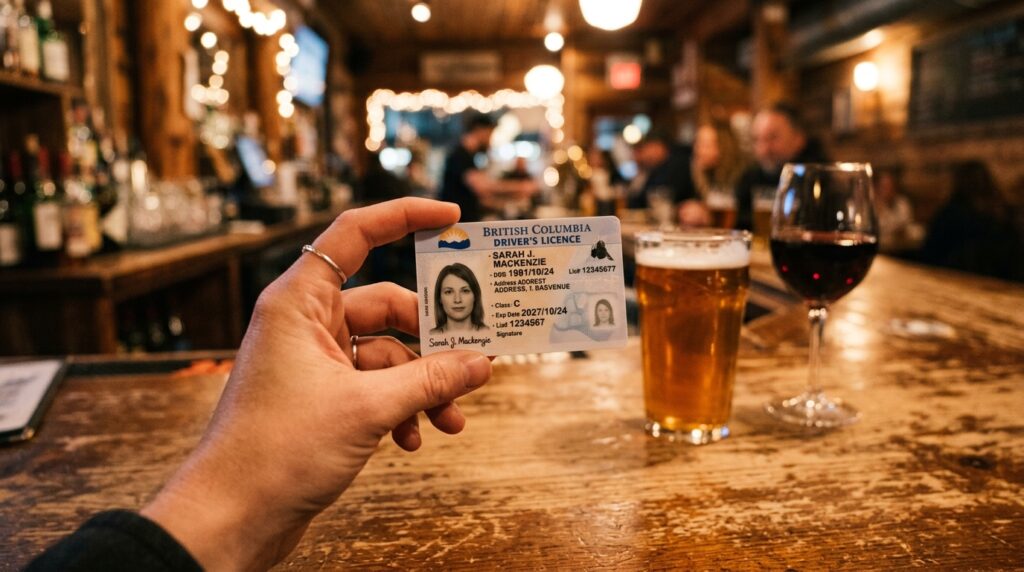
Bring valid, government-issued photo ID, such as a driver’s licence, passport or provincial photo card. In Ontario, staff must check ID for anyone who appears under 19 before selling or serving alcohol. A school card is unlikely to work, so carry the real thing.
The AGCO’s guidance for licensees says, “Do not make assumptions based on appearance, familiarity, or frequency of visits.” In other words, being a regular does not exempt you from being carded.
No special card or licence is needed to buy alcohol. You only need ID that proves your age. It should be valid, not expired, and match your face.
Visitors should carry a passport, because it is the safest choice. Some venues also scan the card, and each venue decides which foreign ID it will accept.
Best practices for checking ID
If you work in a bar, a store or at an event, these steps come from the AGCO’s guidance:
- Be consistent. Check everyone who appears under age, every time.
- Look closely. Hold the ID by hand. Confirm the photo, the birthdate and the expiry date.
- Ask questions if unsure. Request a second piece of ID, or ask the person to confirm details like a birthdate or postal code.
- Say no politely. Explain that the law does not allow service to minors, and point to the sign.
- Get backup. Ask a manager or colleague to help if things get tense.
- Stay calm with upset customers. You are required to check anyone who looks underage. Call the local police if you need to.
The AGCO also publishes separate tips for checking ID and for identifying minors, and it lists responsible liquor sale, service and delivery training for staff.
What Are the Penalties for Underage Drinking in Canada?
Underage drinking is a provincial offence, not a Criminal Code offence, and penalties depend on the province. Minors, sellers, servers and adults who supply alcohol can all face consequences. Drinking and driving is different: it is a federal crime with mandatory minimum penalties.
Rules about minors and alcohol come from each province’s or territory’s liquor laws, and the exceptions and penalties depend on where you are. Fine amounts change over time, so this guide does not list provincial amounts. Check your province’s current fine schedule.
What really happens on the ground
Most alcohol enforcement happens at the counter or the door. A server checks ID and says no. A minor is told to leave, or an officer writes a ticket.
Take a teenager who borrows an older sibling’s licence. Staff notice the photo does not match. The teen is refused service, may be banned, and could be reported to police.
If you are ticketed or charged, get advice before you respond.
How enforcement works: ID checks, compliance and a few surprises
The AGCO’s website lists a mystery shopper program among its compliance tools. A young-looking tester can check whether staff ask for ID. Police and inspectors also check venues.
The AGCO also has pages on monetary penalties and on hearings and appeals. That means a venue that breaks the rules can face a formal process, not just a warning.
A few things surprise people:
- Adults get carded. The trigger is how you look, not your real age.
- You can serve before you can drink. In Ontario, 18-year-olds may handle alcohol at work.
- The parent exception stops at the restaurant door.
- Trains follow provincial law. VIA Rail says provincial laws forbid passengers from drinking personal alcohol on trains, except inside a private cabin on select long-haul trains.
- The border applies age rules. The CBSA ties duty-free alcohol to the age of the province where you enter.
What Is the Legal Alcohol Limit for Driving in Canada?
The Criminal Code prohibits driving with 80 mg or more of alcohol per 100 ml of blood within two hours of driving. A first offence carries a mandatory minimum fine of $1,000. Fines rise with higher readings, and provinces add roadside penalties that can start at lower levels.
Justice Canada explains that the Criminal Code bans driving while “impaired to any degree.” So you can be charged with impaired driving even when you are under 80 mg. The offences sit in section 320.14 of the Criminal Code.
A first offender with a reading of 120 to 159 mg faces a minimum fine of $1,500, and a reading of 160 mg or more raises it to $2,000. Read the Justice Canada impaired driving guide for the full rules.
Young drivers in Ontario must have zero alcohol in their blood. Other provinces have their own rules for new drivers.
What if you feel fine after two drinks? Feeling fine is not the test, because the law looks at your blood alcohol level and at whether you are impaired. If you plan to drink, plan your ride first.
People search this topic as DUI laws Canada, blood alcohol concentration Canada, blood alcohol level Canada, BAC legal limit Canada, Canada alcohol limit, Canada drink drive limit, Canada driving under the influence and punishment for drinking and driving in Canada. This section answers all of them.
What Are Canada’s Drinking Laws and Alcohol Guidelines?
Canada’s drinking laws work in three layers: federal criminal law, provincial liquor laws and city bylaws. Federal law covers impaired driving and customs, provinces set the age, licensing and penalties, and cities control parks and public spaces. Health guidance is separate, and Canada’s 2023 alcohol guidance calls two drinks or fewer a week low risk.
Searches like drinking laws Canada, Canadian drinking laws, Canada drinking laws, drinking rules in Canada, Canadian alcohol laws and Canada alcohol laws all lead here.
Where can you legally buy alcohol?
You can buy from licensed sellers. Depending on the province, that means government liquor stores, licensed bars and restaurants, and private or grocery retailers where the province allows them.
Ontario uses the LCBO, Quebec uses the SAQ for spirits, and British Columbia has BC Liquor Stores. Anyone buying must meet the legal age to buy alcohol in Canada for that province.
What do Canada’s low-risk drinking guidelines say?
The Canadian Centre on Substance Use and Addiction (CCSA) set a low-risk level of two drinks or fewer per week in 2023. Three to six drinks a week is moderate risk. Seven or more is higher risk.
These are health guidelines, not laws. They help you understand your own risk. You may see them searched as Canada alcohol guidelines, alcohol guidelines Canada, Canadian alcohol guidelines, Canadian drinking guidelines, Canada drinking guidelines, drinking laws in Canada, liquor laws in Canada, and Canadian legal age to drink.
Can Visitors Drink in Canada? Canada vs USA
Visitors follow the drinking age of the province they are in, not the age at home. A 19-year-old American can legally drink in Ontario, and an 18-year-old can in Alberta, Manitoba or Quebec. The United States generally uses 21, so US rules can still matter when you return.
Picture a 20-year-old cousin who visits Toronto from Buffalo. In Ontario she is old enough. She still needs valid photo ID, and a passport works best.
People compare the two systems by searching drinking age 18 vs 21, drink age USA, legal drinking age in Canada for US citizens, legal drinking age in Canada for American citizens and legal drinking age of Americans in Canada.
How much alcohol can you bring into Canada?
You can bring a limited amount duty-free if you meet the age rule of the province where you enter. The limits also depend on what the province or territory of entry allows. Choose one of these:
Always declare alcohol at the border, and confirm current limits on the CBSA website before you travel.
Can you carry alcohol from one province to another?
Sources disagree, so check before you go. One travel guide says personal-use limits are set by each province. Other sites say you may need permission from the provincial liquor board.
Check the liquor authority of the province you are entering, and keep amounts small.
Can you drink on trains and buses?
Mostly no. VIA Rail says provincial laws forbid drinking your own alcohol on trains, except in a private cabin on select long-haul trains. VIA has also said that drinking on its trains is governed by the laws of the province the train is travelling through.
So if you board a train in Toronto with a bottle of wine, you cannot open it unless you have a private sleeping cabin on a long-haul train.
What Should Travellers Know Before Drinking in Canada?
Know the age of the province you are in, carry government photo ID and never drink and drive. Alcohol you bring into Canada must fit CBSA limits and the age rule of the province where you enter. Do not drink your own alcohol on trains outside a private cabin.
Use this quick checklist:
- ☐Learn the local age: 18 in Alberta, Manitoba and Quebec, 19 elsewhere.
- ☐Carry a passport or other government-issued photo ID.
- ☐Declare any alcohol at the border and stay within CBSA limits.
- ☐Recheck the age each time you cross a provincial border.
- ☐Avoid open alcohol in parks and streets unless the area is permitted.
- ☐Do not drink your own alcohol in the open sections of a train.
- ☐Plan a taxi, rideshare or designated driver before your first drink.
- ☐Keep hotel minibar drinks for adults of legal age.
How Does Age Affect Alcohol Risk?
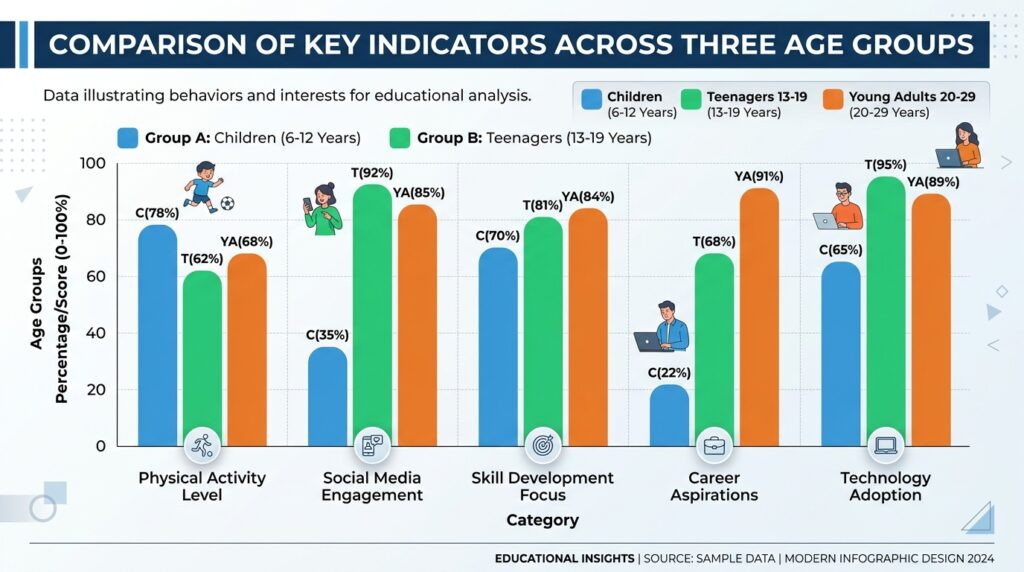
Alcohol risk changes with age, and young people are more at risk from the same amount of alcohol. Canada’s guidance says young people should delay drinking as long as possible. Health Canada survey data show the riskiest patterns among 20 to 24 year olds, and adults over 25 face growing long-term health risks.
The table below uses Health Canada’s Canadian Alcohol and Drugs Survey 2019. The survey groups ages 15 to 19 together, covers the provinces only, and uses the older 2011 low-risk guidelines.
Age 15 to 17: Why delaying matters
This age group is below the legal drinking age in every province. The CCSA’s guidance tells young people to delay drinking for as long as possible.
Brain development continues into a person’s mid-twenties, and the same amount of alcohol carries greater risk for youth than for adults. In one Canadian study, 27% of people who began drinking by age 14 developed alcohol dependence within 10 years, compared with 4% of those who started at 21.
Age 18 to 19: The legal line, and the risk line
This is when drinking becomes legal, at 18 in three provinces and at 19 elsewhere. New freedom and peer pressure can raise the risk of binge drinking. Youth who binge drink are more likely to have memory problems, mental health issues, and trouble in school.
In the survey, 38% of drinkers aged 15 to 19 reported at least one alcohol-related harm. Set a limit and plan a safe ride home before you go out.
Age 20 to 24: The highest-risk group
Young adults in this range drink the most. Among 20 to 24 year old drinkers, 31% went over the chronic-risk guideline, and 26% went over the acute-risk guideline. Forty percent reported at least one harm.
Here is a surprising detail. Only 3% of 20 to 24 year old drinkers said they had driven within two hours of two or more drinks, compared with 7% of adults 25 and older. Stress from school and first jobs can push drinking from social to habit.
Age 25 and older: Long-term health risks
Brain development is largely complete, so the focus shifts to long-term health. The 2023 CCSA guidance names two drinks or fewer per week as low risk, and alcohol is a known carcinogen.
Statistics Canada has reported a trend toward less frequent drinking, strongest among young men aged 15 to 34. Alcohol-free days and lower weekly totals are the simplest way to cut risk. It also helps to tell one person you trust about your plan.
Signs alcohol may be becoming a problem
Watch for these signs at any age:
- Drinking to sleep, then waking at 3 a.m.
- Skipping events that do not include alcohol.
- Breaking your own rules, like “no weekday drinking.”
- Friends or family raising concerns.
If two or more sound familiar, talk to your doctor or a local addiction service. Asking early is easier than asking late.
Advice for parents by age
Under 18, set clear rules and explain why the law exists. At 18 to 19, review the local age and plan safe rides. At 20 to 24, talk about stress, sleep and money, and at 25 and older, check in if alcohol is doing the heavy lifting for stress.
What Is the Legal Age for Smoking, Vaping and Cannabis in Canada?
Tobacco, vaping and cannabis have their own minimum ages, and they can differ from the alcohol age. Federal law sets a national floor of 18 for buying vaping products, and provinces can go higher. Quebec, for example, sets its cannabis age at 21 while keeping alcohol at 18.
Quebec’s government raised the cannabis age to 21 out of concern for the developing brain. Cannabis is legal for adults in Quebec, but the age limit is higher than the alcohol age.
Ages for tobacco and cannabis vary by province, so confirm the current rule where you live. Ages for tobacco and cannabis vary by province, so confirm the current rule where you live. Do not assume that the legal age for smoking, vaping, or cannabis is the same as the drinking age.
Did Canada’s Drinking Age Change to 21?
No, Canada’s drinking age has not been raised to 21. It is still 18 or 19, depending on the province. Ontario’s and Quebec’s premiers have both publicly rejected raising it, and no province had announced a change as of September 2026, based on our review.
The “changed to 21” idea keeps coming up for three reasons. Ages were higher decades ago, the United States uses 21, and governments debate the topic.
What has the recent debate looked like?
In 2018, Quebec’s junior health minister floated revisiting the alcohol age, and Premier Legault shut it down the same day. At the time, Quebec had tabled a bill to raise its cannabis age to 21.
In 2024, Ontario’s chief medical officer of health recommended a comprehensive alcohol strategy, and Premier Doug Ford rejected raising the age. He said, “We believe in treating people like adults.”
Online forums regularly argue for 21, and you will see the pros and cons of the legal drinking age in Canada discussed there. Those posts are opinions, not law. Always check your provincial liquor authority for the current rule, whatever the drinking age in Canada 2025 or drinking age Canada 2026 threads on forums might claim.
Frequently Asked Questions
Q1. Is alcohol legal in Canada?
Q2. Can minors drink with their parents in Canada?
Q3. What happens if you use a fake ID in Canada?
Q4. Can you drink alcohol on a train or in a hotel room in Canada?
Q5. Can I bring alcohol into Canada?
Q6. Can an adult buy alcohol for someone underage?
Q7. Can visitors and international students use foreign ID?
Q8. Can you drink in a park or on the street in Canada?
Conclusion
The alcohol legal drinking age in Canada is 18 in Alberta, Manitoba, and Quebec, and 19 in the other ten provinces and territories. The age that applies is the one where you are, and it can change the moment you cross a provincial border.
Carry government-issued photo ID. Never drink and drive, because the Criminal Code penalties are serious. If you are unsure about a ticket, a charge, or a business compliance question, talk to a licensed lawyer in your province.
This article is general information only and not a substitute for advice from a qualified attorney licensed in your jurisdiction. Laws and fines change, so confirm details with your provincial or territorial liquor authority.