



There is no simple yes or no answer for whether MyLawyer360, or any similar online legal platform, is trustworthy. What you can do is run a quick, free verification check yourself before you hand over any information or money. This guide walks you through exactly how.
This article is general information only. It is not legal advice and not a substitute for advice from a qualified attorney licensed in your jurisdiction.
Why online legal platforms need extra scrutiny
Legal help is one of the areas scammers target hardest. People are usually stressed, in a hurry, and unfamiliar with how the system works. That combination makes it easy to trust a site that simply looks professional.
Here’s the tricky part. A polished homepage, a friendly tone, and the word “trusted” repeated a dozen times tell you nothing about whether a platform actually connects you to a real, licensed attorney. Anyone can build a website and write those words. Verification has to come from somewhere independent of the site itself, like a state bar association.
If you are trying to sort fact from rumor around a specific case or company, our breakdown of the Emuaid lawsuit is a good example of how to separate what is documented from what is just noise online, the same approach worth applying here.
What MyLawyer360 says about itself
Searching for MyLawyer360 turns up several websites and review-style articles describing it as an “all-in-one digital legal platform” that connects users with attorneys and offers legal education content. Worth noting: there are also near-identical domains (for example, one ending in “360.com” and another ending in “360s.com”) making different and sometimes conflicting claims, one describing itself as an educational resource that does not practice law, another describing itself as a law firm that provides representation.
That kind of inconsistency across similarly named sites is common with content farms, groups of low-effort websites built mainly to rank in search results rather than to serve a specific, accountable business. It does not automatically mean fraud, but it is a reason to slow down and verify independently rather than take the site’s self-description at face value.
Five checks to run before you trust any legal website
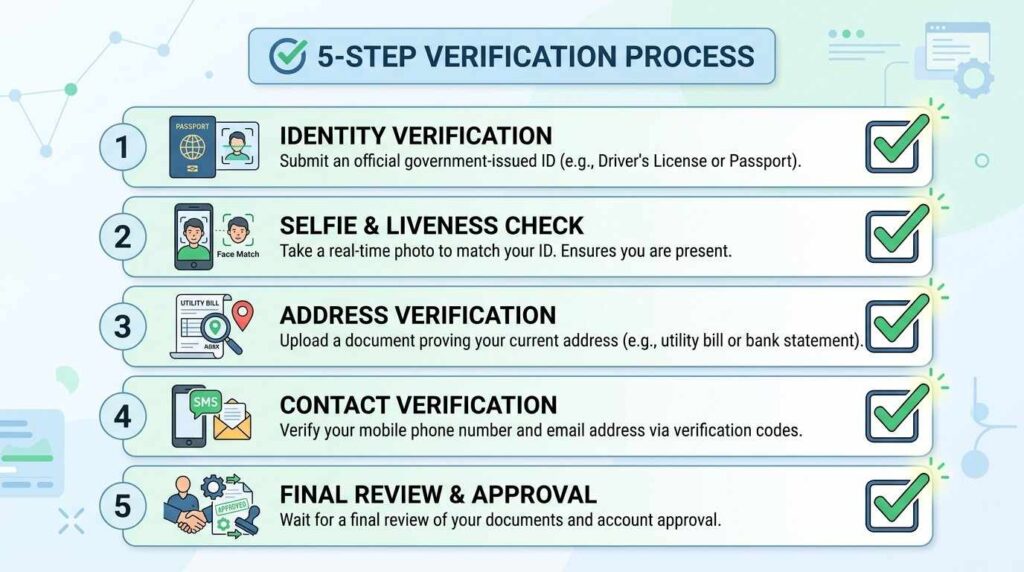
You do not need special tools for this. A few minutes of checking can tell you a lot.
1. Look for named, licensed attorneys. A legitimate legal service, or a legitimate lawyer-matching platform, will name real attorneys along with their bar number and the state where they are licensed. If a site only talks about “our network of trusted professionals” without naming anyone specific, that is a gap worth noting.
2. Check the “About” page for a real business address and ownership. Look for a physical address, a registered business name, and information about who runs the site. A P.O. box or no address at all is a caution sign, not proof of a problem, but a caution sign.
3. Search the exact business name plus the word “review” or “complaint.” Do this on a general search engine, not just on the platform’s own site. The BBB Scam Tracker lets you search reported scams by business name or website, and independent complaint boards and consumer forums often surface issues months before they show up anywhere else.
4. Check how old the domain is. ICANN’s official WHOIS lookup tool shows when a website’s domain was registered. A legal services brand claiming years of reputation but registered a few months ago is worth a second look.
5. Read the privacy policy and terms of service. Scam or low-quality sites often have thin, generic legal pages, sometimes copied from another site, sometimes missing entirely. A real legal platform, of all businesses, should have carefully written policies.
For more background on how legal claims and disputes get reported online, browse our Lawsuit coverage, which tracks how these stories evolve, and often get distorted, over time.
Red flags that show up on low-quality legal sites
Watch for these patterns. None of them proves a site is fraudulent on its own, but seeing several together is a strong signal to pause.
- Vague claims like “connects you with trusted lawyers” with no attorney names, bar numbers, or license states
- Pressure language urging you to act “today” or “now” before getting help
- Testimonials that read like they were written by the same person, even though they are attributed to different clients
- No clear way to contact a real human being, only a contact form
- Claims of awards or recognition with no link to the actual award source
- Content that reads the same, almost word for word, across several unrelated-looking websites
If several of these apply, it does not automatically mean the platform is a scam. But it does mean you should verify everything independently before sharing personal details or paying for anything.
How to actually verify a lawyer is licensed
This is the single most reliable step, and it costs nothing.
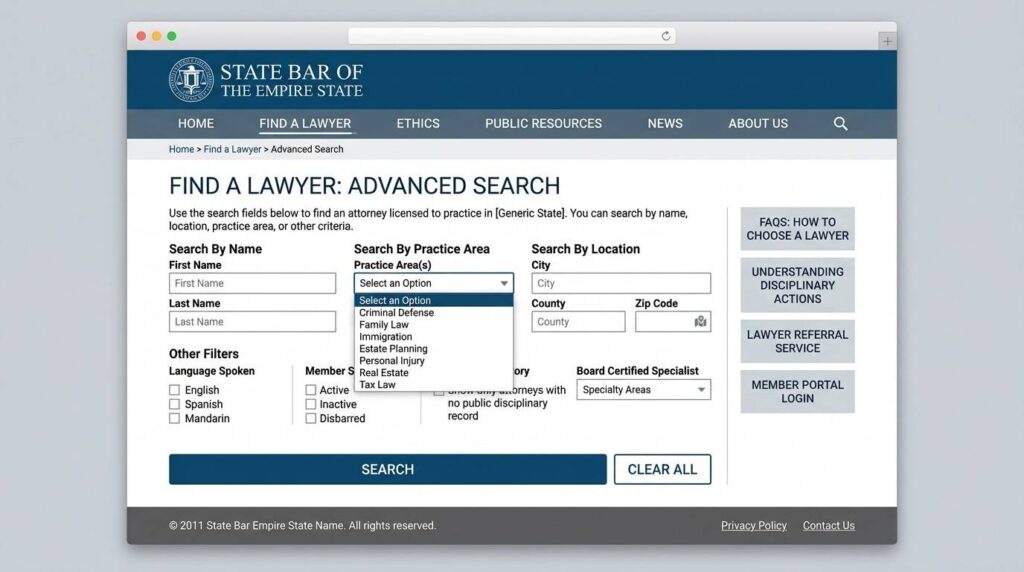
- Get the attorney’s full name and the state where they claim to practice.
- Search “[state name] bar association attorney search.”
- Look up the attorney by name on that official state bar website.
- Confirm the license status shows active and in good standing.
- Check for any public disciplinary history listed on the same page.
Every U.S. state maintains this kind of public directory, and it is free to use. <cite index=”9-1″>Before hiring an attorney, using your state bar’s directory to verify their license, check for disciplinary history, and know the warning signs of fraud is the recommended first step</cite>. If the attorney’s name does not appear at all, or the license shows as inactive or suspended, treat that as a serious warning sign, not a technicality.
The American Bar Association’s guide to lawyer licensing links out to each state’s official licensing agency, which is a good starting point if you are not sure which office handles it in your state.
Safer ways to find legal help online
If you need a lawyer and want to skip the guesswork, these routes tend to be more reliable than an unfamiliar third-party platform:
- Your state or local bar association’s lawyer referral service. Most bar associations run one, and the lawyers listed are already verified members.
- Legal aid organizations, if cost is a concern. Many offer free or low-cost help for qualifying cases.
- A direct recommendation from someone you trust who has used the lawyer before.
- Court self-help centers, for basic procedural questions that do not require full representation.
Browse our Attorney section for more guides on working with lawyers and understanding how legal representation actually works before you start searching.
Consumer protection agencies also track these patterns closely. <cite index=”22-1″>Online reviews might help you decide what to buy or what company to hire, but you should be able to trust that these reviews reflect the honest opinions of people who actually used a product or service, and unfortunately, some reviews are fake, deceptive, or manipulated</cite>. That guidance from the FTC applies just as much to reviews of legal platforms as it does to product reviews.
FAQ
Is MyLawyer360 a scam?
There is not enough independently verifiable information to call it one or clear it entirely. The safest approach is to run the verification steps above, especially confirming any attorney’s license directly through their state bar, before sharing personal information or paying anything.
Is it normal for legal websites to have similar-sounding names?
It happens, but a cluster of nearly identical domain names describing themselves in inconsistent ways (educational resource in one place, law firm in another) is more common with content farms than with a single established business.
Can an online platform legally give me legal advice?
Only a licensed attorney can give legal advice specific to your situation. A platform that is not a law firm and does not employ licensed attorneys directly should stick to general information, not advice, unless it is clearly connecting you to a named, verifiable lawyer.
How do I check if a lawyer is licensed in my state?
Search “[your state] bar association attorney search,” look up the lawyer by name, and confirm the license is active and in good standing. This is free and takes a few minutes.
What should I do if I already paid a platform that turned out to be fake?
Contact your bank or card issuer to dispute the charge, and file a report with the FTC’s fraud reporting site. Keep any emails, receipts, or screenshots as records.
Are all lawyer-matching websites untrustworthy?
No. Many are legitimate and connect users with verified, licensed attorneys. The difference usually comes down to transparency: named attorneys, real license information, and a track record you can check independently.
What is the fastest single check I can do?
Look up the attorney’s name on their state bar’s official website. If they are not listed as active and in good standing, stop there.
Does a professional-looking website mean a legal service is real?
No. Website design has nothing to do with whether a business is licensed, insured, or accountable. Verification has to come from an independent source, not the site’s own design or copy.
Conclusion
Before trusting MyLawyer360, or any online legal platform, run the same handful of checks: look for named, licensed attorneys, verify that license directly with the state bar, and search independently for reviews and complaints rather than relying on testimonials posted on the site itself. None of these steps take long, and together they tell you far more than a homepage ever will.
This article is general information only and not a substitute for advice from a qualified attorney licensed in your jurisdiction. If you are dealing with a specific legal problem, consider reaching out to your local bar association’s referral service, or explore our Legal Services section for more guidance on finding and working with a lawyer safely.