



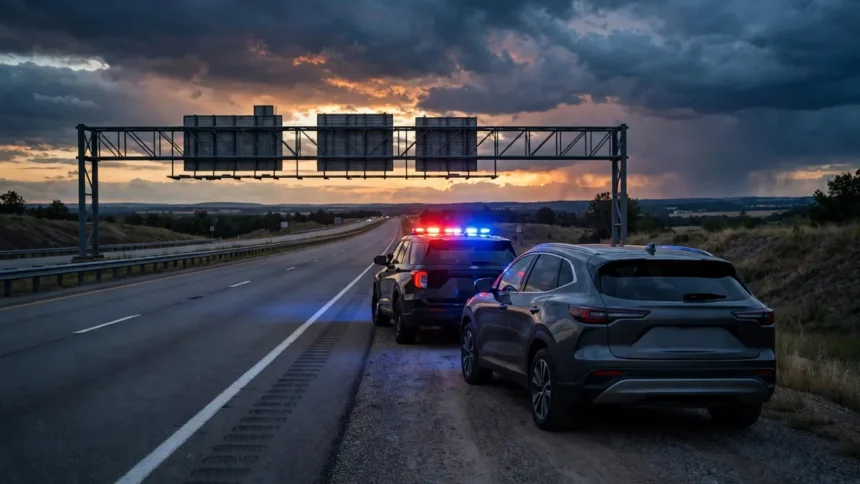
A common myth among road-trippers, business travelers, and interstate commuters is that a speeding ticket received across state lines stays in the state where it was issued. Many drivers assume that if they live hundreds of miles away, paying the fine—or worse, ignoring the citation—will have no impact on their home driver’s license or auto insurance rates.
- How the Driver License Compact Shares Ticket Data
- How Home States Convert Out-of-State Points (and Insurance Risks)
- Stricter Interstate Rules for Commercial Drivers (CDL Holders)
- Why Ignoring an Out-of-State Citation Triggers License Suspension
- Contesting an Out-of-State Ticket Without Traveling Back
- Steps to Take Immediately After an Interstate Traffic Stop
Under federal and interstate reciprocity laws, that assumption can lead to unexpected license suspensions, steep reinstatement fees, and multi-year insurance surcharges. Through the Driver License Compact (DLC), the Non-Resident Violator Compact (NRVC), and the federal National Driver Register (NDR), state motor vehicle agencies share conviction and compliance data nationwide.
How the Driver License Compact Shares Ticket Data
Forty-five states and the District of Columbia belong to the Driver License Compact, an interstate agreement built on a simple principle: "One Driver, One License, One Record." Only five states—Georgia, Massachusetts, Michigan, Tennessee, and Wisconsin—are not formal DLC members, though several still exchange violation data through separate bilateral agreements and electronic state-to-state verification networks.
When a driver receives a moving violation in a DLC member state and resolves it by paying the fine, two things happen automatically:
Out-of-State Conviction Reporting: The municipal or justice court where the ticket was issued reports the guilty disposition to its own state licensing agency.
Home-State Record Transfer: That agency electronically transmits the conviction to the driver’s home state Department of Motor Vehicles (DMV) or Motor Vehicle Division (MVD).
Once the report arrives, your home licensing authority treats the violation as though it occurred locally—recording the conviction on your motor vehicle record and making it visible to your auto insurance carrier at policy renewal.
See also Window tint percentage laws: VLT rules most drivers get wrong
How Home States Convert Out-of-State Points (and Insurance Risks)
A frequent point of confusion is whether an out-of-state speeding ticket adds demerit points to a home license. The answer depends entirely on the home state’s motor vehicle code:
Full Point Reciprocity States: Many states translate out-of-state moving violations directly into their own statutory point equivalents. For example, a 15-mph-over speeding conviction in a neighboring state can add 2 to 4 demerit points at home, pushing drivers closer to mandatory traffic survival school or point-accumulation suspensions.
Conviction-Only States: Certain states (such as California, Colorado, and Pennsylvania for minor speeding) generally do not assess demerit points for minor out-of-state speeding infractions, yet they still post the conviction to the driver's official driving abstract.
Even in states that assess zero points for out-of-state tickets, auto insurance underwriters do not rely on state DMV points alone. Insurers review the underlying conviction entry on your motor vehicle report and routinely apply 20% to 30% rate surcharges over a three- to five-year rating period.
Stricter Interstate Rules for Commercial Drivers (CDL Holders)
While non-commercial motorists in the five non-DLC states occasionally avoid home-state point transfers for minor infractions, Commercial Driver’s License (CDL) holders have zero interstate exemptions. Under federal Motor Carrier Safety Improvement Act (MCSIA) and Federal Motor Carrier Safety Administration (FMCSA) regulations (49 U.S.C. § 31311 and 49 CFR Part 383), every state licensing agency is legally required to transmit any moving violation conviction—whether committed in a commercial rig or a personal passenger vehicle—to the driver’s home state within 10 days of conviction.
In addition, under 49 CFR § 383.31, CDL holders must notify their current employer in writing within 30 days of any out-of-state traffic conviction (excluding parking tickets). Because federal rules classify excessive speeding (15 mph or more over the posted limit) as a serious traffic violation—and two serious violations within three years trigger a mandatory 60-day CDL disqualification—paying an out-of-state ticket without contesting it can jeopardize a commercial driver's career.
Why Ignoring an Out-of-State Citation Triggers License Suspension
Some motorists make the mistake of discarding an out-of-state ticket because they do not plan to return to that jurisdiction. Under the Non-Resident Violator Compact (NRVC)—signed by 44 states and D.C. (all states except Alaska, California, Michigan, Montana, Oregon, and Wisconsin)—failing to appear in court or resolve an out-of-state traffic citation triggers an immediate administrative chain reaction.
The out-of-state court notifies its licensing agency of the failure to comply, which then instructs your home state DMV to suspend your driver’s license until you clear the underlying ticket and pay reinstatement fees. Simultaneously, suspensions are logged in the federal National Driver Register (NDR), preventing you from renewing your license or obtaining a license in any other state. Driving without realizing your home license has been suspended exposes you to criminal misdemeanor charges during any routine local traffic stop.
Contesting an Out-of-State Ticket Without Traveling Back
Because appearing in person at a distant municipal or justice court is impractical for most travelers, out-of-state drivers often pay the fine online simply to save airfare or a multi-day drive. However, paying the fine forfeits every opportunity to protect your driving record.
Instead of pleading guilty by mail, retaining a local speeding ticket attorney in the jurisdiction where the citation was issued often allows legal counsel to appear in court on your behalf, negotiate a reduction to a non-moving violation, or verify eligibility for defensive driving dismissal without requiring you to travel back.
Steps to Take Immediately After an Interstate Traffic Stop
If you are cited while driving outside your home state, taking three practical steps before your court date protects both your license and your insurance rates:
Verify the Citation Classification: Check whether the ticket is marked as a civil infraction or a criminal misdemeanor (such as excessive or criminal speeding, which carries mandatory court appearance rules and bench warrant risks if missed).
Check Home-State Point Reciprocity: Confirm how your home DMV converts out-of-state moving violations and whether completing an approved defensive driving course in the issuing state prevents the conviction from being reported home.
Act Before the Appearance Deadline: Whether pursuing defensive driving diversion or contesting radar/lidar evidence through local counsel, resolving the matter before the response date prevents default judgments and interstate suspension holds.