



The Nightfall Group lawsuit is a civil enforcement case filed by the Los Angeles City Attorney against a luxury short-term rental company. The city says the company broke local rules on party houses and short-term rentals. This article breaks down the case in plain language.
- What Is the Nightfall Group Lawsuit About?
- Who Are the Parties Involved in the Nightfall Group Lawsuit?
- Timeline of the Nightfall Group Lawsuit
- What Laws Are at the Center of the Nightfall Group Lawsuit?
- Settlements and Where the Case Stands Now
- How the Nightfall Group Lawsuit Affects Property Owners and Renters
- Common Legal Issues Raised in Cases Like This One
- What To Do If You Are Involved in a Similar Dispute
- FAQ Section
- Conclusion
This topic matters because short-term rental rules affect property owners, hosts, and renters across the country. Many cities are watching how this case plays out. It could shape future rules for luxury rental businesses.
This article is for general information only. It is not legal advice. Laws change, and every case has its own facts. If you have a legal issue related to short-term rentals or a similar dispute, talk to a licensed attorney in your state.
What Is the Nightfall Group Lawsuit About?
The Nightfall Group lawsuit is a civil enforcement action. It was filed by the Los Angeles City Attorney’s Office, not by a private person.
The case targets Ultimate Host, LLC, doing business as The Nightfall Group. The company is based in Beverly Hills and became known for renting out large luxury homes in Los Angeles and Miami.
The city says Nightfall operated many properties as unlicensed short-term rentals. It also alleges the company ran some homes as large event venues, known as party houses, without following city rules.

The Los Angeles Police Department reportedly responded to more than 250 complaints tied to Nightfall properties over a two-year period, mostly in the Hollywood area. A Los Angeles City Attorney press release says these issues included loud noise, large crowds, and safety concerns for neighbors.
If you want to see how other companies have faced similar civil enforcement actions, our guide on the CarGuard lawsuit covers a comparable case involving consumer and business complaints.
Who Are the Parties Involved in the Nightfall Group Lawsuit?
Several parties are named in the case. Here is a simple breakdown.
Plaintiff:
- The People of the State of California, represented by the Los Angeles City Attorney’s Office
Main Defendants:
- Ultimate Host, LLC, doing business as The Nightfall Group
- Mokhtar Jabli, the owner and operator of Nightfall
- Jungle Kerry, Inc.
- 5554 Green Oak, LLC
- Kirill “Kirk” Ayzenberg, individually and as trustee of a family trust
Several property owners are also named. The city says these owners allowed their homes to be used in ways that broke local rental rules.
The case was filed and handled by the Public Rights Branch of the Los Angeles City Attorney’s Office. This branch focuses on consumer protection, nuisance issues, and unfair business practices.
Before you go further, it may help to browse our full lawsuit news and case guides section for more examples of how civil enforcement actions unfold.
Timeline of the Nightfall Group Lawsuit
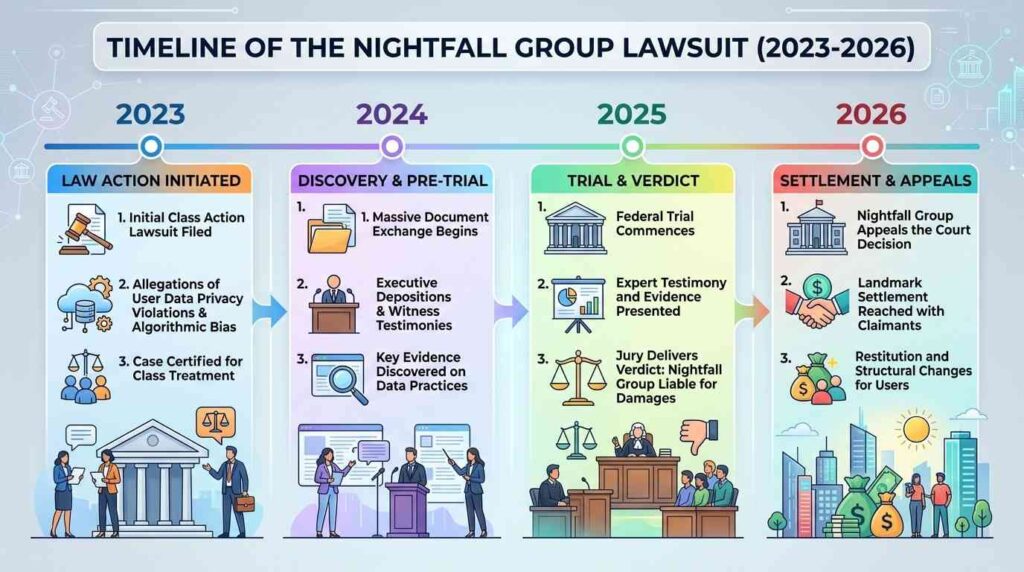
Here is a simple timeline of key events in the case.
| Date | Event |
|---|---|
| Before 2023 | At least seven civil lawsuits filed by business partners and investors against Ultimate Host and Mokhtar Jabli, mostly alleging fraud and broken lease deals |
| August 16, 2023 | Los Angeles City Attorney files case number 23STCV19069 against Ultimate Host, LLC, DBA The Nightfall Group |
| 2023 to 2025 | Case proceeds through Los Angeles Superior Court |
| September 2025 | City Attorney’s Office announces settlements with three of the named defendants |
| 2026 | Case continues to draw public attention as part of a broader city crackdown on illegal short-term rentals |
This timeline draws on reporting by The Real Deal and official city statements. Court dockets can include many smaller filings not listed here.
What Laws Are at the Center of the Nightfall Group Lawsuit?
The complaint centers on two main Los Angeles city laws.
1. The Short-Term Rental Ordinance
This rule generally says a person can only operate one short-term rental at a time. The host must also live at the property for more than six months of the year. The city alleges Nightfall ran many properties as short-term rentals without meeting this rule.
2. The Party House Ordinance
This ordinance targets homes used to host large, disruptive events. Cities pass these laws to protect neighbors from noise, traffic, and safety risks. The city alleges some Nightfall properties operated more like event venues than private rentals.
The city is seeking two main types of relief:
- An injunction to stop the ongoing conduct
- Civil penalties of up to $2,500 for each violation of each ordinance
Given the scale of Nightfall’s alleged operation across many properties over several years, city officials say the total penalties could add up to a large sum.
For another example of a business facing enforcement action over how it operates, see our coverage of the Direct Fairways lawsuit.
Settlements and Where the Case Stands Now
By September 2025, the Los Angeles City Attorney’s Office announced that three defendants in the case had reached settlements. According to a Los Angeles Times report, the penalties broke down as follows: Kirill “Kirk” Ayzenberg paid $215,000, 5554 Green Oak, LLC paid $45,000, and Jungle Kerry, Inc. paid $20,000, for a combined total of about $280,000. As part of the settlements, these defendants must also tell guests that loud and unruly parties are prohibited.
The case is part of a wider enforcement push by the City Attorney’s Office against illegal short-term rentals and party houses across Los Angeles. Officials have described the Nightfall case as an early example in this larger campaign.
As of the latest public information, no court ruling has found every defendant liable on every claim. Some parties have settled, while other parts of the case may still be active. Always check the official court record for the most current status of a specific case.
You can review the city’s own statements about the case through the Los Angeles City Attorney’s official updates page.
How the Nightfall Group Lawsuit Affects Property Owners and Renters
This case is not just about one company. It touches on issues that affect many people.
For property owners:
- Leasing a home to an operator who breaks local rental rules can create legal risk for the owner too.
- Local ordinances often hold owners responsible even when a management company runs the day-to-day rental.
For short-term rental hosts:
- Cities are increasing enforcement of local hosting rules.
- Running more than one short-term rental, or not living at the property as required, can trigger fines.
For renters and guests:
- Booking through a company involved in legal disputes does not usually create liability for the guest.
- Guests may still want to check a property’s registration status before booking.
Example (hypothetical): Imagine a homeowner leases their house to a rental company for a flat monthly fee. The company then lists the home nightly without a permit. If the city investigates, the homeowner could face questions too, even if they were not the one managing bookings. This shows why understanding a lease agreement matters before signing one.
If you are a host or owner trying to understand your own risk, browsing our Attorney section can help you find general guidance on when and how to work with a licensed lawyer.
Common Legal Issues Raised in Cases Like This One
Cases involving large-scale short-term rental operators often raise similar legal questions. These include:
- Unlicensed business operation. Running rentals without required city permits.
- Nuisance claims. Noise, traffic, or safety issues that affect neighbors.
- Breach of contract. Disputes between operators, property owners, and investors.
- Fraud allegations. Claims that a company misrepresented terms to partners or investors.
- Housing supply concerns. Long-term rental units being converted to short-term use.
Many of the private lawsuits filed against Ultimate Host before the city’s case involved breach of contract and fraud claims from business partners, not consumers.
What To Do If You Are Involved in a Similar Dispute
If you are dealing with a short-term rental dispute, a lease disagreement, or a city code enforcement issue, here are general steps to consider.
- Gather your documents. Collect leases, emails, permits, and any city notices.
- Check local ordinances. Rules vary by city, so confirm what applies to your property.
- Avoid ignoring city notices. Respond within any deadlines listed.
- Talk to a licensed attorney. A local real estate or civil litigation attorney can review your specific situation.
- Keep records of communication. Save texts, emails, and letters related to the dispute.
This list is general guidance only. It does not replace advice from a qualified attorney who knows the details of your case.
FAQ Section
1. What is the Nightfall Group lawsuit about?
It is a civil enforcement case filed by the Los Angeles City Attorney against Ultimate Host, LLC, doing business as The Nightfall Group. The city alleges violations of local short-term rental and party house rules.
2. When was the Nightfall Group lawsuit filed?
The Los Angeles City Attorney filed the case on August 16, 2023, under case number 23STCV19069.
3. Who is Mokhtar Jabli?
Mokhtar Jabli is the owner and operator of The Nightfall Group. He is named as an individual defendant in the case.
4. Has the Nightfall Group been found guilty of a crime?
No. This is a civil case, not a criminal case. As of the latest public information, no ruling has established criminal wrongdoing.
5. Have there been any settlements in the case?
Yes. In September 2025, the City Attorney’s Office announced settlements with three of the defendants named in the case. Reported penalties totaled approximately $280,000 combined, according to the Los Angeles Times.
6. Does this lawsuit affect regular Airbnb or VRBO hosts?
The case mainly targets a large-scale operator running many properties. It does not directly change the law for individual hosts, but it shows that cities are increasing enforcement of existing short-term rental rules.
7. What penalties could the defendants face?
The city is seeking an injunction and civil penalties of up to $2,500 per violation of each ordinance, which could total a large amount given the number of alleged violations.
8. Where can I read the official case filings?
Court filings are available through the Los Angeles Superior Court under case number 23STCV19069. The City Attorney’s Office has also posted public updates on its official website.
Conclusion
The Nightfall Group lawsuit shows how seriously some cities now enforce short-term rental and party house rules. What started as a single civil case in 2023 has grown into a wider example of how local governments are cracking down on unlicensed luxury rental operations.
For property owners, hosts, and renters, this case is a reminder to understand local rental laws before listing or booking a property. Rules can vary a lot between cities, and penalties can add up quickly for repeat violations.
If you are facing a similar dispute or have questions about short-term rental compliance in your area, consider speaking with a local attorney who handles real estate or municipal law. You can also read more related case guides on our site, including our breakdown of the CarGuard lawsuit and the Direct Fairways lawsuit, to better understand how similar legal disputes unfold.
This article is for general informational purposes only and is not a substitute for advice from a qualified attorney licensed in your jurisdiction. Laws vary by city and state, and details of this case may change as it moves through court.