




Class action settlements are deals that end a group lawsuit. A company agrees to pay money, change a business practice, or do both, and a judge must approve the deal. If you got a settlement notice, you may be able to file a claim and get paid.
- What Are Class Action Settlements?
- Class Action Settlements in 2026: What the Numbers Show
- How Class Action Settlements Work Step by Step
- Types of Class Action Settlements
- Who Qualifies for Class Action Settlements?
- How to File a Claim and Get Paid
- How Much Do Class Action Settlements Pay?
- Where the Money Goes: Fees, Costs, and Unclaimed Funds
- Your Options: Claim, Opt Out, Object, or Do Nothing
- Are Class Action Settlement Payments Taxable?
- How to Spot Fake Class Action Settlement Notices
- Common Mistakes to Avoid
- When to Talk to a Lawyer
- FAQ About Class Action Settlements
- What are class action settlements?
- How do I know if I qualify for a class action settlement?
- How long does it take to get paid?
- Do I have to pay to file a claim?
- How much money will I get from a class action settlement?
- Can I file a claim after the deadline?
- Should I opt out of a class action settlement?
- Are class action settlements taxable?
- Conclusion
Most eligible people never file. The Federal Trade Commission (FTC) found that the typical consumer settlement drew claims from only about 9 percent of the people who got notice. That means real money often sits unclaimed.
This guide explains how class action settlements work from start to finish. You will learn who qualifies, how to file a claim, how much people really get, how taxes apply, and how to spot a fake notice.
What Are Class Action Settlements?
A class action is one lawsuit filed for many people who were harmed in a similar way. One person or a small group, called the lead plaintiff or class representative, sues for everyone in the group. The group is called the class.
Class action settlements are the agreements that resolve these cases without a full trial. Both sides negotiate the terms. The judge then reviews the deal to protect people who never appeared in court.
Federal courts follow Rule 23 of the Federal Rules of Civil Procedure. Many states use similar rules. These terms show up in most notices:
- Class members: the people covered by the case.
- Class counsel: the lawyers who represent the whole class.
- Defendant: the company or group being sued.
- Settlement administrator: the outside firm that sends notices, takes claims, and pays people.
- Release: your promise not to sue the defendant again over the same claims.
Hypothetical example: A company sells two million blenders with a faulty lid. Buyers say the lid cracks within a year. One buyer sues for all buyers, and the case ends in a settlement. Buyers who file valid claims get a share.
Class actions cover many topics, from product defects to data breaches and hidden fees. Our guide to the Hello toothpaste lawsuit shows how a proposed class action over lead claims begins long before any settlement.
Class Action Settlements in 2026: What the Numbers Show
Class action settlements keep getting larger. The law firm Duane Morris tracks them every year. Its Class Action Review reports that class actions and government enforcement cases settled for about $79 billion in 2025. The 2024 total was $42 billion.
The first half of 2026 looks even bigger. Duane Morris counted about $53.795 billion by mid-year, including three settlements of $1 billion or more. Antitrust cases led the way, and the college athlete name, image, and likeness case alone reached $2.78 billion.
Filings are rising too. According to Duane Morris, plaintiffs filed more than 13,229 class action lawsuits in federal courts in 2025. Approximately 1,822 involved data privacy claims. These figures show how quickly privacy-related litigation has grown in recent years.
A big total does not mean a big check for you. Duane Morris is a defense firm, and its totals include government cases. Your share depends on the class size, the claims rate, and the deal terms.
Serious injury cases often run as mass torts instead. Our Depo-Provera lawsuit update explains how settlement payouts and deadlines work in that kind of case.
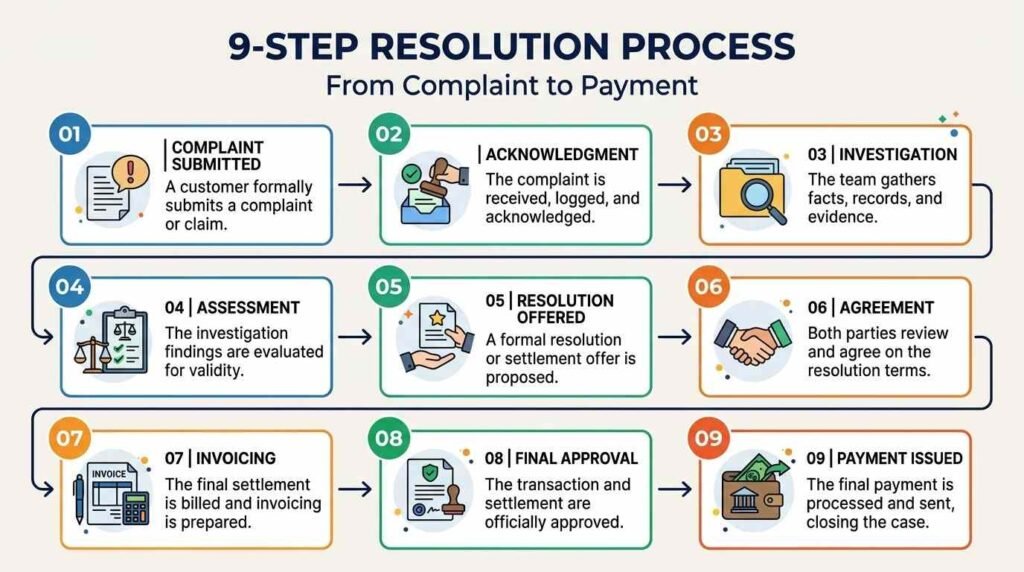
How Class Action Settlements Work Step by Step
Most class action settlements follow the same path. The timing changes from case to case.
- Filing. A lead plaintiff files a complaint for the whole class.
- Early fights. The company may ask the judge to dismiss the case.
- Class certification. The judge decides if the group can proceed together. Rule 23(a) requires numerosity, commonality, typicality, and adequate representation.
- Negotiation. Both sides trade offers, often with a mediator.
- Preliminary approval. The judge reviews the deal and allows notice to go out.
- Notice. Class members get mail, email, ads, or a website. Companies must also tell federal and state officials about the deal under the Class Action Fairness Act.
- Deadlines. You get a date to file a claim, opt out, or object.
- Final approval hearing. The judge may approve the deal only after a hearing and a finding that it is fair, reasonable, and adequate under Rule 23(e).
- Payment. Money goes out after final approval, and after any appeal ends.
Rule 23 was updated in December 2018 to add detail on notice and settlement review. Judges now look harder at whether the lawyers and the lead plaintiff treated all class members fairly.
Types of Class Action Settlements
Not all class action settlements pay the same way. The type decides how easy it is to get money. A Duke Judicature debate between two top class action lawyers explains the main models.
- Common fund. The company pays one set amount. Fees and costs come out first, and valid claimants split the rest.
- Claims-made. The company pays only the claims people file. This model is common when the company has no list of buyers.
- Direct payment. The administrator sends money to people on a customer list. No claim form is needed.
- Vouchers or coupons. Class members get a discount or credit. Federal law ties lawyer fees on coupons to the value actually redeemed.
- Injunctive relief. The company changes a practice, such as fixing a defect or ending a fee. No cash may be involved.
Claims-made deals draw the most debate. One lawyer in that debate noted that the stated value of such a deal can far exceed what class members receive. Always check what you can actually collect, not the headline number.
Product defect cases often use these models. Our Ford F-150 oil consumption lawsuit guide shows how owners track a defect claim.
Who Qualifies for Class Action Settlements?
You qualify if you fit the class definition in the notice. That definition is the key. It usually names a product, a service, a date range, and sometimes a state.
For example, a class might cover people who bought a certain model between 2020 and 2024. A data breach class might cover people whose records were exposed. A fee case might cover customers who paid a specific charge.
Consumer fee cases are common. The Home Depot damage protection class action is a good example of a group of cases built around a charge that customers paid.
Use this quick check:
- Read the class definition in the notice.
- Match the dates and the product or service to your records.
- Find the case name and number on the notice.
- Visit the official settlement website named in the notice.
- Look for a Claim ID or Notice ID printed on the notice.
Many settlements accept a sworn statement. Some ask for receipts or account records. When in doubt, read the claim form before you start.
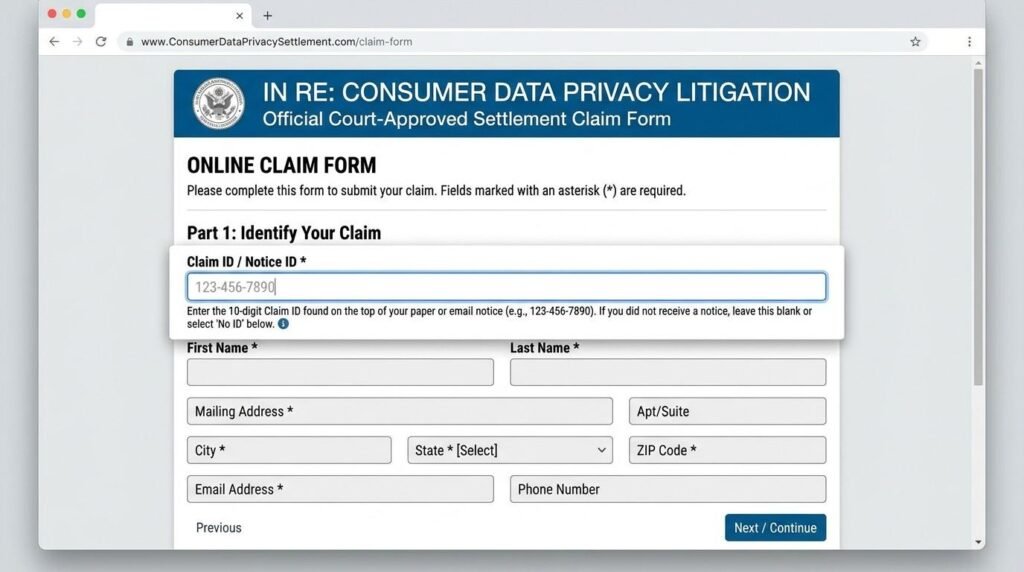
How to File a Claim and Get Paid
Filing is free. Follow these steps.
- Go to the official website. Use the web address printed on the notice. Do not trust a link in an unexpected message.
- Enter your ID. Many sites ask for your Claim ID or Notice ID.
- Confirm you are in the class. Read the definition again.
- Fill out the form. You usually sign under penalty of perjury, so answer honestly.
- Choose how to be paid. Common options are check, direct deposit, or a digital payment.
- Upload proof if asked. Keep copies of everything.
- Submit before the deadline. Attorneys commonly say claim windows run about 90 to 120 days.
- Save your confirmation. Take a screenshot or keep the email.
After you file, the administrator reviews your claim. In the FTC’s study of 149 consumer cases, most claims that were filed were approved. The median approval rate was 93 percent.
Then you wait. Payment follows final approval, and an appeal can add months or even years. Check the settlement website for updates.
How Much Do Class Action Settlements Pay?
It depends. Many consumer payouts are small, often a few dollars up to a few dozen dollars. Other cases pay far more, especially when people lost real money or were injured.
The math follows the type of deal. In a common fund, your payment depends on how many people file. Fewer claims often mean a bigger share for each person.
Hypothetical example: A court approves a $6 million fund.
| Item | Amount |
|---|---|
| Settlement fund | $6,000,000 |
| Attorney fees (25 percent) | $1,500,000 |
| Notice and administration | $500,000 |
| Service awards to named plaintiffs | $20,000 |
| Left for class members | $3,980,000 |
Now see how the claims rate changes your check.
| Valid claims filed | Payment per person |
|---|---|
| 40,000 | $99.50 |
| 200,000 | $19.90 |
The FTC’s September 2019 study of 149 consumer class actions found a median claims rate of 9 percent and a weighted average of only 4 percent. Mailed notices did better than email or online notice. You can read the full FTC staff report on consumer class actions.
Where the Money Goes: Fees, Costs, and Unclaimed Funds
A settlement fund does not all go to class members. Several costs come out first.
- Attorney fees. The court must approve them under Rule 23(h). Many courts start near one quarter of the fund and adjust from there.
- Costs. These cover experts, filing fees, and court expenses.
- Notice and administration. The administrator charges for mailing, websites, and payments.
- Service awards. Named plaintiffs may get a small extra payment for their time. Some courts limit these.
What happens to money nobody claims? It depends on the deal. Unclaimed funds may go to a second round of payments, to a charity under the cy pres rule, or to a state unclaimed property program. In some deals, money goes back to the company, though courts tend to disfavor that.
This is why a low claims rate matters. When few people file, the money may go somewhere other than class members. Filing your claim is the only way to get your share.
Your Options: Claim, Opt Out, Object, or Do Nothing
A notice gives you choices. Each one has a different effect.
| Option | What it means | What you give up |
|---|---|---|
| File a claim | You ask for a payment | You release your claims |
| Do nothing | You stay in the class | You get no money and still release your claims |
| Opt out | You leave the class | You get no settlement money, but you keep your right to sue alone |
| Object | You tell the judge what you dislike | You stay in the class unless you also opt out |
Doing nothing surprises many people. In most money cases, you are bound by the deal even if you never respond. That is why reading the notice matters.
Opting out makes sense only when your own loss is large. You must file and pay for your own case. Objecting requires you to follow the notice rules, including the deadline and the case number.
Few people use these rights. The FTC found that both opt outs and objections were far below one percent. For an example of how a live case lays out its status and choices, see our Life360 lawsuit guide.
Are Class Action Settlement Payments Taxable?
Often, yes. The IRS asks one main question: what was the payment meant to replace? Its page on the tax implications of settlements and judgments explains the rule.
In general, all income is taxable unless a law says otherwise. One common exception covers damages paid for physical injury or physical sickness. Payments for emotional distress without a physical injury are generally taxable. Punitive damages and interest are also taxable.
A Form 1099 is just a report to the IRS. Getting one does not decide whether money is taxable. Not getting one does not make it tax free.
Hypothetical example: A data breach settlement pays you $35 and you get no tax form. That payment may still count as income, because it does not compensate a physical injury. Reporting rules and thresholds change, so check the current IRS instructions or ask a tax professional.
How to Spot Fake Class Action Settlement Notices
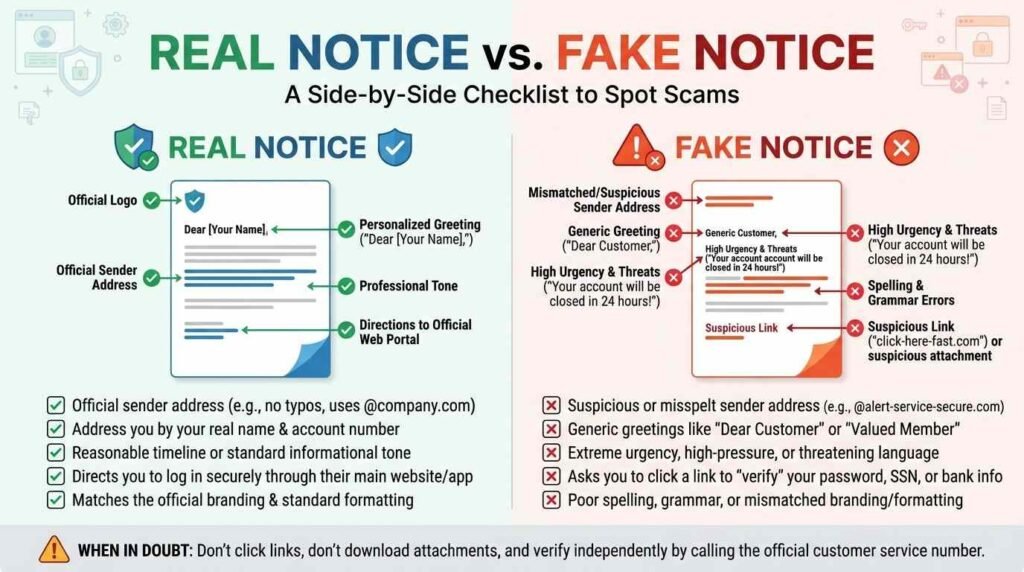
Scammers copy real class action settlements because people expect them. The FTC warned about fake websites during the Equifax settlement. It also said you never pay to file a claim, and a caller who pushes you to file is almost certainly a scammer. Read the full FTC warning about fake settlement websites.
Watch for these red flags:
- The message asks for a fee of any kind.
- It pressures you to act right now or lose your money.
- The website address does not match the one on the official notice.
- It asks for your Social Security number or a bank login that the claim does not need.
- It promises a payout that seems too large.
- It comes as an unexpected phone call or attachment.
How to verify a notice:
- Search the case name and number on the court docket.
- Find the settlement website through the court record or a trusted news source.
- Compare the deadline and payout on the notice with the official site.
- Use trusted class action tracking websites as a second check.
Common Mistakes to Avoid
- Missing the deadline. Late claims are often rejected.
- Tossing the notice as spam. Check it first. Many are real.
- Using a look-alike website. Type the address from the notice.
- Paying a claim filing service. You can file for free on your own.
- Giving false information. You sign under penalty of perjury.
- Skipping your address update. Checks mailed to old addresses come back.
- Ignoring taxes. Plan for possible income reporting.
- Assuming silence protects you. Doing nothing may still release your claims.
When to Talk to a Lawyer
Most small claims need no lawyer. You can file a form yourself. Still, some situations call for advice.
Talk to a qualified attorney if you were hurt, if your loss is large, or if you run a business that may be in the class. Also call one before you opt out or object. A tax professional can help with large payments.
Not sure what kind of professional you need? Our guide on attorney vs lawyer explains the terms in plain English. Many lawyers offer free first consultations, so ask about fees up front.
FAQ About Class Action Settlements
What are class action settlements?
They are agreements that end a lawsuit filed for a large group. The company pays money, changes a practice, or both. A judge must approve the deal before payment.
How do I know if I qualify for a class action settlement?
Read the class definition in the notice. Match it to your purchase, account, or dates. Then check the official settlement website for details.
How long does it take to get paid?
It varies. Payment usually comes after final approval, and appeals can add a long delay. Expect months at least, and sometimes more than a year.
Do I have to pay to file a claim?
No. Filing a claim in a court approved settlement is free. Anyone asking for a fee is a red flag.
How much money will I get from a class action settlement?
It depends on the fund size, the fees, and how many people file. Many consumer payments are small. Injury and financial loss cases can pay more.
Can I file a claim after the deadline?
Usually not. Courts set firm dates, and late claims are often rejected. Check the notice and the settlement website for any extension.
Should I opt out of a class action settlement?
Only consider it if your own loss is large and you can afford to sue alone. You keep your right to sue, but you give up the settlement money. A qualified attorney can review your case.
Are class action settlements taxable?
Often they are. Payments for physical injury may be excluded, but many other payments count as income. A Form 1099 does not decide the question, so check with a tax professional.
Conclusion
Class action settlements can put real money back in your pocket, but only if you act. Read the notice, check the class definition, and use the official website to file before the deadline. Remember that filing is free, and that doing nothing usually means you give up your claims anyway.
Stay alert for scams, plan for possible taxes, and save your confirmation. If your loss is large or you were injured, talk to a qualified attorney before you decide.
Keep following Legal Expertise for plain English updates on new lawsuits and settlements.