



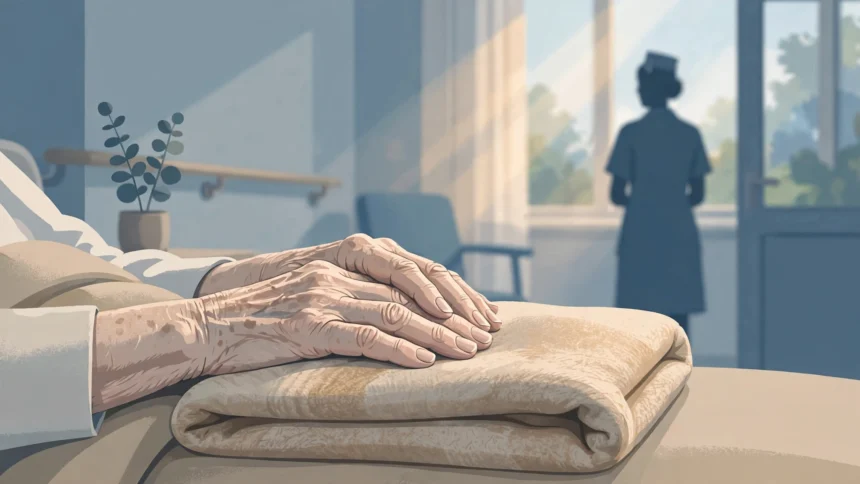
Bedsores start off as hardly anything to pay attention to, and you’d never think something like that could endanger a person’s life.
And yet, it can. It starts off as a small red patch, which is nothing more than irritated skin. It can easily go away if the pressure is no longer put on that spot, but if it doesn’t, the irritation progresses to what ends up being a wound that can expose the muscles and bones underneath. Some people end up in surgery, and some don’t survive.
Bedsores aren’t anything new in nursing homes, and neither are bedsore lawsuits.
If you looked into how much these kinds of cases are worth, you may have come across some 7-figure settlements and verdicts, but you need to know that lawsuits that involve bedsores aren’t based on just the wound alone.
How Much Are Bedsore Lawsuits Worth in 2026?
The truth is, there’s no easy way to answer this. It could be $50,000 (USD), it could be $500,000, it could be a few million. In other words, you can’t estimate your case based on what you read on Google.
As of March 2026 and based on data from VerdictSearch, the average settlement was about $1.62 million. But according to a separate study (also from 2026), that number is closer to $383,000 for settlements and about $2.1 million for jury verdicts.
You’re probably curious as to why the difference is so big. You have to remember that different sets of cases went into all this research, plus even a handful of 7-figure payouts can push those averages a lot.
The fact is that each case is unique to a point, so when you’re looking at typical payouts in pressure ulcer lawsuits, those figures don’t have to be even close to what you will (or would) get. What’s important here is what the person who suffered bedsores actually went through.
Take a look at Stage 4 bedsores.
Those are serious, to say the least, and in many cases, you can literally see the bone because the wound has gotten THAT deep. That requires surgery, which can leave someone disabled for the rest of their life. It only makes sense that this kind of case ends up in a bigger payout than one where someone had a wound that healed pretty quickly.
That’s not to say that a Stage 2 bedsore can’t cause serious issues and trauma. Bedsores shouldn’t happen in nursing facilities because the staff is supposed to turn residents and react in time if they see patches of irritated skin anywhere.
But when they do happen, the seriousness of the wound absolutely has an impact on the result of the claim.
How You Can Pursue a Bedsore Lawsuit and Make Sure Your Claim Is Strong
Your grandmother developed a bedsore at the nursing home she’s in, and you think it’s because the staff has been neglecting her. Your suspicions might be 100% true, but you have to prove it, and your gut saying that something is so isn’t proof.
You need evidence, and the sooner you start looking for it, the better.
The obvious place to start would be medical records because you want to see when the bed sore started in black and white. The records should show how quickly it got worse, and what the nursing home did to help your grandmother. Photos are helpful, as well, especially if you have a few of them that show the wound getting worse as time went on.
There’s only so much medical records can do, however, so extra evidence will be needed.
Nursing homes employ people who are experts at taking care of vulnerable seniors, meaning they should be able to assess each resident’s risk of developing bedsores. If someone is high-risk, they need to do something to prevent them from occurring.
Staff sometimes skip these steps or even fail to do the assessment, in which case you have grounds for a lawsuit. Naturally, a bedsore doesn’t automatically prove negligence because some people get them despite being cared for. Still, it’s definitely something to investigate further.
If you’re thinking of a lawsuit, you’ll need a lawyer.
The good thing is that most personal injury lawyers work on a contingency basis, and initial consultations are almost always free.
Conclusion
You can’t look at a bedsore and put a price on it because the fact that a bedsore exists doesn’t tell you whether you have a case, let alone what you can get for it. The only answer you can get is that the amount depends on how seriously the person was hurt as a result of having a bedsore.
If you’re sure that the bedsore could have been prevented, then do something about it.
Talk to a lawyer (preferably one that has a history of handling nursing home negligence cases), and if you have some evidence to show at the consultation, all the better.