



The CarGuard lawsuit refers to a group of legal cases filed against CarGuard Administration, Inc., a company that sells vehicle service contracts, sometimes called extended car warranties. Consumers have brought claims for two very different reasons: unwanted robocalls and denied repair claims. This matters because thousands of car owners may qualify for compensation without knowing it.
- What Is the CarGuard Lawsuit
- Who Is CarGuard Administration
- The Two Types of CarGuard Claims
- What the TCPA Says About Robocalls
- Real Case Examples
- Is There a CarGuard Settlement in 2026
- Who Qualifies to File a Claim
- How Much Could You Get
- Steps to Take If You Think You Qualify
- Common Pitfalls to Avoid
- FAQ
- Conclusion
This article is for general information only. It is not legal advice and does not replace guidance from a licensed attorney in your state.
What Is the CarGuard Lawsuit
The term “CarGuard lawsuit” is not one single case. It is a pattern of lawsuits filed in different federal courts across the country. Some target CarGuard directly. Others target the telemarketing partners and payment companies that sell CarGuard’s contracts on its behalf.
Most of the legal pressure falls into two buckets:
- Robocall complaints under the Telephone Consumer Protection Act, known as the TCPA.
- Warranty and contract disputes from customers who paid for coverage and then had a repair claim denied.
Both types of cases have shown up in court filings, and both can affect ordinary consumers in different ways. For a broader look at how consumer protection lawsuits work in general.
Who Is CarGuard Administration
CarGuard Administration, Inc. sells vehicle service contracts, which cover certain repair costs after a car’s factory warranty runs out. These plans are marketed nationwide, often through independent sales agents, dealer partnerships, and telemarketing campaigns.
CarGuard is still an active, operating company. It continues to sell service contracts while the legal cases against it move through the court system.
The Two Types of CarGuard Claims
It helps to think of this as two separate legal tracks rather than one lawsuit.
Track 1: Unwanted calls. Consumers say they received autodialed or prerecorded calls promoting vehicle service contracts, sometimes even after asking to be placed on a do-not-call list. This track does not require you to have ever purchased a CarGuard plan.
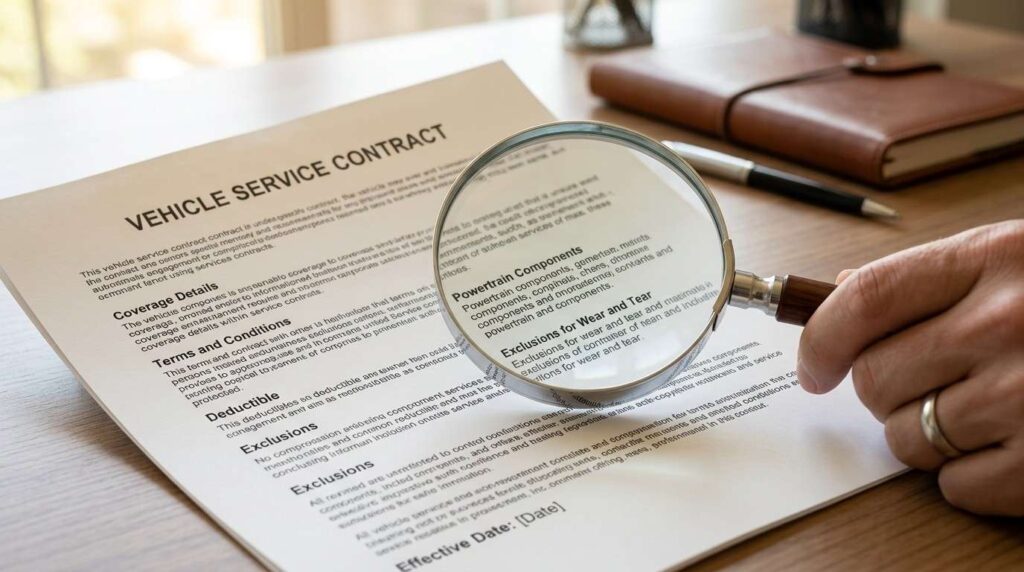
Track 2: Denied coverage. Consumers who bought a CarGuard contract say the company denied repair claims that should have been covered, or refused to issue promised refunds after cancellation. This track only applies to people who actually purchased a plan.
Knowing which track applies to your situation is the first step toward understanding your options.
What the TCPA Says About Robocalls
The Telephone Consumer Protection Act is a federal law passed in 1991. It restricts companies from using automated dialing systems or prerecorded voice messages to call consumers without their prior written consent.
Under the TCPA:
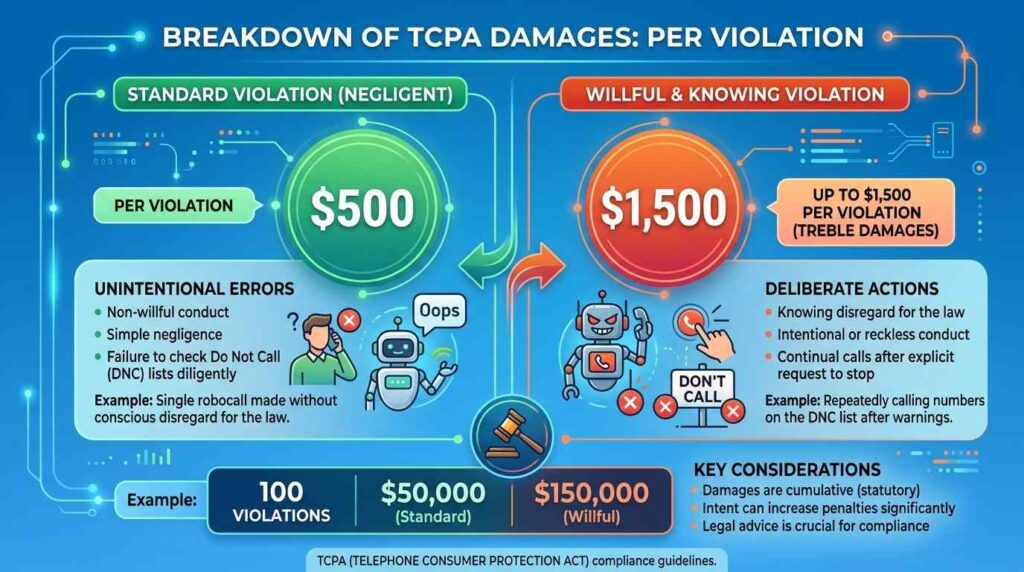
- Each illegal call can trigger statutory damages of $500.
- If a court finds the violation was willful or knowing, damages can rise to $1,500 per call.
- Consumers do not need to prove they lost money to recover these damages. The violation itself is enough.
You can read the full text of the law directly from the FCC’s official TCPA page. This is why a handful of unwanted calls can add up to a meaningful claim, especially for someone who received several calls over months. You can read the full text of the TCPA at the Federal Communications Commission’s consumer guide, which explains the rules telemarketers must follow.
For a broader look at how consumer protection claims work in general.
Real Case Examples
Court records give a clearer picture of how these claims actually play out.
In one Pennsylvania federal case, Baccari v. CarGuard Administration, Inc., a consumer alleged that CarGuard knowingly accepted business generated through illegal prerecorded calls made by a third-party telemarketing vendor. CarGuard argued it was unaware its vendor was making those calls, and the court examined whether the consumer could show CarGuard was responsible for the harm.
In another case out of California, a proposed class action named Legion Auto Protection Services, WalCo Funding, and CarGuard Administration as defendants. The complaint alleged the defendants used an automatic dialing system to call a consumer whose number had been on the National Do Not Call Registry since 2003, and that the calls used a spoofed local number to appear more trustworthy.
A separate Arizona case, NCWC Inc. v. CarGuard Administration, involved a business dispute between CarGuard and one of its contract partners, rather than a consumer complaint. It shows that CarGuard has also faced litigation from companies it works with, not just individual customers.
What this shows: CarGuard has been named in lawsuits filed by individual consumers, proposed class actions, and business partners, spread across several states. You can search federal case dockets yourself through PACER, the official U.S. federal court records system, to follow the status of any of these filings.
Is There a CarGuard Settlement in 2026
As of 2026, there is no publicly confirmed, court-approved class action settlement covering all CarGuard claims. Multiple cases remain in active discovery, mediation, or pre-certification stages in federal courts.
This does not mean consumers have no options. It means the path to compensation right now runs more through individual claims than through joining an existing class settlement fund.
A few things worth understanding:
- Mediation means both sides are negotiating with a neutral third party, which usually signals that both sides see risk in going to trial.
- Regulators including the Federal Trade Commission have flagged vehicle service contract robocalls as a frequent consumer complaint category, which adds pressure on companies in this space. You can check or file a complaint yourself through the FTC’s official Do Not Call complaint portal. You can view current complaint data on the FTC’s National Do Not Call Registry page.
- If a class settlement is eventually approved, class members typically receive formal notice and a claim deadline.
If you are still deciding whether your situation fits a class action or an individual claim, our article on understanding your legal options breaks down the difference in plain language.
Who Qualifies to File a Claim
You may have a potential claim if any of the following apply to you.
For robocall claims:
- You received an autodialed or prerecorded call promoting a CarGuard vehicle service contract.
- You never gave written consent to be contacted.
- You were called after asking to stop, or while your number was on the Do Not Call Registry.
- The calls happened within the last four years, which is the general TCPA filing window.
For warranty and contract claims:
- You purchased a CarGuard vehicle service contract.
- A covered repair was denied for reasons you believe were unfair or inconsistent with the contract.
- You canceled your plan and did not receive the refund you were promised.
You do not need to have purchased a CarGuard plan to qualify for a robocall claim. Those two tracks are evaluated separately.
How Much Could You Get
Payout amounts depend heavily on which track applies and how a case eventually resolves.
| Claim Type | Typical Range | Notes |
|---|---|---|
| TCPA robocall (individual claim) | $500 to $1,500 per call | Higher end requires proof of willful conduct |
| TCPA robocall (class settlement, if approved) | $150 to $900 per claimant | Amount depends on total claims filed and fund size |
| Denied repair claim | Cost of the repair plus expenses | Varies by contract terms and state law |
| Canceled contract refund | Remaining pro-rata premium | Based on how much of the contract term was unused |
Example scenario: Imagine a driver who received four unwanted robocalls from a CarGuard telemarketing partner after asking to be added to the company’s internal do-not-call list. If a court found the later calls were made knowingly, that alone could represent thousands of dollars in statutory damages, even without any purchase ever being made.
This is a hypothetical example to illustrate how the math works. It is not a guarantee of any specific outcome.
Steps to Take If You Think You Qualify
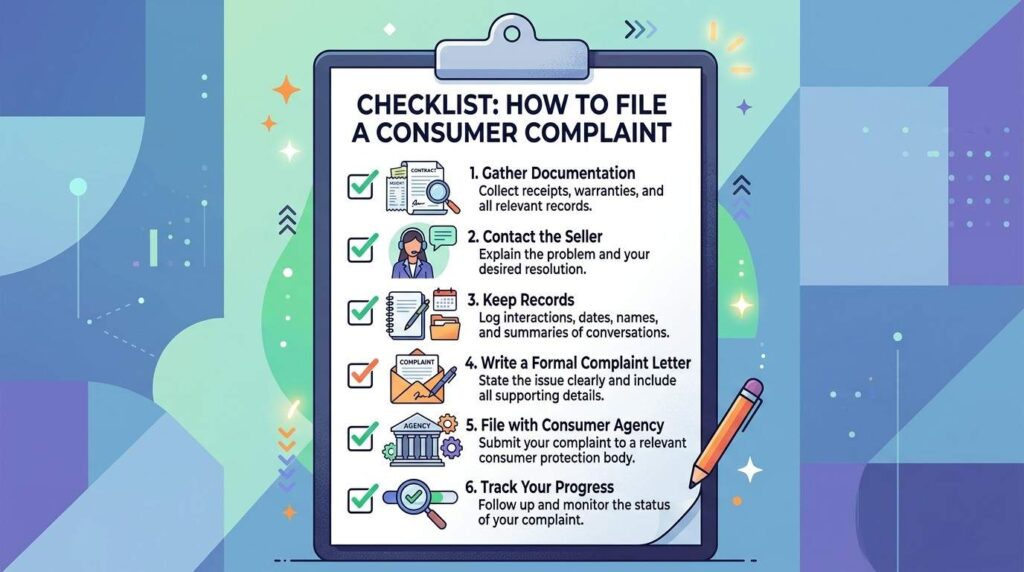
- Check your call log. Look for unknown or repeated numbers around the time you noticed the calls.
- Listen to voicemails again. Prerecorded or robotic-sounding messages are strong evidence for a TCPA claim.
- Pull your CarGuard contract. If you purchased a plan, find your paperwork and any denial letters.
- Write down dates. Note when calls happened or when a claim was denied, while it is still fresh.
- Talk to a consumer protection attorney. Many TCPA and warranty attorneys work on contingency, meaning you pay nothing upfront.
- Ask about the statute of limitations. TCPA claims generally must be filed within four years of the call.
If you are not sure where to start, our team can walk you through the process. Visit legalexpertise.net to connect with a consumer protection attorney near you. You can also register your number and file a direct complaint through the official National Do Not Call Registry, run by the FTC.
Common Pitfalls to Avoid
- Waiting too long. Evidence like call logs and voicemails can disappear, and legal deadlines do not pause.
- Assuming a single call is enough. One unwanted call can technically qualify, but attorneys often look at the full pattern of contact before taking a case.
- Confusing the two tracks. A robocall complaint and a denied repair claim are handled differently and may need different evidence.
- Ignoring your contract’s fine print. Some vehicle service contracts include arbitration clauses that affect how a dispute can be pursued.
- Ghost settlement scams. Be cautious of anyone contacting you claiming a CarGuard settlement has already been finalized and asking for payment to join. As of this writing, no such nationwide settlement exists.
FAQ
Is CarGuard still in business?
Yes. CarGuard Administration continues to sell vehicle service contracts while the lawsuits against it proceed.
Do I need to have bought a CarGuard plan to file a claim?
No. Robocall claims under the TCPA do not require you to have purchased anything. You only need to show you received unwanted automated calls.
Has CarGuard settled its lawsuits?
Not as of 2026. Several cases remain active in discovery or mediation, and no nationwide class settlement has received final court approval.
How much can I get from a TCPA claim against CarGuard?
Federal law sets statutory damages at $500 per illegal call, rising to $1,500 per call if the violation is shown to be willful.
What if my CarGuard warranty claim was denied?
That is treated as a separate contract dispute rather than a TCPA claim. Review your denial letter and contract terms, and consider speaking with an attorney about your options.
How long do I have to file a claim?
TCPA claims generally have a four-year filing window from the date of the call. Contract disputes may follow different deadlines depending on your state.
Will joining a lawsuit cost me money?
Many consumer protection attorneys take TCPA and warranty cases on contingency, which means they only get paid if you recover compensation.
How do I know if a settlement offer is legitimate?
Confirm any settlement claim through official court documents or a licensed attorney before providing personal or payment information.
Conclusion
The CarGuard lawsuit is really two separate legal stories unfolding at once, one about unwanted robocalls and another about denied vehicle repair claims. As of 2026, no final class action settlement has been approved, but that has not stopped individual consumers from pursuing their own claims through the courts.
If you believe you received unsolicited calls from CarGuard or its telemarketing partners, or if a covered repair was wrongfully denied, start by gathering your records and documenting what happened. From there, a consultation with a qualified consumer protection attorney can help you understand whether your situation fits either track, and what your case might realistically be worth.
This article is general information only and is not a substitute for advice from a qualified attorney licensed in your jurisdiction. Laws and case details can change as litigation progresses.